
5 Fall Simmering Pot Recipes to Make Your Home Smell Amazing
As the leaves begin to turn vibrant shades of amber and the crisp air requires pulling your favorite sweaters out of storage, there is an undeniable urge to make your home feel as cozy as possible. Lighting a candle is the standard go-to, but if you want to elevate your autumn experience, nothing compares to the rich, layered aroma of a natural stovetop potpourri.
If you are hosting a Thanksgiving dinner, preparing for a weekend of watching football, or simply curling up with a good book on a rainy October afternoon, the scent of your home sets the tone for the entire day. The subtle fragrances of cinnamon, citrus, and toasted spices drifting from the kitchen create an atmosphere that feels incredibly welcoming.
These fall simmering pot recipes offer a natural, customizable way to fill your home with the quintessential scents of the season. By gently warming everyday kitchen ingredients—like fruit peels, whole spices, and fresh herbs—in a pot of water, you release their natural essential oils into the air. This guide will walk you through exactly how to craft the perfect aromatic blend, how to get the most out of your ingredients, and how to package these beautiful dry ingredients as thoughtful homemade gifts for the holidays.
What Are Fall Simmering Pots?
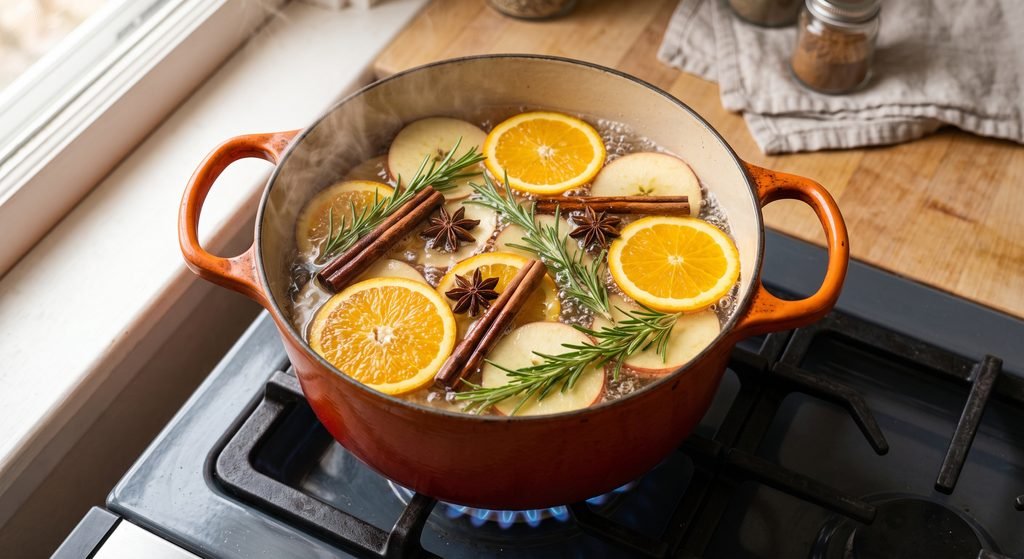
A simmering pot, frequently referred to as stovetop potpourri, is an incredibly simple concept with historical roots. Before commercial air fresheners or synthetic candles were widely available, people relied on natural botanicals to scent their homes. A simmering pot involves filling a saucepan with water, adding a curated mixture of aromatic ingredients—such as fresh fruits, whole spices, herbs, and extracts—and allowing the mixture to heat gently on the stove.
As the water warms, it slowly extracts the fragrant oils from the ingredients. The steam then carries these natural, earthy, and sweet aromas throughout your house. Unlike baking a pie, which eventually finishes cooking and comes out of the oven, a simmering pot can be left on the stove for hours, providing a continuous, long-lasting scent.
In the autumn, these pots lean heavily into warming spices. Cinnamon sticks, whole cloves, star anise, apples, and oranges are the stars of the show, mimicking the comforting smells of hot apple cider, freshly baked pumpkin bread, and crisp woodland air.
Why You’ll Love Making Stovetop Potpourri
If you have never simmered aromatics on your stove before, you are about to discover your new favorite fall tradition. Here are just a few reasons why this method beats out traditional room sprays and expensive candles every time:
- Completely Natural and Non-Toxic: Many commercial candles and air fresheners are made with synthetic fragrances and phthalates that can cause headaches or irritate sensitive respiratory systems. Simmering pots use pure, whole foods and spices, meaning the air you breathe is completely natural.
- A Brilliant Way to Reduce Food Waste: You do not need to use pristine, grocery-store-perfect fruits for this. A simmering pot is the perfect destination for bruised apples, the peels from the oranges you ate for breakfast, and the ends of carrots or celery if you are leaning toward an earthy, savory scent.
- Budget-Friendly: High-quality, aesthetic candles can easily cost upwards of thirty or forty dollars. A simmer pot utilizes a few cents’ worth of spices and water. Even if you purchase ingredients specifically for the pot, it remains incredibly economical.
- Acts as a Natural Humidifier: As the temperatures drop outside, we turn on our indoor heating, which dries out the air in our homes. The gentle, continuous steam from a simmering pot adds much-needed moisture back into the air, helping to soothe dry skin and sinuses.
- Endlessly Customizable: You are the master fragrance designer. If you want a scent that is sweeter, add more vanilla. If you prefer something woodsy, toss in some pine sprigs. You can tweak the recipes perfectly to match your current mood.
The Ultimate Autumn Ingredient Guide
Before we get into the specific recipes, it is helpful to understand the building blocks of a great simmering pot. You can mix and match these categories to invent your own signature house scent.
The Fruity Base
- Apples: The foundation of most fall scents. You can use whole slices, just the peels, or leftover apple cores. They provide a sweet, mellow, baked-goods aroma.
- Oranges: Citrus peels contain a high concentration of essential oils. Oranges add a bright, uplifting note that cuts through the heavy warmth of fall spices.
- Lemons: Similar to oranges, but with a sharper, cleaner scent. Lemon pairs beautifully with earthy herbs like rosemary.
- Cranberries: While they don’t have an overpowering scent on their own, they add a tart, fruity background note and make the pot look absolutely stunning as they burst in the hot water.
The Warming Spices
- Cinnamon Sticks: Do not use ground cinnamon; it will just turn the water to a murky brown paste. Whole cinnamon sticks are essential for that classic bakery scent.
- Whole Cloves: Intensely aromatic, sharp, and warm. A tablespoon of whole cloves goes a long way.
- Star Anise: These beautiful, star-shaped pods add a very subtle, sophisticated black licorice and warm spice note. They are also incredibly photogenic floating in the water.
- Whole Nutmeg: You can drop a whole nutmeg seed into the water, or grate a little bit over the top for a woody, sweet aroma.
The Earthy Herbs and Botanicals
- Fresh Rosemary: Piney, woodsy, and clean. It is one of the strongest herbs for stovetop potpourri.
- Pine or Cedar Sprigs: If you have evergreen trees in your yard, snipping a small branch and boiling it brings the scent of an autumn forest directly into your living room.
- Bay Leaves: Often used in savory cooking, bay leaves actually release a slightly floral, eucalyptus-like scent when boiled.
The Flavor Extracts
- Vanilla Extract: A teaspoon of pure vanilla extract added to the water makes the whole house smell like you are baking sugar cookies.
- Almond Extract: Very potent, offering a sweet, cherry-like marzipan aroma. Use sparingly.
How to Make a Fall Simmering Pot (Base Method)
Regardless of which specific ingredient combination you choose, the method for making stovetop potpourri is always the same.
Prep Time: 5 minutes Cook Time: Up to 4 hours (active simmering time) Total Time: 4 hours, 5 minutes Servings: 1 pot (scents an entire home)
Step 1: Choose Your Vessel
Select a medium-sized saucepan or a Dutch oven. Heavy-bottomed pots, like enameled cast iron Dutch ovens, are fantastic for this because they distribute and hold heat very evenly, providing a steady simmer.
Step 2: Combine the Ingredients
Place all of your chosen fruits, spices, herbs, and extracts directly into the bottom of the empty pot. You do not need to be precise with your knife work—rough chops and thick slices are perfectly fine.
Step 3: Add the Liquid
Fill the pot with water, leaving about an inch or two of space at the top so it doesn’t boil over. Recipe Tip: For an even more intense aroma, you can replace half of the water with cheap, store-bought apple cider or cranberry juice.
Step 4: Bring to a Boil, Then Simmer
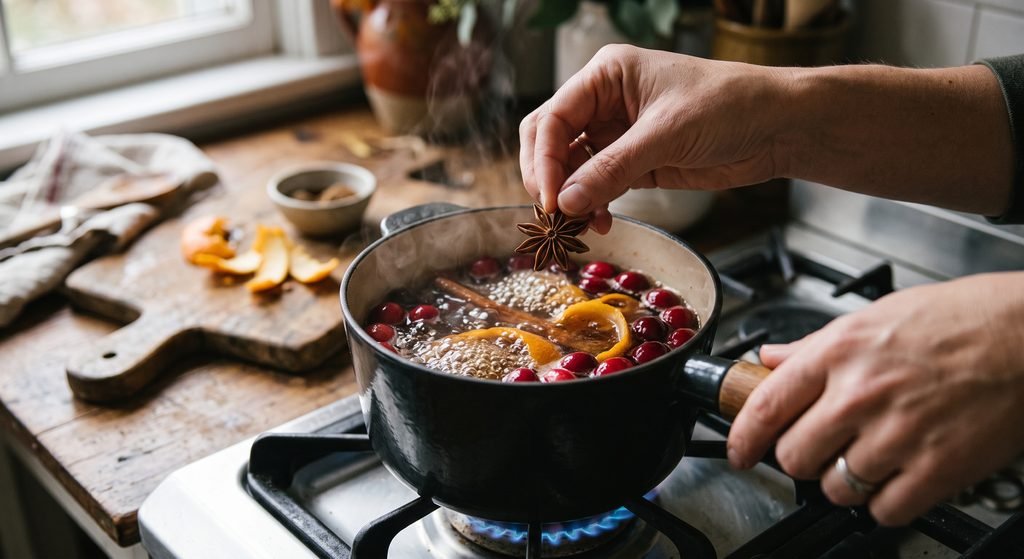
Place the pot on the stove over medium-high heat. Allow the water to come to a rolling boil. The moment it boils, immediately reduce the heat to the lowest possible setting. You want a very gentle, lazy simmer with just a few bubbles breaking the surface.
Step 5: Monitor the Water Level
This is the most important step for safety and success. As the pot simmers, the water will evaporate as steam. Check the pot every 45 to 60 minutes. When the water gets low, pour in another cup or two of warm tap water. Never let the pot boil dry, as the sugars from the fruit will scorch and burn onto the bottom of your pan, creating a terrible smell.
5 Signature Fall Simmering Pot Recipes
Here are five tried-and-true flavor profiles to try this season. Feel free to use these as starting points and adjust the ratios based on what you have in your pantry.
1. The Classic Apple Orchard Harvest
This is the quintessential autumn scent. If you want your house to smell exactly like a fresh-baked apple pie cooling on the counter, this is the recipe for you. It is sweet, deeply spiced, and incredibly comforting.
- 1 large apple, thinly sliced (any variety works)
- 1 orange, sliced into rounds
- 4 whole cinnamon sticks
- 1 tablespoon whole cloves
- 1 teaspoon pure vanilla extract
2. The Williams Sonoma Signature Copycat
If you have ever walked into a high-end kitchen store during the holidays, you have likely smelled this exact combination. It is slightly more sophisticated than the apple pie blend, balancing sweet citrus with sharp, woodsy herbs.
- 1 lemon, sliced into rounds
- 3 sprigs of fresh rosemary
- 1 teaspoon whole black peppercorns
- 1 teaspoon pure vanilla extract
3. Spicy Autumn Woods
For those who prefer deep, earthy, and grounding scents over sweet ones, this blend brings the outdoors inside. It smells like a brisk hike through the forest in late October.
- 1 handful of fresh pine, fir, or cedar sprigs (rinsed clean of dirt)
- 1 orange, peeled (use only the peels)
- 3 whole star anise pods
- 2 whole nutmeg seeds
- 3 dried bay leaves
4. Cranberry Citrus Spice
Tart, bright, and festive. This pot transitions beautifully from the early days of fall straight through Thanksgiving. As the cranberries burst, the water turns a gorgeous ruby red color.
- 1 cup fresh or frozen whole cranberries
- 2 oranges, sliced into rounds
- 3 whole cinnamon sticks
- 1 tablespoon whole cloves
- A splash of apple cider (optional)
5. The Cozy Coffeehouse
If you love the smell of a bustling coffee shop roasting beans and pulling espresso shots on a crisp morning, you can recreate that exact warmth without brewing a full pot.
- 1/4 cup whole roasted coffee beans
- 3 whole cinnamon sticks
- 1 tablespoon whole cardamom pods
- 1 teaspoon vanilla extract
- 1/2 cup leftover brewed coffee (optional, for a stronger scent)
Helpful Tips for the Best Results
To ensure your simmering pots are safe, aromatic, and easy to clean up, keep these practical tips in mind.
Use a Slow Cooker Instead of the Stove If you do not want to leave a burner on, or if you need the stove space for cooking dinner, you can easily make any of these recipes in a slow cooker. Simply place the ingredients in your Crockpot, fill it to the top with water, and turn it on “High” uncovered. Once it is steaming and fragrant, you can turn it down to “Low.” You will still need to check the water level occasionally, but it evaporates much slower than on the stovetop.
Do Not Use Ground Spices It can be tempting to shake some ground cinnamon or ground nutmeg into the water if you are out of whole spices. Resist this urge. Ground spices do not dissolve in water; they simply clump together, create a murky foam on the top of the pot, and tend to stick like glue to the sides of the pan as the water evaporates. Always stick to whole spices for simmering.
Set a Timer It is easy to get distracted by a movie or a good book while the house smells amazing. Set a recurring timer on your phone for 60 minutes to remind yourself to walk into the kitchen and check the water level.
How to Make Dry Simmering Pot Mason Jars for Gifts
One of the best things about fall simmering pot recipes is that they make stunning, inexpensive, and highly thoughtful gifts for teachers, neighbors, and party hosts.
To create a dry simmering pot mix, you will need to dehydrate your fruit.
- Preheat your oven to 200°F.
- Slice your apples and oranges very thin (about 1/4 inch thick).
- Place the fruit slices on a wire rack set inside a baking sheet.
- Bake for 2 to 3 hours, flipping halfway through, until the fruit is completely dry and no longer tacky.
- Let the fruit cool completely.
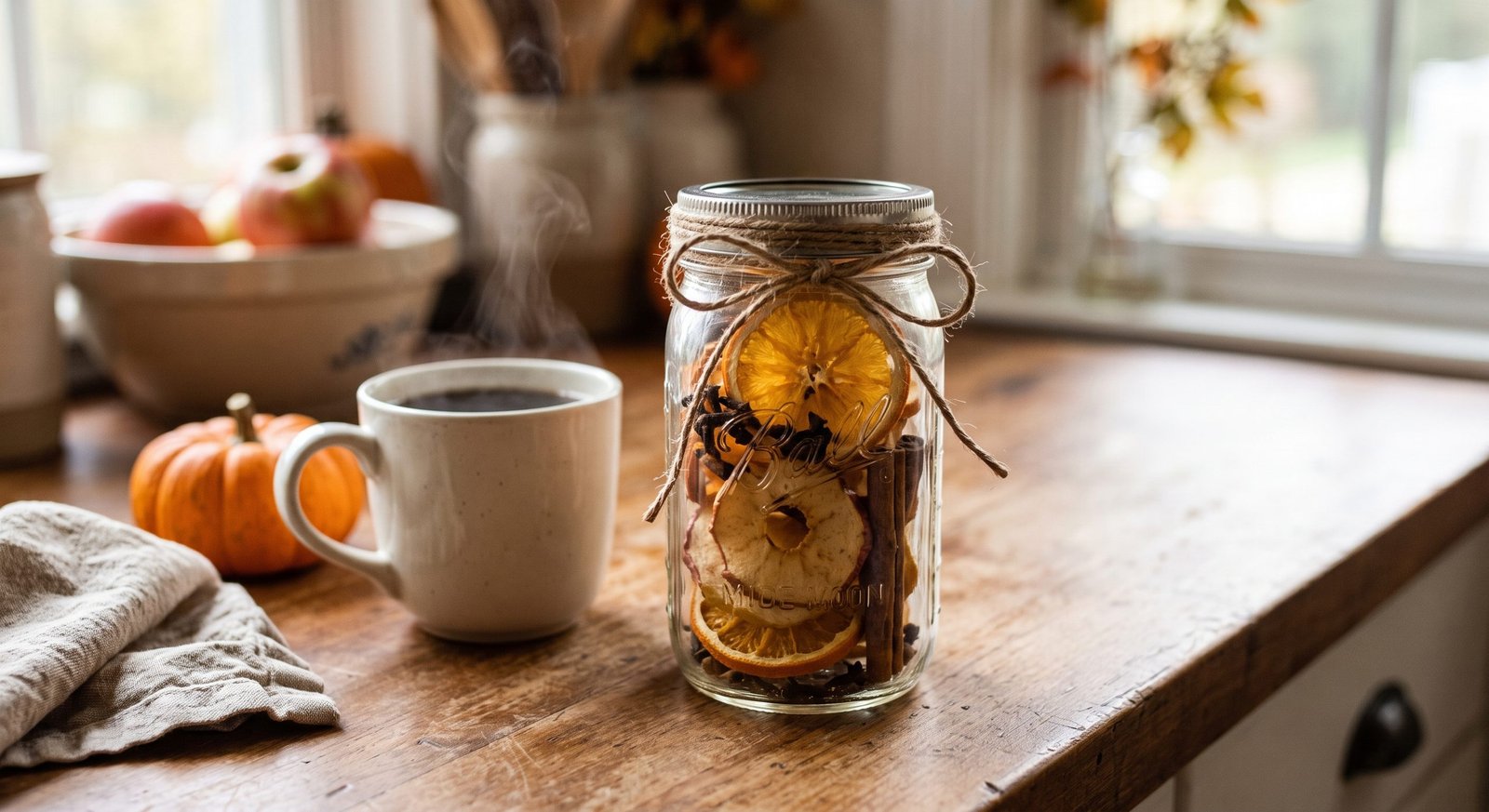
Once the fruit is dried, layer the dehydrated apple and orange slices into a glass mason jar. Add 3 cinnamon sticks, a tablespoon of whole cloves, and a few star anise pods to the jar. Seal the lid tight.
Tie a beautiful piece of twine around the lid and attach a small tag with the instructions: “Stovetop Potpourri: Empty contents into a saucepan. Cover with water and simmer on low heat. Add water as needed. Do not let boil dry!” These jars look incredibly rustic and beautiful, and they will stay fresh in a sealed jar in the pantry for up to three months.
Storage and Reheating (Reusing Your Pot)
You do not need to throw away the ingredients after just one day of use. Most simmering pots have enough essential oils in them to last for two to three days.
How to Store: When you are done simmering for the evening, simply turn off the stove and let the pot cool down completely. You have two options. If your house is cool, you can simply leave the pot on the back of the stove overnight. If you prefer, or if you won’t use it again for a few days, you can transfer the water and all the ingredients into a large glass jar or Tupperware container and store it in the refrigerator for up to one week.
How to Reuse: The next day, pour the mixture back into the saucepan on the stove. You will notice the water is likely brown or deeply tinted from the spices—this is perfectly normal. Add a fresh cup of water to bring the level back up, and turn the heat to a simmer. You may want to add one fresh slice of citrus or a dash of vanilla extract to revive the top notes of the scent, but the spices will continue to release their warmth. Once the fruit turns entirely to mush and the scent fades (usually after the third use), compost the ingredients and start fresh.
Frequently Asked Questions
Can you drink the liquid from a simmering pot? While all the ingredients used are technically food-safe, you should not drink the water. By the time it has boiled for hours, the liquid is incredibly bitter from the pith of the citrus peels and the strong tannins in the whole spices. It tastes a bit like chewing on tree bark. Keep this strictly for smelling, not sipping.
Is it safe to leave a simmering pot unattended? You should never leave a pot boiling on the stove if you are leaving the house or going to sleep. While it is perfectly safe to be in another room while it simmers, you must be present in the home to monitor the water level. If you want a safer alternative, use the slow cooker method mentioned above, though it should still be turned off before you leave the house.
Are essential oils safe to add to the water? You can add a few drops of pure essential oils (like sweet orange or cinnamon leaf) to boost the fragrance, but exercise extreme caution if you have pets. Many essential oils, particularly eucalyptus, tea tree, citrus, and pine, are highly toxic to dogs and cats when diffused into the air. Sticking to whole, natural foods is generally much safer for households with pets, but always consult your vet if you are unsure.
What kind of pot is best to use? Any standard kitchen saucepan will work, but enameled cast iron (like Le Creuset or Staub) is the gold standard because it regulates low heat beautifully. Avoid using unlined aluminum or cast iron, as the high acidity of the lemons and cranberries can react with the metal and cause pitting. Stainless steel or glass pots are excellent choices.
Why does my simmering pot smell burnt? If your house suddenly smells like burnt sugar instead of a cozy bakery, the water level in your pot got too low. Once the water evaporates, the natural sugars in the fruit and the dry spices will stick to the bottom of the hot pan and scorch. Turn off the heat immediately, carefully move the pot to a cool burner, and let it cool completely before attempting to clean it.
Will this make my house smell like food permanently? No. Unlike deep-frying or cooking with heavy garlic, the scents from a simmering pot are very light and volatile. The scent will linger beautifully for a few hours after you turn off the stove, but it will eventually dissipate. It will not permanently embed itself into your upholstery or curtains.
Can I use old spices that have been in my pantry for years? Yes! This is the absolute best way to use up those whole cloves or cinnamon sticks that have been sitting in the back of your cupboard since 2018. While they might not be punchy enough for baking a cake anymore, the heat of the boiling water will still manage to extract plenty of fragrance out of older, stale spices.
Do I need to peel the fruit first? Not at all. In fact, the skin and the peel are where the vast majority of the fragrant essential oils live. Simply wash the fruit briefly to remove any grocery store wax, slice it up, and throw the whole thing—seeds, core, peel, and all—into the water.
Final Thoughts
Transitioning your home for the cooler months is about more than just bringing out the heavy blankets; it is about engaging all the senses. By utilizing these fall simmering pot recipes, you can create a warm, inviting atmosphere that smells as comforting as it feels.
Whether you lean toward the spicy, baked-goods aroma of apples and cinnamon, or the crisp, woodsy freshness of pine and rosemary, there is a stovetop potpourri combination perfect for every mood. The best part is that you do not need to follow these recipes rigidly. Open up your pantry, see what spices and fruit scraps you have on hand, and start experimenting. A gently bubbling pot on the stove is one of the simplest, most rewarding ways to embrace the autumn season in your home.