
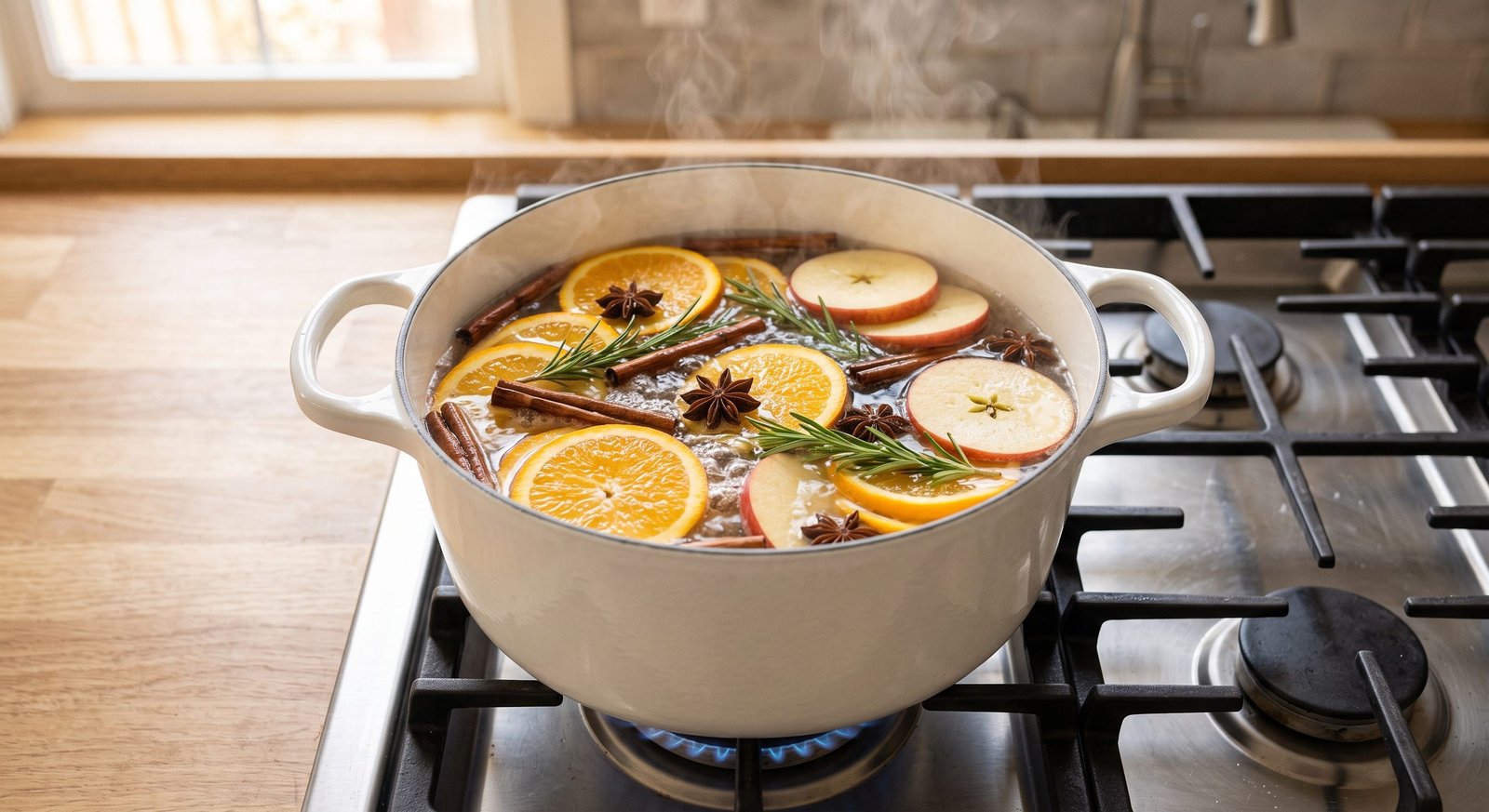
The Ultimate Guide to Making Potpourri on the Stovetop
There is nothing quite as inviting as walking through the front door of a home that smells incredible. Scent is heavily tied to our memories and emotions, and the aroma of a house sets the entire mood for the people inside it. While lighting a candle or plugging in a commercial air freshener might be the quickest way to scent a room, it rarely provides the deep, layered, and natural fragrance that you truly crave. If you want your house to smell like a cozy autumn cabin, a fresh spring morning, or a bustling holiday bakery, you need to try making potpourri on the stovetop.
If you have never simmered natural botanicals on your stove, you are missing out on one of the easiest, most rewarding domestic tricks. By simply combining water, fruit slices, whole spices, and herbs in a saucepan and letting it heat gently, you can extract bright, beautiful essential oils right into the air of your home. It is a completely customizable process that utilizes ingredients you likely already have sitting in your pantry or crisper drawer.
This comprehensive guide will teach you exactly how to master the art of potpourri stovetop blends. We will cover the best ingredient combinations for every season, how to safely maintain your simmer pot all day, and how to turn these beautiful botanical mixtures into perfect homemade gifts for your friends and neighbors. Get ready to ditch the artificial fragrances and transform your kitchen into an all-natural scent oasis.
What Is Potpourri Stovetop?
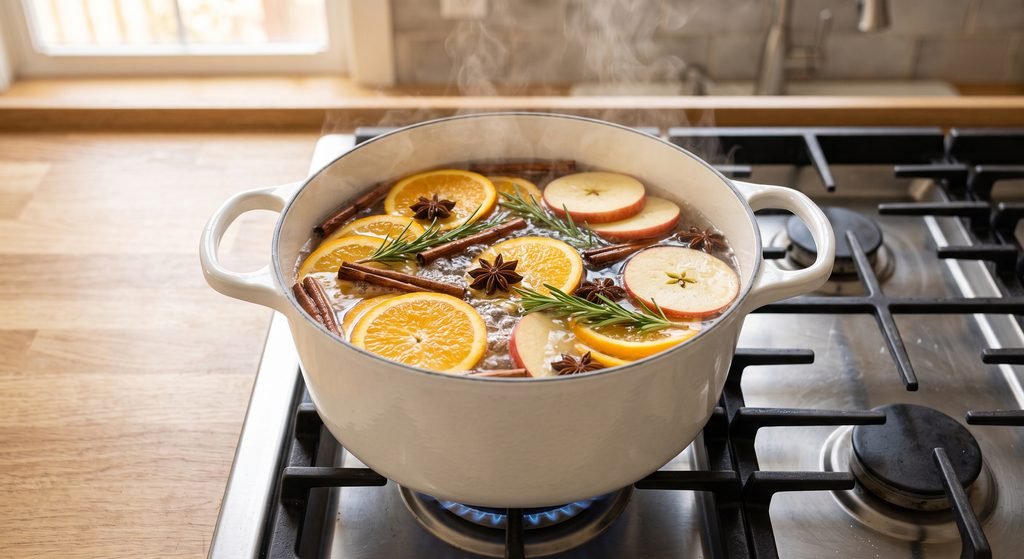
A potpourri stovetop, often referred to as a simmer pot or stovetop potpourri, is a natural method of home fragrancing that dates back centuries. Traditional potpourri consists of dried, naturally fragrant plant materials placed in a decorative bowl to scent a room slowly over time. The stovetop method speeds up and intensifies this process by using heat and water to extract the natural essential oils from both fresh and dried ingredients.
The science behind it is wonderfully simple. When you place items like citrus peels, whole cloves, and pine sprigs into a pot of water and bring it to a gentle simmer, the heat breaks down the cellular walls of the botanicals. The aromatic compounds are released into the water, and as the water evaporates into steam, it carries those tiny, fragrant oil molecules throughout your home.
Unlike baking a batch of cookies—where the scent eventually fades once the food is out of the oven—a potpourri stovetop can be maintained for hours on end. As long as you keep replenishing the water, the ingredients will continue to release their earthy, sweet, and spicy notes, acting as a continuous, all-natural air freshener.
Why You’ll Love This Method
If you are accustomed to buying expensive luxury candles, you might wonder why you should bother simmering fruit on your stove. There are several incredible benefits to making stovetop potpourri that go far beyond just saving money.
- Completely Non-Toxic and Natural: Many commercial room sprays, plug-ins, and even high-end candles contain synthetic fragrances, phthalates, and volatile organic compounds (VOCs). For people with asthma, allergies, or sensitive respiratory systems, these chemicals can trigger headaches and irritation. Simmer pots use 100% natural, food-safe ingredients, ensuring the air your family breathes is clean.
- A Natural Humidifier: During the colder months, indoor heating systems dry out the air, leading to static electricity, dry skin, and scratchy throats. The continuous steam rolling off a simmer pot naturally adds essential moisture back into your living space.
- The Ultimate Zero-Waste Hack: A simmer pot does not require perfect, pristine grocery store produce. It is the absolute best way to use up apple cores, the rinds from your breakfast oranges, herbs that are starting to wilt, and that jar of whole spices that has been sitting in the back of your cabinet for three years.
- Inexpensive and Cost-Effective: A high-quality luxury candle can easily cost upwards of thirty to fifty dollars and burns out in a few days. A stovetop potpourri uses a few cents’ worth of tap water, leftover fruit peels, and a dash of extract to provide hours of premium fragrance.
- Tailored to Your Exact Preferences: You are the master fragrance designer. If a scent is too sweet, you can add a sprig of earthy rosemary. If it needs more warmth, toss in an extra cinnamon stick.
Ingredients (The Master Formula)
Creating the perfect potpourri stovetop blend is more about following a formula than a strict recipe. A well-balanced pot usually contains a mix of fruits, spices, herbs, and a liquid base. Here is a breakdown of the best ingredients to keep on hand.
The Citrus and Fruit Base
- Oranges and Lemons: The rinds of citrus fruits contain highly concentrated essential oils. They provide a bright, clean, and uplifting top note. You can use whole slices or just the leftover peels.
- Apples: Perfect for autumn and winter blends. Apples provide a mellow, sweet, baked-goods aroma.
- Cranberries: While they don’t have an overpowering scent on their own, they add a tart, fruity background and look incredibly beautiful floating in the water.
The Whole Spices
- Cinnamon Sticks: The non-negotiable backbone of most cozy scents. Always use whole sticks; ground cinnamon will just turn your water into a murky, sludgy mess.
- Whole Cloves: Intensely aromatic, sharp, and warm. Cloves have a very strong scent, so one tablespoon is usually plenty.
- Star Anise: These gorgeous, star-shaped pods add a very subtle black licorice and warm spice note.
- Whole Nutmeg: Dropping a whole nutmeg seed into the water provides a woodsy, sweet, and slightly nutty aroma.
Earthy Herbs and Botanicals
- Fresh Rosemary: Piney, woodsy, and crisp. Rosemary is one of the strongest herbs you can use and pairs beautifully with lemon.
- Pine or Cedar Sprigs: Snipping a small branch of evergreen from your yard brings the crisp scent of a winter forest indoors.
- Bay Leaves: Normally reserved for soups, dried bay leaves release a slightly floral, eucalyptus-like scent when simmered.
Liquids and Extracts
- Water: The standard base. Warm tap water works perfectly.
- Apple Cider or Juice: Replacing half the water with leftover apple cider or cranberry juice intensifies the fruity aroma instantly.
- Vanilla Extract: One teaspoon of pure vanilla extract makes the entire house smell like warm sugar cookies.
- Almond Extract: Very potent, offering a sweet, cherry-like marzipan aroma. Use only a few drops.
How to Make Potpourri Stovetop (The Signature Recipe)
This is a classic, foolproof signature recipe that works beautifully year-round but feels especially cozy during the fall and winter.
Prep Time: 5 minutes Cook Time: Up to 4 hours (active simmering time) Total Time: 4 hours, 5 minutes Servings: 1 pot (scents a whole house)
Step 1: Select the Right Pot
Choose a medium-sized saucepan or a Dutch oven. Enameled cast iron is highly recommended because it distributes heat evenly and maintains a very steady, gentle simmer without hot spots.
Step 2: Combine the Aromatics
Into the empty pot, add 1 large apple (sliced, core and all), 1 whole orange (sliced into rounds), 4 whole cinnamon sticks, 1 tablespoon of whole cloves, 2 whole star anise pods, and 1 teaspoon of pure vanilla extract.
Step 3: Add the Liquid
Fill the pot with tap water, stopping about two inches below the rim. You need to leave enough space at the top so the water does not bubble over the sides when it heats up.
Step 4: Bring to a Boil
Place the pot on your stove over medium-high heat. Stay nearby and watch it carefully. Allow the water to come to a full, rolling boil.
Step 5: Reduce to a Gentle Simmer
The moment the water boils, immediately reduce the heat to the lowest possible setting on your burner. You want a very gentle, lazy simmer with just a few small bubbles periodically breaking the surface.
Step 6: Monitor and Refill
Let the pot simmer uncovered. Within 10 to 15 minutes, the scent will travel through your home. Because the water is turning into steam, the water level will slowly drop. Check the pot every 45 to 60 minutes. When the water gets low, carefully pour in 1 to 2 cups of hot tap water to replenish it.
Helpful Tips for the Best Results
To ensure your simmer pot experience is safe, effective, and mess-free, keep these practical tips in mind.
Never Walk Away or Leave the House While a potpourri stovetop is safer than an open candle flame, it still requires a burner to be on. Never leave the house, go to sleep, or leave the pot entirely unattended for hours. If you want a safer, more hands-off approach, use a slow cooker instead (more on this below).
Set a Water Timer It is incredibly easy to start reading a book or watching a movie and forget about the pot on the stove. Set a recurring timer on your phone for 60 minutes to remind yourself to walk into the kitchen and check the water level. If the pot boils dry, the fruit and spices will scorch, burn to the bottom of your pan, and fill your house with the smell of burnt sugar.
Avoid Ground Spices at All Costs It might be tempting to shake some ground nutmeg or ground cinnamon into the water if you are out of whole spices. Do not do it. Ground spices do not dissolve in water. They will clump together, create a weird foam on top of the pot, and bake onto the sides of your cookware as the water evaporates, making cleanup a nightmare. Always use whole spices.
Use a Slow Cooker Alternative If you do not want to use your stove, a slow cooker is a brilliant alternative. Place all your ingredients into your slow cooker, fill it to the top with water, and turn it on “High” uncovered. Once the water is steaming and fragrant, turn it down to “Low.” You will still need to add water occasionally, but it evaporates much slower than on the open stovetop.
Variations and Substitutions
The beauty of stovetop potpourri is that you can adapt it to match any season or mood. Here are four incredible variations to try throughout the year.
The Spring Cleaning Blend
When you have just deep-cleaned the house and want a scent that is crisp, bright, and refreshing, lean into citrus and herbs rather than heavy baking spices.
- 1 lemon, sliced
- 1 lime, sliced
- 3 sprigs fresh rosemary
- 1 teaspoon whole black peppercorns
- 1 teaspoon vanilla extract
The Williams Sonoma Signature Copycat
If you have ever walked into a high-end luxury kitchen store, you know this exact smell. It is an elevated, sophisticated blend of citrus and woodsy notes that feels incredibly expensive.
- 1 lemon, sliced
- 3 sprigs fresh rosemary
- 2 teaspoons pure vanilla extract
- 1 teaspoon whole black peppercorns
The Christmas Cabin Blend
This is the ultimate holiday scent. It smells like a fresh-cut Christmas tree mixed with a warm fireplace and holiday baking.
- A handful of fresh pine, spruce, or cedar sprigs
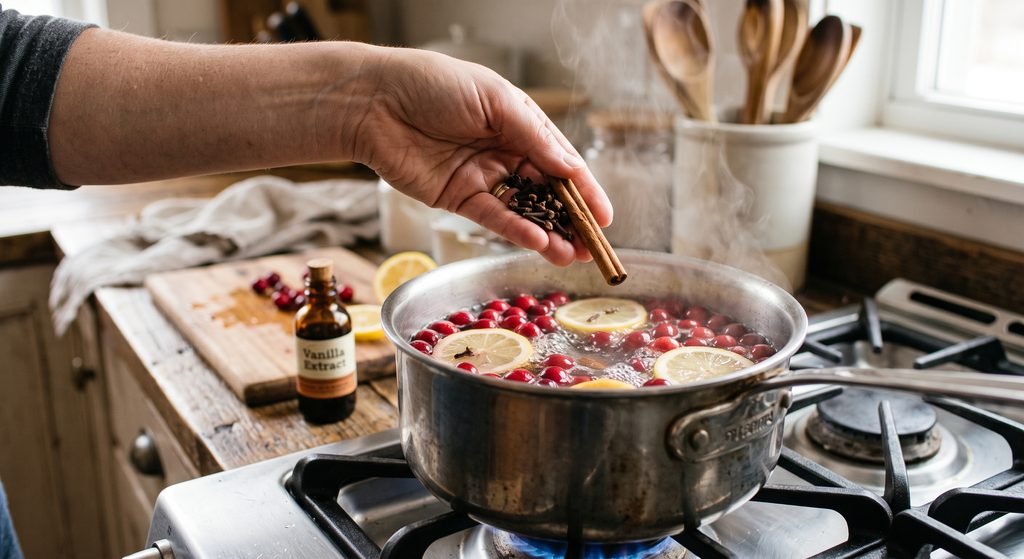
- 1 cup fresh cranberries
- 3 whole cinnamon sticks
- 1 orange, sliced
- 1 whole nutmeg seed
The Cozy Coffeehouse
If you love the aroma of a bustling café on a rainy morning but don’t actually want to drink another cup of coffee, this blend is warm, dark, and comforting.
- 1/4 cup whole roasted coffee beans
- 3 whole cinnamon sticks
- 1 tablespoon whole cardamom pods
- 1 teaspoon pure vanilla extract
How to Package Potpourri for Gifts
One of the greatest joys of making potpourri stovetop blends is sharing them. Dehydrated simmer pot kits make stunning, inexpensive, and highly thoughtful gifts for teachers, neighbors, coworkers, and holiday party hosts.
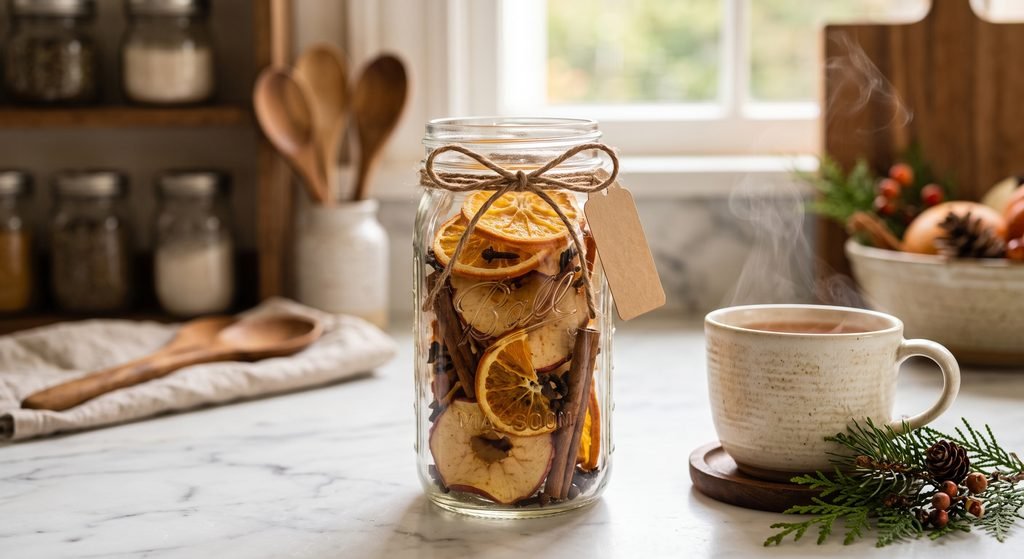
How to Dehydrate the Fruit: To make a gift jar, you cannot use fresh fruit, or it will mold. Preheat your oven to 200°F (95°C). Slice your apples, oranges, or lemons very thinly (about 1/4 inch thick). Lay them flat on a wire cooling rack set inside a baking sheet. Bake them for 2 to 3 hours, flipping them halfway through, until they are completely dry and no longer sticky to the touch. Let them cool completely.
Assembling the Jars: Take a clean glass mason jar and begin layering your ingredients. Start with a few dried apple rings, add a layer of dried orange slices, and drop in 3 whole cinnamon sticks. Sprinkle in a tablespoon of whole cloves and a few star anise pods.
The Finishing Touches: Seal the jar tightly with its lid. Tie a beautiful piece of twine or festive ribbon around the top. Attach a small, handwritten tag with these instructions: “Stovetop Potpourri: Empty contents into a saucepan. Cover with water and simmer on low heat. Add water as needed. Do not let boil dry!” These dry jars will stay fresh in a pantry for up to three months.
Storage and Reheating (Reusing Your Pot)
You do not need to throw your ingredients away after just one afternoon of simmering. Most whole spices and citrus peels contain enough essential oils to last for two to three separate uses.
How to Store After Use: When you are done enjoying the scent for the day, turn off the stove and let the pot cool down completely to room temperature. If your house is relatively cool, you can simply leave the pot sitting on the back of the stove overnight. If you prefer to clear your stovetop, or if you won’t use it again for a few days, carefully transfer the water and all the solid ingredients into a large glass jar or an airtight plastic container. Store it in the refrigerator for up to 5 days.
How to Reheat: The next day, pour the entire mixture (liquid and solids) back into your saucepan. You will notice the water is likely a deep brown or amber color from the spices—this is totally normal. Add an additional cup of fresh water to bring the level back up, and turn the heat back to a simmer. You may want to add one fresh slice of lemon or a fresh dash of vanilla extract to revive the top notes, but the heavy spices will continue to release their warmth. Once the fruit turns into complete mush and the scent is gone (usually by the third day), you can toss the solids into your compost bin.
Frequently Asked Questions
Can you drink the liquid from a stovetop potpourri? Absolutely not. While all the ingredients used are technically food-grade and safe, the resulting liquid is incredibly bitter and unpleasant. The boiling process extracts the harsh tannins from the whole spices and the bitter pith from the citrus rinds. It tastes akin to chewing on tree bark and soap. Keep this liquid strictly for fragrancing the air, not for sipping.
Are essential oils safe to add to the water? You can add a few drops of pure essential oils (such as sweet orange, peppermint, or cinnamon leaf) to boost the fragrance of your pot. However, you must exercise extreme caution if you have pets in the home. Many essential oils, particularly eucalyptus, tea tree, citrus, and pine, are highly toxic to dogs, cats, and birds when diffused into the air. Sticking to whole, natural foods is generally the safest route for pet owners.
What kind of pot is best to use? Any standard kitchen saucepan will work, but enameled cast iron (like a Le Creuset or Staub Dutch oven) is the gold standard because it holds and regulates low heat beautifully. Avoid using unlined aluminum or raw cast iron. The high acidity of boiling lemons, oranges, and cranberries can react with bare metal, potentially causing pitting or leaving a metallic smell in the air. Stainless steel, glass, or enameled pots are the best choices.
Why does my potpourri smell burnt instead of fragrant? If your house suddenly smells like burnt sugar or charred wood, it means the water level in your pot got too low and boiled completely dry. Without water, the natural sugars in the fruit and the dry spices will immediately stick to the bottom of the hot pan and scorch. Turn off the heat immediately, carefully move the pot to a cool burner, and let it cool completely before you try to scrub it clean.
Will this make my house smell like food permanently? No. Unlike deep-frying fish or roasting heavy garlic, the scents from a simmering pot are very light, clean, and volatile. The scent will linger beautifully for a few hours after you turn off the stove, but it will eventually dissipate. It will not permanently embed itself into your carpets, upholstery, or curtains.
Can I use old spices that have been in my pantry for years? Yes! This is one of the best reasons to make a simmer pot. It is the perfect way to use up those whole cloves, star anise, or cinnamon sticks that have been sitting in the back of your cupboard since you moved in. While they might be too stale or lacking in punch to use for baking a cake, the heat of the boiling water will still manage to extract plenty of beautiful fragrance out of them.
Do I need to peel the fruit first? Not at all. In fact, the skin and the rind are where the vast majority of the fragrant essential oils live. Simply wash the fruit briefly to remove any dirt or grocery store wax, slice it up, and throw the whole thing—seeds, core, peel, and all—straight into the water.
Final Thoughts
Transforming the atmosphere of your home does not require expensive room sprays, synthetic plug-ins, or luxury candles. By embracing the simple, old-fashioned art of making potpourri on the stovetop, you can create a warm, inviting environment that smells as comforting as it feels.
Whether you are trying to capture the spicy, baked-goods aroma of autumn, the crisp, woodsy freshness of winter, or the bright, clean citrus notes of spring, there is a simmering pot combination perfect for every single day of the year. The best part of this process is that there are no strict rules. Open up your pantry, see what spices, extracts, and fruit scraps you have available, and start experimenting. A gently bubbling pot on the stove is one of the simplest, most rewarding ways to make your house truly feel like a home.