
The Ultimate Guide to the Best Grilled Steak Recipes
There is a distinct, undeniable magic that happens when high-quality beef meets an open flame. The sound of the sizzle as the meat hits the hot grates, the intoxicating aroma of rendering fat, and the anticipation of that first perfectly charred, juicy bite—it is the quintessential American dining experience. Yet, despite how universally beloved a good steak is, many home cooks find the prospect of grilling one to be incredibly intimidating.
When you invest in a beautiful, expensive cut of meat, the pressure not to overcook it or ruin the crust can be overwhelming. Achieving a steakhouse-quality dinner in your own backyard is not about having a culinary degree or a luxury outdoor kitchen. It is about understanding a few fundamental principles of heat, salt, and patience.
Once you learn the simple science of dry-brining, the necessity of a two-zone fire, and the life-saving magic of an instant-read meat thermometer, you will never feel nervous standing over the grill again. Because the world of steak is wonderfully diverse, this guide provides a foundational master method for grilling thick-cut steaks, followed by three distinct, incredible recipe variations to cover every flavor profile you could possibly crave.
What Are Grilled Steak Recipes?
At their core, grilled steak recipes are methods designed to maximize the natural, robust flavors of beef through the application of intense, dry heat. Cooking over a fire triggers the Maillard reaction—a chemical reaction between amino acids and reducing sugars that gives browned food its distinctive, complex flavor.
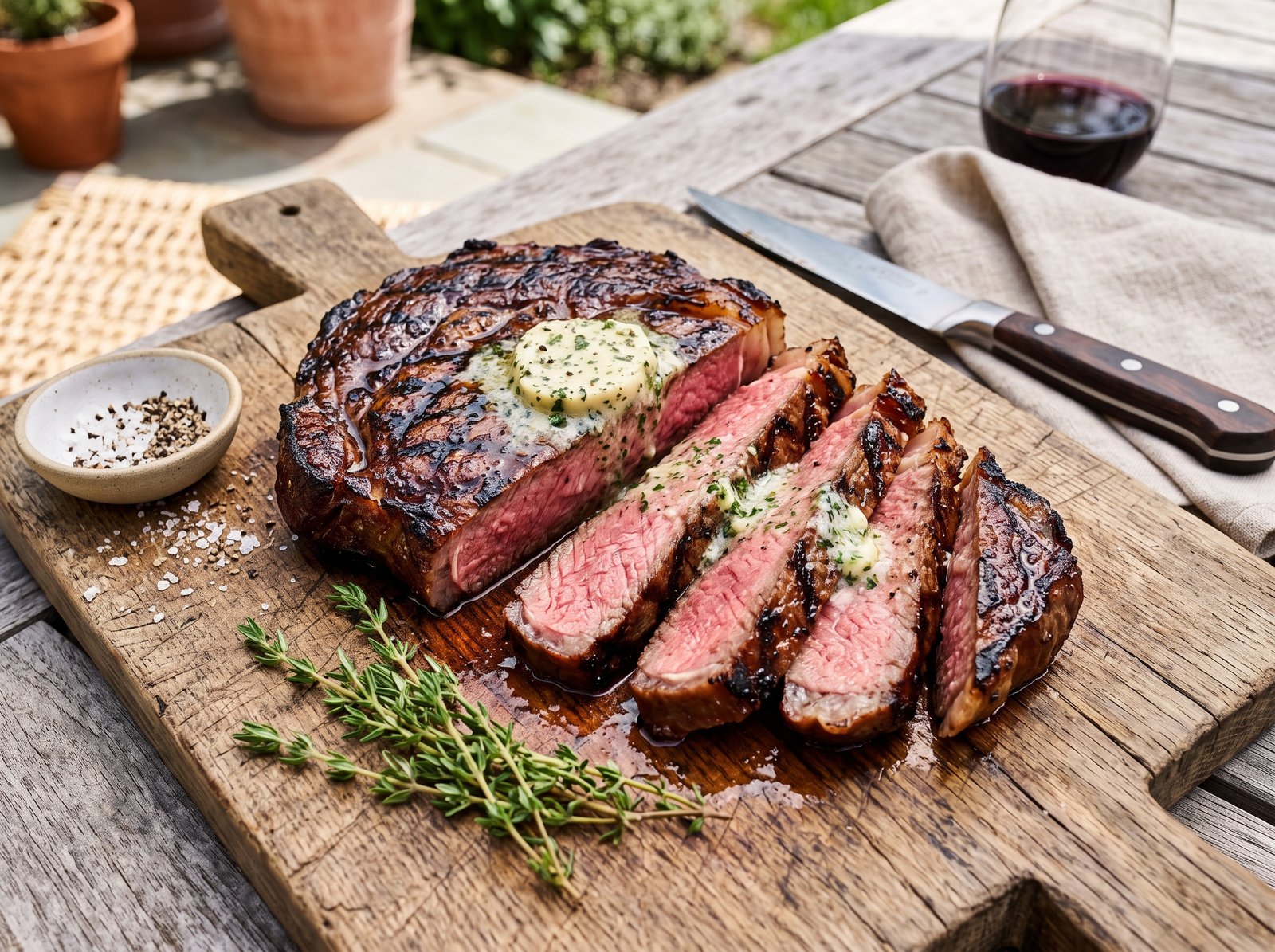
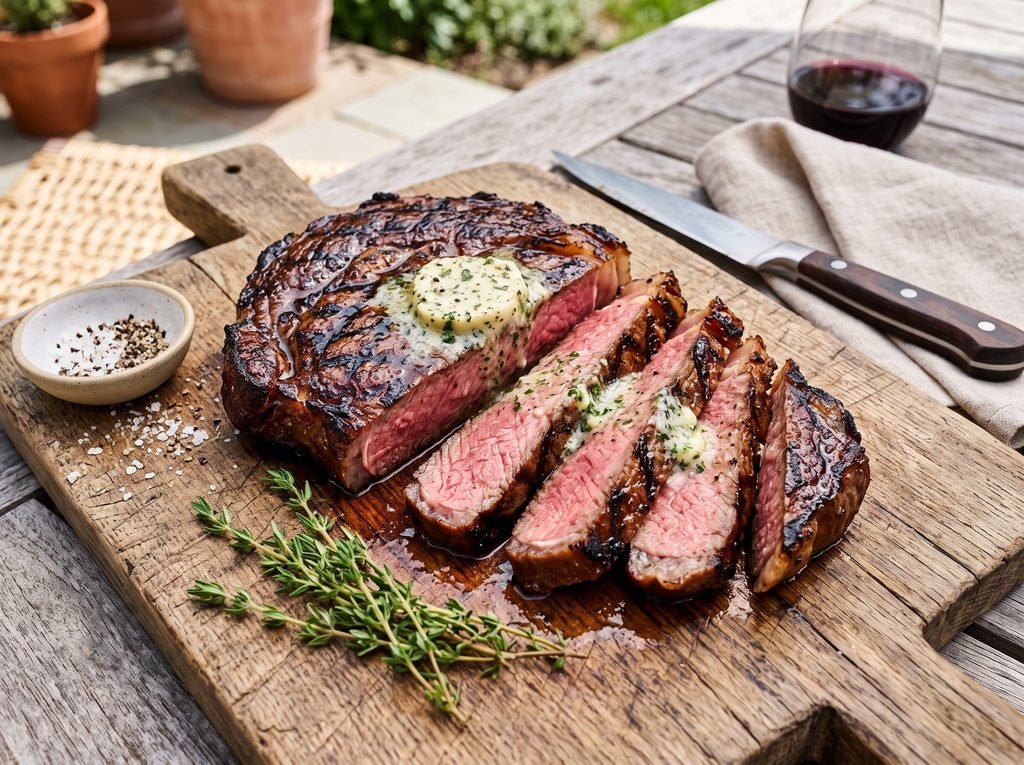
A perfectly grilled steak is an exercise in beautiful contrasts. On the outside, it should boast a dark, mahogany-brown crust with distinct grill marks and a slight, smoky char. On the inside, the steak should be edge-to-edge pink (or your preferred level of doneness), incredibly tender, and bursting with rich, beefy juices.
Different cuts of meat require entirely different recipes and approaches. A thick, highly marbled Ribeye thrives with nothing more than coarse salt, black pepper, and high heat. Conversely, a leaner, tougher cut like a Flank or Skirt steak benefits immensely from an acidic marinade and a fast, blistering sear. Understanding how to match the cut of beef to the correct recipe is the secret to mastering the grill.
Choosing the Right Cut for the Grill
Not all beef is created equal, and not every cut is suited for the grill. When shopping, look for USDA Prime or Choice grading, which indicates better marbling and tenderness.
- The Ribeye: The undisputed champion of the grill. Highly marbled with intramuscular fat, it melts down during cooking, naturally basting the meat from the inside out. It is incredibly flavorful, juicy, and forgiving.
- The New York Strip: Offers a fantastic balance of tenderness and robust beef flavor. It has a tighter texture than a ribeye and a thick fat cap along one edge. It delivers a profoundly satisfying, classic steakhouse chew.
- Top Sirloin: A lean, budget-friendly option that offers great beefy flavor. It requires careful temperature monitoring so it does not dry out, and should always be sliced against the grain.
- Flank and Skirt Steak: Long, flat, and fibrous cuts that pack a massive, beefy punch. They take marinades beautifully and require a very fast, extremely hot sear to prevent the center from overcooking while the outside chars.
Why You’ll Love This Method
- Foolproof Temperature Control: By utilizing a two-zone grilling method and a meat thermometer, we remove all the guesswork from the process.
- Maximum Flavor Development: Learning the technique of dry-brining ensures your steak is seasoned all the way to the center, not just on the surface.
- Endless Variety: With one master technique, you can easily pivot to different marinades, dry rubs, and finishing butters to keep your dinners exciting.
- Restaurant Quality at Home: You will save a massive amount of money by producing steaks that rival high-end steakhouses right in your own backyard.
Ingredients for the Master Grilled Steak
To execute the classic steakhouse method, you need very few ingredients. Quality is everything here.
- 2 Thick-Cut Steaks: (Ribeye or New York Strip, about 1.5 to 2 inches thick and 1 to 1.25 pounds each). Thin steaks will overcook before developing a crust.
- 1 tablespoon Kosher Salt: Diamond Crystal or Morton’s. Do not use standard table salt; its fine granules will make the meat aggressively salty.
- 1 tablespoon Freshly Cracked Black Pepper: Coarse grind creates a beautiful, textured crust.
- 1 teaspoon Garlic Powder: Adds a savory, earthy background note.
- 1 tablespoon Canola Oil or Avocado Oil: For lightly oiling the steaks. You need an oil with a high smoke point; extra virgin olive oil will burn and taste bitter over an open flame.
For the Classic Garlic Herb Compound Butter:
- 4 tablespoons (1/2 stick) Unsalted Butter: Softened to room temperature.
- 1 clove Garlic: Minced very finely.
- 1 tablespoon Fresh Parsley: Finely chopped.
- A pinch of Kosher Salt.
How to Make the Master Grilled Steak
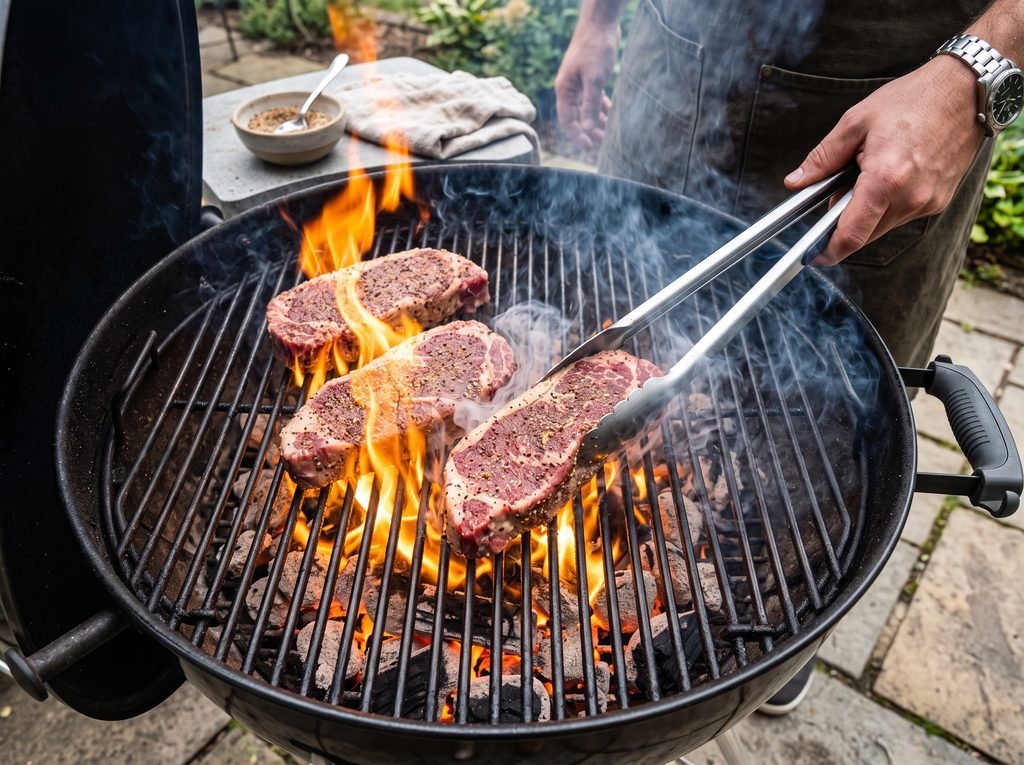
The key to a stress-free grilling experience is setting up a two-zone fire. This means having one side of your grill screaming hot for searing, and the other side at a lower, gentler temperature for finishing the cooking process.
Prep Time: 1 hour (for dry brining)
Cook Time: 15 minutes
Total Time: 1 hour 15 minutes
Servings: 2 to 4
Step 1: Dry Brine the Steaks
At least one hour before grilling (or up to 24 hours in advance), place your steaks on a wire rack set over a baking sheet. Pat them completely dry with paper towels. Season them aggressively on all sides, including the edges, with the kosher salt. Place them uncovered in the refrigerator. The salt will draw out moisture, dissolve, and pull back into the meat, seasoning it deeply while drying out the surface for a superior crust.
Step 2: Make the Compound Butter
Combine the softened butter, minced garlic, chopped parsley, and a pinch of salt in a small bowl. Mash everything together with a fork. Scrape the butter onto a piece of plastic wrap, roll it into a small log, and place it in the fridge to firm up.
Step 3: Temper and Season
Remove the steaks from the refrigerator 30 minutes before grilling to take the chill off the meat. Pat them dry one final time. Lightly rub the steaks with the canola or avocado oil. Season all sides with the coarse black pepper and garlic powder, pressing the spices gently into the meat.
Step 4: Prepare the Two-Zone Grill
- For a Gas Grill: Turn half of your burners to the absolute highest setting. Leave the other half of the burners completely off. Close the lid and preheat for 15 minutes.
- For a Charcoal Grill: Light a large chimney starter full of charcoal briquettes. Once covered in white ash, dump the coals exclusively onto one half of the charcoal grate. Leave the other half empty. Put the cooking grate in place and let it heat up for 5 minutes.
- Brush the hot grates clean with a grill brush.
Step 5: The Hard Sear
Place the steaks directly over the hottest part of the grill. Leave the lid open. Let the steaks sear undisturbed for 2 to 3 minutes until a dark, mahogany crust forms. Flip the steaks and sear the other side for another 2 to 3 minutes. If you get a massive flare-up from dripping fat, use tongs to temporarily move the steaks to the cool side until the flames die down.
Step 6: Finish on Indirect Heat
Move the seared steaks to the cool side of the grill. Close the lid. This allows the steaks to roast gently, bringing the internal temperature up without burning the exterior.
Step 7: Check the Temperature
After 3 to 4 minutes on the cool side, insert an instant-read meat thermometer into the thickest part of the steak. Pull the steaks off the grill when they are exactly 5 degrees below your target final temperature (see the temperature guide in the tips section below).
Step 8: The Crucial Rest
Transfer the steaks to a clean cutting board. Slice a generous medallion of your prepared garlic herb butter and place it directly on top of each hot steak so it melts. Tent the steaks loosely with aluminum foil and let them rest for 5 to 10 minutes. Serve whole, or slice against the grain.
Helpful Tips for the Best Results
- Understand Carryover Cooking: When you remove a steak from a hot grill, the intense heat trapped in the outer layers continues to travel inward. Your steak will rise in temperature by about 5°F while it rests. Always pull your steak 5 degrees early.
- Medium-Rare: Pull at 130°F (54°C) to rest to 135°F (57°C).
- Medium: Pull at 140°F (60°C) to rest to 145°F (63°C).
- Invest in a Thermometer: Poking the meat with your finger is inaccurate. A digital instant-read thermometer is the only guaranteed way to achieve perfect doneness.
- Never Press the Meat: Resist the urge to press down on the steak with your spatula. Pressing acts like a sponge, squeezing flavorful juices down into the fire and leaving the meat dry.
- Slice Against the Grain: When slicing, look for the direction of the muscle fibers (the grain). Cut perpendicular to these lines. This shortens the muscle fibers, making the meat significantly more tender to chew.
Variations and Substitutions: Three More Steak Recipes
While a thick Ribeye only needs salt and pepper, other cuts of beef welcome bold, creative flavor profiles. Here are three distinct recipes to expand your grilling repertoire.
Recipe 1: The Classic Steakhouse Marinade (Best for Sirloin or Flank)
Marinades break down tougher muscle fibers and infuse lean cuts with incredible flavor.
- The Marinade: In a bowl, whisk together 1/3 cup soy sauce, 1/3 cup olive oil, 3 tablespoons balsamic vinegar, 2 tablespoons Worcestershire sauce, 1 tablespoon Dijon mustard, and 4 cloves minced garlic.
- The Method: Place a 1.5-pound Flank steak or two Top Sirloin steaks into a zip-top bag and pour the marinade over the meat. Squeeze out the air and refrigerate for 4 to 12 hours. Wipe the excess marinade off before grilling to prevent flare-ups. Grill over direct, high heat for 4 to 5 minutes per side until nicely charred. Rest for 10 minutes, then slice very thinly against the grain.
Recipe 2: Spicy Southwestern Coffee Rub (Best for New York Strip)
Coffee acts as an incredible tenderizer and provides an earthy, bitter contrast to the rich fat of a New York Strip.
- The Rub: Mix 2 tablespoons finely ground dark roast coffee (or espresso powder), 1 tablespoon dark brown sugar, 1 tablespoon smoked paprika, 1 tablespoon kosher salt, 1 teaspoon black pepper, and 1/2 teaspoon cayenne pepper.
- The Method: Pat your steaks completely dry. Rub them generously with a small amount of avocado oil, then pack the coffee rub tightly onto all sides of the meat. Grill using the master two-zone method described above. The brown sugar will caramelize with the coffee to create an unbelievable, slightly spicy bark.
Recipe 3: Chimichurri Skirt Steak (Fast and Fresh)
Skirt steak is intensely beefy but very thin. It requires a blistering hot, rapid sear and pairs perfectly with bright, acidic sauces.
- The Chimichurri Sauce: In a food processor, pulse 1 cup packed fresh parsley, 1/4 cup fresh cilantro, 2 cloves garlic, 1/4 cup red wine vinegar, 1/2 cup olive oil, 1/2 teaspoon red pepper flakes, and a heavy pinch of salt until finely chopped but not completely pureed.
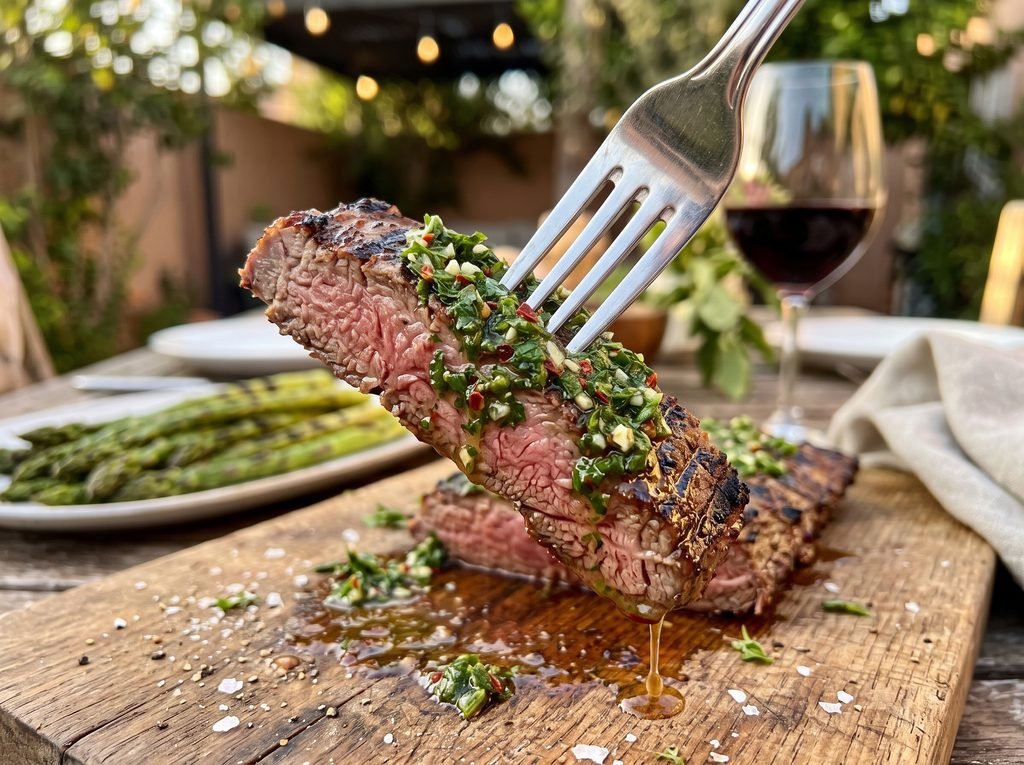
- The Method: Season a 1.5-pound skirt steak heavily with kosher salt and black pepper. Get your grill as hot as it will possibly go. Sear the steak over direct heat for just 2 to 3 minutes per side. Pull it off at 130°F (54°C). Rest for 5 minutes, slice thinly against the grain, and spoon the vibrant green chimichurri generously over the top.
What to Serve With It
A great grilled steak demands side dishes that are classic, flavorful, and capable of cutting through the richness of the beef.
- Grilled Asparagus: Toss thick spears of asparagus in olive oil, salt, and pepper, and grill them over direct heat for 3 to 4 minutes until slightly charred and tender-crisp.
- The Ultimate Baked Potato: Serve a fluffy Russet potato loaded with butter, sour cream, sharp cheddar cheese, crispy bacon bits, and fresh chives.
- Classic Wedge Salad: A cold, crisp quarter of iceberg lettuce topped with creamy blue cheese dressing, cherry tomatoes, red onions, and bacon crumbles provides a sharp, refreshing contrast to the hot beef.
- Garlic Bread: Thick slices of sourdough slathered in garlic butter and toasted on the cool side of the grill until golden brown.
Storage and Reheating
Leftover high-quality steak is a terrible thing to waste, but it is very easy to ruin during the reheating process.
- To Store: Allow the leftover steak to cool to room temperature. Wrap it tightly in aluminum foil or place it in an airtight container. Store in the refrigerator for up to 3 days.
- Serve it Cold: Leftover steak is fantastic eaten cold. Slice it thinly and serve it over a large green salad with a sharp vinaigrette, or tuck it into a toasted baguette for a hearty steak sandwich.
- To Reheat (The Oven-to-Pan Method): Never microwave a good steak; it will instantly turn it rubbery and gray. Place the steak on a wire rack over a baking sheet and heat it in a 250°F (120°C) oven for about 10 to 15 minutes, just until warmed through. Then, get a skillet screaming hot with a tiny drop of oil, and quickly sear the steak for 30 seconds per side to re-crisp the crust.
Frequently Asked Questions
Should I use a gas or charcoal grill? Both produce fantastic results, but they offer different advantages. Gas grills are unmatched for convenience, speed, and precise temperature control. Charcoal grills take more time and effort to set up, but they provide a distinct, authentic wood-smoke flavor that a gas grill simply cannot replicate. The two-zone setup works perfectly for both.
Is it true you should only flip a steak once? This is a long-standing grilling myth. While flipping it only once (leaving it alone for 4 minutes per side) guarantees distinct crosshatch grill marks, flipping the steak multiple times (every 60 seconds) actually helps the meat cook more evenly from edge to edge and can result in an even better, more uniform crust.
What is the “Reverse Sear” method? The reverse sear is essentially flipping the traditional grilling method backward. Instead of searing first, you start the steak on the cool, indirect heat side of the grill, cooking it very slowly until it reaches about 115°F (46°C). Then, you move it to the screaming hot direct heat side for just 1 minute per side to create the crust. This method guarantees a perfectly even, edge-to-edge pink interior without any gray bands of overcooked meat near the crust. It is highly recommended for steaks that are over 2 inches thick.
Should I oil the grill grates or the steak? It is best to lightly oil both. Brushing a light coat of high-heat oil directly onto the steak ensures that the seasoning sticks and gives the crust a jumpstart in the browning process. Quickly wiping the hot grill grates with an oiled paper towel right before putting the meat down creates a temporary non-stick surface, ensuring your steak releases easily without tearing.
How long does a steak really need to rest? The resting time depends on the size of the steak. For a standard 1.5-inch thick ribeye or strip, 5 to 10 minutes is ideal. For a massive Tomahawk steak, it may need up to 20 minutes. Resting allows the super-heated, rapidly moving juices inside the meat to cool slightly, thicken, and redistribute throughout the muscle fibers. If you cut into a steak immediately off the grill, those juices will flood your cutting board, leaving the meat dry.
Why is my grilled steak tough and chewy? Tough steak usually stems from three common errors: purchasing a low-quality or inherently tough cut of meat, overcooking the meat past medium (which tightens the muscle fibers and squeezes out the juices), or forgetting to slice the meat against the grain.
Can I grill a frozen steak? Surprisingly, yes. Grilling a steak straight from the freezer actually prevents the center from overcooking while you build a crust. You will need to sear it over high heat, then move it to the indirect heat zone for significantly longer than a thawed steak, seasoning it only after the surface has thawed on the grill. However, for the absolute best texture and flavor penetration, starting with a properly thawed and dry-brined steak is vastly superior.
Final Thoughts
Mastering the art of the perfect grilled steak is one of the most rewarding culinary skills you can develop. It transforms your backyard into the best steakhouse in town and gives you the confidence to cook premium cuts of beef without the fear of ruining them.
By taking the time to dry-brine your meat, utilizing the precision of a two-zone fire, and relying on a digital thermometer rather than guesswork, you guarantee a flawless result every single time. Whether you choose the purist approach with a thick Ribeye, or experiment with a spicy coffee rub or a bright chimichurri sauce, these foundational techniques will serve you well. Fire up the grill, embrace the smoke, and get ready to enjoy a steak that is charred to perfection on the outside and unbelievably tender on the inside.