
The Ultimate Guide to Homemade Cheese Soup Recipes
There is a profound, universal comfort found at the bottom of a steaming, velvety bowl of cheese soup. When the temperatures drop and the skies turn gray, our bodies naturally crave meals that provide warmth and rich, stick-to-your-ribs satisfaction. While a simple grilled cheese sandwich paired with tomato soup is a nostalgic classic, taking that sharp, savory, melty cheese and transforming it into the soup itself is a completely elevated culinary experience.
A properly made cheese soup is a masterpiece of texture and flavor. It is luxurious but unpretentious, rich but balanced, and surprisingly simple to master in your own kitchen. Whether you are craving a Panera-style broccoli cheddar, a robust Wisconsin-style beer cheese soup for game day, or a spicy jalapeño and bacon blend, the foundation remains the same. Once you understand the basic science of melting cheese into a savory broth without it breaking or turning grainy, a whole world of cozy autumn and winter dinners opens up to you.
In this comprehensive guide, we are focusing on a master recipe for the undisputed king of the category: The Ultimate Broccoli Cheddar Cheese Soup. From there, we will explore how to tweak this foundational method to create three other distinct, incredible cheese soup recipes, giving you a full arsenal of comforting meals for the season. Let us dive into the simple techniques that will make your homemade cheese soup better than any restaurant version.
What Is Cheese Soup?
At its core, cheese soup is exactly what it sounds like: a rich, broth-and-dairy-based soup where cheese is the primary flavoring and thickening agent. The concept has roots in classic French culinary techniques. It essentially begins as a velouté or a béchamel sauce—a combination of butter and flour (a roux) whisked with broth and milk. When you melt a massive amount of cheese into that thickened base, it becomes a mornay sauce. Thin that sauce out with a bit more chicken or vegetable stock, add some aromatics and vegetables, and you have cheese soup.
In the United States, cheese soup has a deep regional history, particularly in the Midwest. Wisconsin, famously known as America’s Dairyland, popularized the hearty Beer Cheese Soup, a staple in taverns and pubs during the freezing winter months. Fast-casual bakeries and cafes later popularized the Broccoli Cheddar variation, turning it into a nationwide phenomenon.
The beauty of any cheese soup lies in the emulsion. The goal is to bind the dairy fats, the liquid broth, and the proteins in the cheese into one seamless, silky liquid. When done correctly, it is smooth, opaque, and coats the back of a spoon beautifully.
Why You’ll Love This Recipe
- Ready in 30 Minutes: Despite its complex flavor and luxurious texture, this soup comes together incredibly fast. Because the vegetables are chopped small, they cook in minutes, making this a realistic option for busy weeknights.
- One-Pot Wonder: From sautéing the aromatics to building the roux and melting the cheese, everything happens in a single Dutch oven or heavy-bottomed pot.
- Better Than the Restaurant: Restaurant versions often rely on artificial thickeners, excess sodium, and processed cheese products to keep the soup stable for hours on a steam table. Making it at home means you use 100% real, sharp cheddar cheese and fresh cream.
- Highly Adaptable: Once you learn the base recipe, you can effortlessly swap out the vegetables, change the liquid (using beer instead of broth), or mix up the cheese varieties to create an entirely new meal.
- Incredibly Filling: Packed with dairy protein, hearty vegetables, and rich fats, a single bowl is a complete, satisfying meal, especially when paired with a chunk of crusty bread.
Ingredients
To achieve a perfectly smooth, deeply flavorful soup, ingredient quality is paramount. Here is what you need for the master Broccoli Cheddar recipe:
- 1/4 cup (55g) Unsalted Butter: Used to sauté the vegetables and create the base of the roux.
- 1 medium Yellow Onion: Finely diced. This provides the sweet, aromatic background.
- 2 medium Carrots: Julienned or grated. They add a pop of color, subtle sweetness, and a slight crunch.
- 3 cloves Garlic: Minced. Fresh garlic cuts through the heavy dairy.
- 1/4 cup (30g) All-Purpose Flour: The thickening agent that gives the soup its body and stabilizes the emulsion.
- 2 cups (470ml) Low-Sodium Chicken Broth: Using low-sodium is crucial because the cheese will add a significant amount of salt to the final dish. (You can use vegetable broth to make it vegetarian).
- 2 cups (470ml) Half-and-Half: You can also use 1 cup of whole milk and 1 cup of heavy cream. This provides the necessary milk fats to keep the soup creamy.
- 3 cups (250g) Fresh Broccoli Florets: Chopped into very small, bite-sized pieces.
- 8 ounces (225g) Sharp Cheddar Cheese: Freshly grated from a block. Do not buy pre-shredded cheese.
- 1/2 teaspoon Dry Mustard Powder: This is the secret ingredient. Mustard powder is an emulsifier that helps the cheese melt smoothly and drastically enhances the sharp cheddar flavor without making the soup taste like mustard.
- 1/2 teaspoon Smoked Paprika: Adds a very subtle warmth and depth.
- Kosher Salt and Freshly Cracked Black Pepper: To taste.
The Importance of Grating Your Own Cheese
If you take away only one tip from this guide, let it be this: never use pre-shredded bagged cheese for soup. Commercial shredded cheeses are coated in anti-caking agents like cellulose or potato starch to prevent them from clumping in the bag. When introduced to a hot liquid, those starches refuse to melt properly, resulting in a gritty, grainy soup. Take the extra three minutes to grate a fresh block of sharp cheddar; the texture will be infinitely silkier.
How to Make The Ultimate Broccoli Cheddar Cheese Soup
Follow these steps carefully, paying special attention to the temperature of your stove when adding the dairy and cheese.
Prep Time: 15 minutes
Cook Time: 20 minutes
Total Time: 35 minutes
Servings: 4 to 6
Step 1: Sauté the Aromatics
Place a large Dutch oven or a heavy-bottomed soup pot over medium heat. Add the unsalted butter. Once the butter is melted and foaming, add the finely diced onion. Sauté for about 4 to 5 minutes until the onion is translucent and soft. Add the grated carrots and minced garlic, and cook for 1 additional minute until the garlic is fragrant.
Step 2: Build the Roux
Sprinkle the all-purpose flour evenly over the sautéed vegetables. Use a wooden spoon to stir the flour into the butter, coating the vegetables completely. Cook this mixture for 1 to 2 minutes, stirring constantly. The flour will look like a thick paste and smell slightly nutty. This step cooks off the raw flour taste.
Step 3: Add the Liquids
Slowly pour in the chicken broth, about half a cup at a time, whisking constantly to dissolve the flour paste into the liquid and prevent lumps from forming. Once all the broth is incorporated, slowly whisk in the half-and-half (or milk and cream mixture).
Step 4: Season and Simmer
Stir in the dry mustard powder, smoked paprika, a pinch of black pepper, and the finely chopped broccoli florets. Increase the heat slightly to bring the liquid to a very gentle simmer—do not let it come to a rolling boil. Once it begins to bubble gently, reduce the heat to medium-low, cover the pot, and let it simmer for 10 to 12 minutes, or until the broccoli is fork-tender.
Step 5: Thicken and Puree (Optional)
Once the broccoli is tender, the soup will have thickened slightly. If you prefer a chunkier soup, leave it as is. If you prefer a smoother texture, use an immersion blender to pulse the soup 3 or 4 times. Do not completely puree it; you still want some texture from the broccoli and carrots.
Step 6: Melt the Cheese Off the Heat
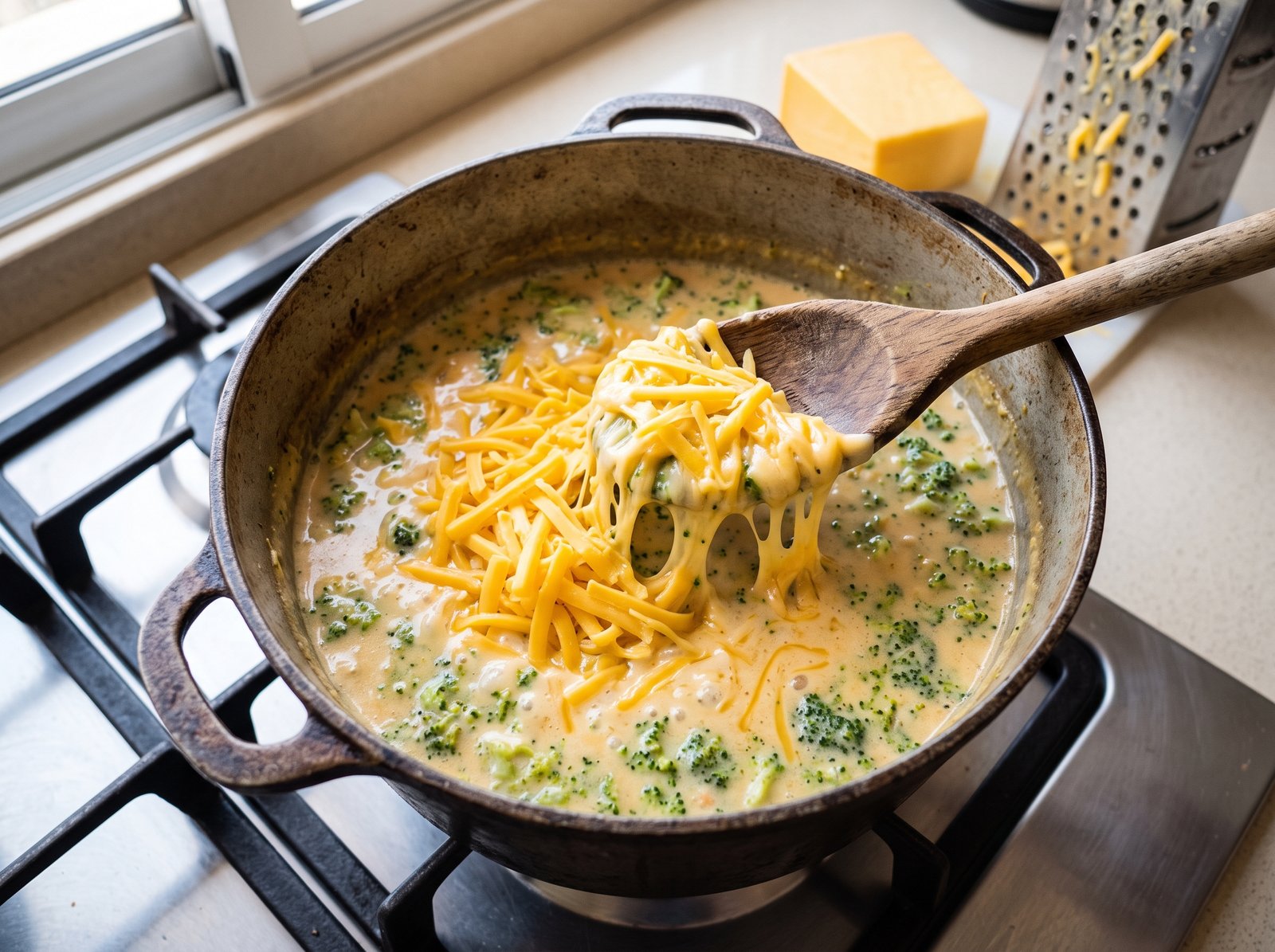
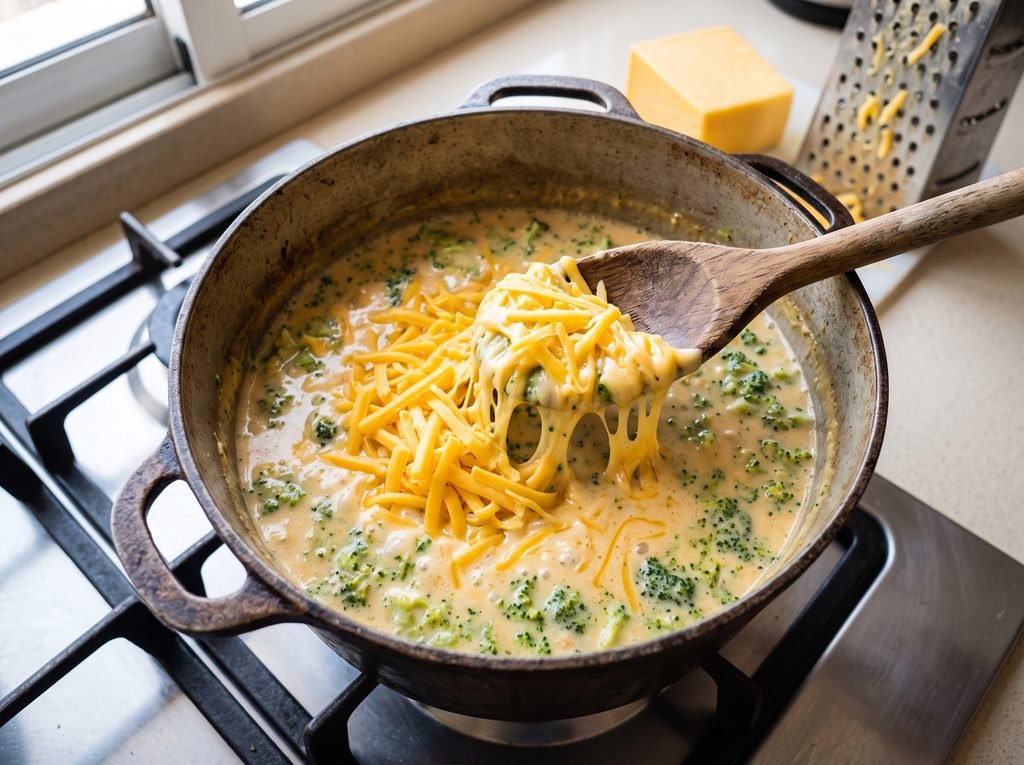
This is the most critical step. Remove the pot from the hot burner entirely. Let the soup sit for about one minute so it is no longer actively simmering. Gradually add your freshly grated sharp cheddar cheese, a handful at a time, stirring gently in a figure-eight motion until the cheese is completely melted before adding the next handful.
Step 7: Taste and Serve
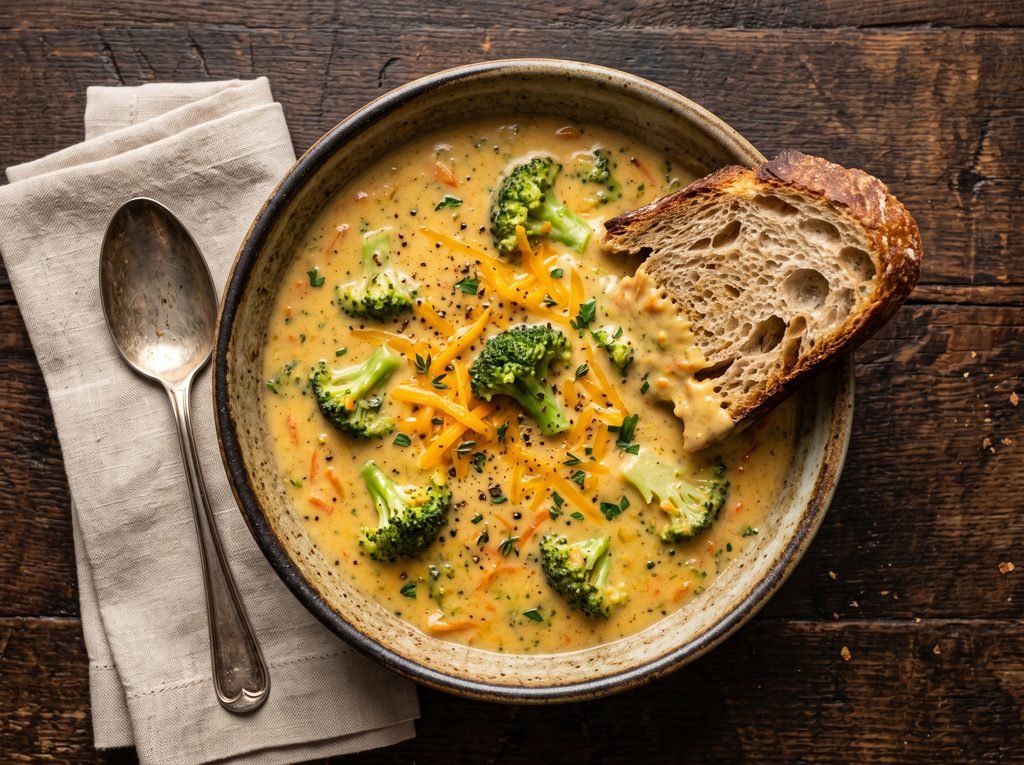
Once all the cheese is incorporated, the soup should be thick, glossy, and smooth. Taste it. Because cheddar and broth contain salt, you should only add extra Kosher salt at the very end if needed. Ladle immediately into warm bowls.
Helpful Tips for the Best Results
- Temperature Control is Everything: Cheese proteins are incredibly delicate. If you add cheese to a boiling liquid, or if you continue to boil the soup after the cheese is added, the proteins will tighten and squeeze out their fats. This leaves you with a broken, oily broth and stringy clumps of rubbery cheese. Always remove the pot from the heat before adding your cheese.
- Chop the Broccoli Small: You want the soup to be easy to eat with a spoon. Huge florets of broccoli make the soup messy and difficult to enjoy. Chop the florets into pieces no larger than a dime.
- Room Temperature Dairy: If you pour ice-cold milk directly into a hot roux, it can shock the flour and cause lumps. Measure out your half-and-half before you start chopping your vegetables so it can take the chill off before it hits the pan.
- Use a Mix of Cheeses: While sharp cheddar is the classic choice, you can add incredible depth by using 6 ounces (170g) of sharp cheddar and 2 ounces (55g) of Gruyère or a touch of freshly grated Parmesan.
Variations and Substitutions: Three More Cheese Soup Recipes
Once you have mastered the roux and the cheese-melting technique, you can easily pivot this base recipe to create entirely different flavor profiles. Here are three incredibly popular variations:
1. Classic Wisconsin Beer Cheese Soup
This tavern favorite is robust, deeply savory, and perfect for cold game days.
- The Swap: Omit the broccoli. Swap 1 cup of the chicken broth for 1 cup (8 fluid ounces) of a good quality beer. A malty amber ale or a light lager works best; avoid heavy stouts or overly bitter IPAs.
- The Cheese: Use a blend of 6 ounces (170g) sharp yellow cheddar and 2 ounces (55g) Gruyère.
- The Method: Sauté the onions, carrots, and celery in butter. Build your roux, then deglaze the pan with the beer, allowing it to bubble and reduce for 2 minutes to cook off the raw alcohol. Add the remaining broth and dairy, simmer for 10 minutes to thicken, remove from heat, and stir in the cheese. Garnish with crumbled bacon and serve with soft pretzels.
2. Spicy Jalapeño Popper Cheese Soup
If you love the rich, spicy bite of a stuffed jalapeño, this soup translates those exact flavors into a bowl.
- The Swap: Omit the broccoli and carrots. Add 3 fresh jalapeños (seeded and finely diced) to the onions during the initial sauté.
- The Cheese: Swap the cheddar for a mix of 4 ounces (115g) Monterey Jack cheese, 4 ounces (115g) Pepper Jack cheese, and 2 ounces (55g) of softened cream cheese.
- The Method: Cook 4 slices of thick-cut bacon in the pot first. Remove the crispy bacon, leave the bacon fat in the pot, and add a little butter to make up the 1/4 cup of fat needed for the roux. Sauté the onions and jalapeños, build the roux, add the liquids, and simmer. Remove from heat, whisk in the cream cheese until smooth, then stir in the grated Jack cheeses. Top with the crumbled bacon.
3. Roasted Cauliflower and Smoked Gouda Soup
This is an elegant, elevated, slightly smoky take on cheese soup that feels right at home at a dinner party.
- The Swap: Swap the broccoli for a head of roasted cauliflower. Toss cauliflower florets in olive oil and roast at 400°F (200°C) for 20 minutes until caramelized.
- The Cheese: Use 8 ounces (225g) of freshly grated Smoked Gouda. (Make sure to cut away the wax rind before grating).
- The Method: Build the soup base with onions, a pinch of fresh thyme, and garlic. Add the liquids and simmer. Add the roasted cauliflower to the hot broth, then use an immersion blender to puree the soup until it is completely smooth and velvety. Remove from heat and stir in the smoked Gouda until melted.
What to Serve With It
Cheese soup is incredibly rich and heavy, so the best accompaniments offer either a structural vessel for dipping or an acidic contrast to cleanse the palate.
- Bread Bowls or Crusty Bread: The ultimate pairing. A hollowed-out sourdough boule or a thick slice of toasted French baguette is mandatory for wiping the bowl clean.
- Soft Pretzels: Particularly if you are making the Beer Cheese variation, warm, salted soft pretzels are a match made in heaven.
- A Sharp, Crisp Salad: An arugula salad dressed simply with a bright lemon vinaigrette and shaved red onions provides the perfect sharp, acidic contrast to the heavy dairy in the soup.
- Roasted Potatoes: Serving a side of crispy roasted baby potatoes allows you to dip them directly into the cheese soup, acting almost like a fondue.
Storage and Reheating
Proper storage and very careful reheating are the keys to keeping leftover cheese soup from breaking and separating.
- To Store: Allow the soup to cool until it is no longer steaming. Transfer it to an airtight container and store it in the refrigerator for up to 4 days. The soup will thicken significantly as it chills in the fridge, almost taking on the texture of a thick dip.
- To Reheat on the Stovetop (Highly Recommended): Transfer the cold soup to a saucepan. Add a splash of milk or chicken broth to help loosen the thick texture. Heat over medium-low heat, stirring constantly, until gently warmed through. Do not let it boil. Heating it slowly prevents the cheese fats from separating from the liquid.
- To Reheat in the Microwave: Place a portion in a microwave-safe bowl. Heat on 50% power in 45-second increments, stirring thoroughly between each interval, until hot. High heat in a microwave will instantly curdle dairy.
- Can I Freeze Cheese Soup? Freezing is not recommended. Cream and cheese-heavy soups do not fare well in the freezer. When thawed and reheated, the emulsion almost always breaks, leaving you with a grainy, separated, and unpleasant texture. It is best enjoyed fresh or from the refrigerator.
Frequently Asked Questions
Why did my cheese soup turn out grainy? A grainy texture is caused by one of two things: either you used pre-shredded cheese from a bag (which contains anti-caking starches that do not melt), or the soup was too hot when you added the cheese. If the liquid is actively boiling, the cheese proteins seize and clump together, creating a gritty mouthfeel. Always use freshly grated cheese and always remove the pot from the heat before stirring it in.
How can I fix a cheese soup that is too thin? If you have already added the cheese and find the soup is too thin, do not add raw flour, and do not put it back on a high boil. Instead, mix 1 tablespoon of cornstarch with 1 tablespoon of cold milk in a small bowl until smooth (a slurry). Gently heat the soup over low, stir in the slurry, and cook for 3 to 4 minutes until it thickens.
Can I make cheese soup vegetarian? Absolutely. Simply swap the chicken broth for a high-quality, low-sodium vegetable broth or stock. Ensure that the specific brand of cheese you purchase uses microbial rennet rather than animal rennet.
Is dry mustard powder really necessary? Yes. While you can technically make the soup without it, dry mustard powder acts as a chemical emulsifier, helping the fats and liquids bind together smoothly. Furthermore, mustard naturally amplifies the tangy, savory notes of cheddar cheese, making the soup taste much more robust without adding a distinct “mustard” flavor.
Can I use half-and-half or milk instead of heavy cream? The master recipe calls for half-and-half, which strikes the perfect balance. You can use 2 cups of whole milk for a slightly lighter soup, but avoid using skim or 1% milk. Low-fat milks do not have enough fat to keep the soup stable, and they are much more likely to curdle when heated.
My soup broke and separated into an oily mess. Can I save it? Once an emulsion breaks, it is very difficult to bring back. However, you can try this chef’s trick: remove the pot from the heat. Vigorously whisk in a tablespoon of very cold heavy cream, or use an immersion blender to forcefully pulse the soup. Sometimes, the rapid mechanical action and the shock of cold fat can force the emulsion back together.

Final Thoughts
Mastering a few incredible cheese soup recipes is one of the smartest things you can do for your autumn and winter culinary repertoire. It is a dish that manages to feel nostalgic and rustic, yet utterly indulgent and luxurious all at once. By respecting a few simple rules of science—taking the time to make a proper roux, grating your own high-quality cheese, and keeping the heat low and gentle—you guarantee a flawless, velvety result every single time.
Whether you are seeking the vegetable-packed comfort of a classic Broccoli Cheddar, throwing together a robust Wisconsin Beer Cheese for a Sunday football game, or exploring spicy, smoky variations, these techniques will serve you perfectly. Grab your favorite heavy pot, pick up a sharp block of cheddar, and get ready to enjoy the most comforting bowl of soup you can possibly make in your own kitchen.