

The Ultimate Guide to Campbell’s Cheddar Cheese Soup: Best Uses, Tips, and a Homemade Copycat Recipe
Walk down the soup aisle of any American grocery store, and you will find an iconic red and white label that has been a secret weapon in home kitchens for generations. Campbell’s condensed cheddar cheese soup is far more than just a quick lunch to heat up on a chilly afternoon. In fact, most home cooks rarely eat it out of a bowl. Instead, this thick, vibrant, and savory pantry staple is the ultimate culinary shortcut—a pre-made, stabilized cheese sauce waiting to transform your weeknight dinners.
Whether you are trying to bind a comforting hash brown casserole, whip up a creamy macaroni and cheese in record time, or add a rich dairy element to a plate of steamed vegetables, this canned soup is a workhorse. It offers the velvety texture of a traditional mornay sauce without the need to stand over the stove whisking a roux.
Understanding how to properly utilize this ingredient can drastically cut down your dinner prep time. And if you ever find yourself midway through a recipe only to discover you are out of your favorite canned shortcut, knowing how to quickly whip up a homemade substitute from scratch is a game-changer. This comprehensive guide covers everything you need to know about cooking with Campbell’s cheddar cheese soup, from classic casserole applications to the ultimate homemade copycat recipe.

What Is Campbell’s Condensed Cheddar Cheese Soup?
At its core, a condensed soup is exactly what it sounds like: a soup from which most of the water has been removed. When you open a can of Campbell’s cheddar cheese soup, you are not met with a sloshing liquid. Instead, you find a thick, paste-like concentrate. To eat it as a traditional soup, the manufacturer instructs you to reconstitute it by adding one full can of milk or water.
However, its condensed nature is precisely what makes it so valuable as an ingredient rather than a standalone meal. In classic French cooking, creating a cheese sauce requires making a béchamel (butter, flour, and milk) and melting cheese into it to create a mornay. Campbell’s has essentially done this work for you and canned it. The soup contains cheese, milk, wheat flour, and stabilizing ingredients that keep the emulsion from breaking.
Because it is industrially stabilized, it is highly resistant to “breaking” or separating under high heat. If you have ever tried to bake a casserole with a homemade cheese sauce only to have it emerge from the oven as a greasy, grainy mess, you understand how delicate cheese proteins can be. The canned soup eliminates this variable, providing a foolproof, smooth texture every single time.
Why You’ll Love Cooking With This Pantry Staple
There is a reason this specific variety of soup makes an appearance in countless mid-western church cookbooks and family recipe cards. Here is why keeping a few cans in your pantry is a brilliant strategy for home cooking:
- Unmatched Convenience: It eliminates the need to measure butter and flour, cook a roux, temper milk, and grate blocks of cheese just to get a creamy base for a weeknight bake.
- Heat Stability: The soup acts as an incredible binder in baked dishes. It holds potatoes, pasta, and vegetables together beautifully without curdling in a 350°F oven.
- Versatile Flavor Profile: While it clearly tastes like cheddar, it is mild enough that it won’t overpower the other ingredients in your dish. It plays just as nicely with spicy jalapeños and Mexican-style chorizo as it does with mild broccoli and chicken.
- Texture Enhancement: Stirring a few spoonfuls of the undiluted soup into ground beef for sloppy joes or meatloaf adds incredible moisture and a savory depth of flavor that dry breadcrumbs simply cannot provide.
5 Classic Ways to Use Campbell’s Cheddar Cheese Soup
If you have a can sitting in your cupboard and need some inspiration, here are the most popular and effective ways to incorporate it into your cooking.
1. The Ultimate Macaroni and Cheese Shortcut
For a creamy stovetop mac and cheese that takes no longer than the boxed stuff, boil half a pound of elbow macaroni. Drain the pasta, return it to the warm pot, and stir in one can of the condensed cheese soup along with half a cup of whole milk and a handful of shredded sharp cheddar. The hot pasta will heat the sauce, resulting in an incredibly thick, rich macaroni and cheese in under ten minutes.
2. Hash Brown Casserole (Funeral Potatoes)
This is perhaps the most famous application. Combine a bag of thawed frozen hash browns, a cup of sour cream, half a cup of melted butter, and one can of cheddar cheese soup. Spread the mixture into a 9×13-inch baking dish, top with crushed cornflakes mixed with a little more butter, and bake until bubbly. The soup binds the potatoes and sour cream together into a rich, cohesive side dish.
3. Quick Queso Dip
When you need a party dip at the last minute, combine one can of the cheese soup with one can of diced tomatoes and green chilies (like Rotel). Heat the mixture gently on the stove or in the microwave until smooth and bubbly. Serve with sturdy tortilla chips. The stabilizers in the soup keep the dip perfectly smooth, even as it cools down on the snack table.
4. Broccoli and Cauliflower Gratin
Getting picky eaters to consume vegetables is much easier when they are blanketed in a rich cheese sauce. Steam fresh broccoli and cauliflower florets until just tender. Place them in a baking dish, pour a can of undiluted cheese soup over the top, sprinkle with crispy fried onions or buttery breadcrumbs, and bake until golden brown.
5. Creamy Chicken Enchiladas
Instead of a traditional red chili sauce, use the cheese soup as a base for a creamy Tex-Mex sauce. Whisk one can of the soup with half a cup of sour cream and a tablespoon of taco seasoning. Pour this rich mixture over rolled chicken enchiladas, top with extra shredded cheese, and bake.
How to Make a Homemade Copycat Cheddar Cheese Soup
Sometimes a recipe calls for a can of soup, but your pantry is bare. Or, perhaps you prefer to cook entirely from scratch to avoid artificial preservatives, colors, and excess sodium. This quick, 10-minute homemade substitute yields the exact equivalent of one 10.5-ounce can of Campbell’s cheddar cheese soup. It is thick, rich, and perfect for folding into casseroles.
Prep Time: 5 minutes Cook Time: 5 minutes Total Time: 10 minutes Yield: 1 ¼ cups (Equivalent to one 10.5-ounce can)
Ingredients
- 3 tablespoons Unsalted Butter: Forms the base of our roux.
- 3 tablespoons All-Purpose Flour: Thickens the mixture to that classic “condensed” consistency.
- 1 cup Whole Milk: Provides the necessary liquid and dairy richness. Do not use skim milk, or the sauce will be too thin.
- 1/4 teaspoon Dry Mustard Powder: The secret ingredient. It acts as a flavor enhancer that makes the cheese taste sharper and more robust.
- 1/4 teaspoon Onion Powder: Adds savory depth similar to the canned version.
- 1/4 teaspoon Salt: Adjust to taste, depending on the saltiness of your cheese.
- 1 cup Sharp Cheddar Cheese (about 4 ounces), freshly grated: Always grate your own block cheese for the smoothest melt.
Step-by-Step Instructions
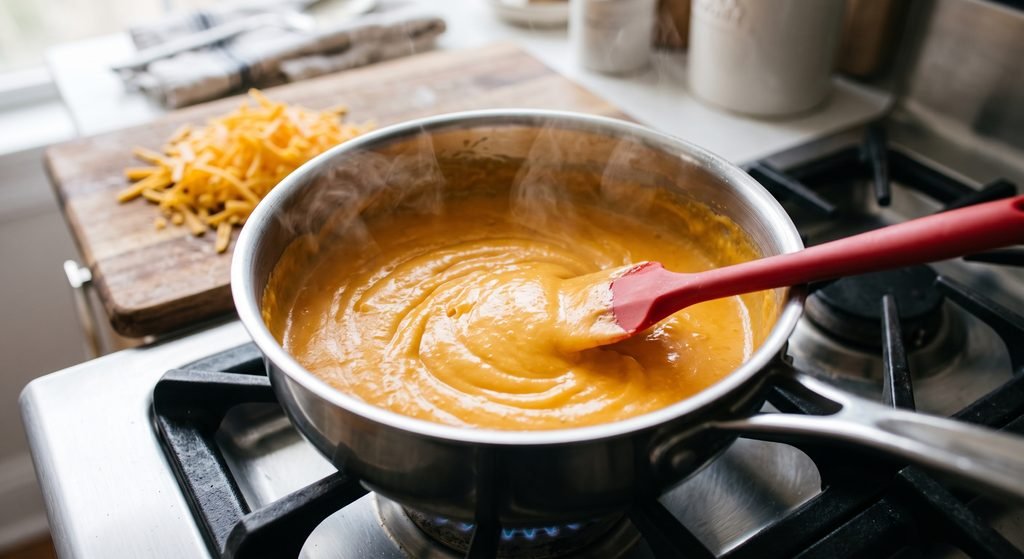
- Melt the Butter: Place a small, heavy-bottomed saucepan over medium heat. Add the unsalted butter and allow it to melt completely without browning.
- Cook the Roux: Sprinkle the all-purpose flour into the melted butter. Whisk constantly for exactly 1 minute. The mixture will look like a thick paste and should smell slightly nutty. This step is crucial to cook out the raw flour taste.
- Incorporate the Milk: Slowly pour the whole milk into the saucepan while whisking vigorously. By adding the liquid slowly and whisking constantly, you prevent any lumps from forming.
- Thicken the Base: Continue to cook the mixture over medium heat, whisking frequently, until it comes to a gentle simmer. Let it bubble for 1 to 2 minutes until it becomes very thick—similar to the consistency of warm pudding.
- Season the Sauce: Whisk in the dry mustard powder, onion powder, and salt.
- Melt the Cheese Off the Heat: This is the most important step. Remove the saucepan entirely from the heat source. Add the freshly grated sharp cheddar cheese and stir gently with a wooden spoon or silicone spatula until the cheese is completely melted and the sauce is smooth.
- Use Immediately or Store: You can use this mixture immediately as a 1:1 substitute for a can of condensed cheese soup in any recipe.
Recipe: Classic Chicken and Broccoli Cheddar Bake
To put your canned soup (or your fresh homemade substitute) to good use, try this incredibly comforting weeknight casserole. It comes together quickly and utilizes everyday ingredients.
Prep Time: 15 minutes Cook Time: 25 minutes Total Time: 40 minutes Servings: 6
Ingredients
- 2 cups Cooked Chicken, shredded or diced: Rotisserie chicken works perfectly here.
- 4 cups Fresh Broccoli Florets: Cut into bite-sized pieces.
- 1 can (10.5 oz) Campbell’s Condensed Cheddar Cheese Soup: Or 1 ¼ cups of the homemade substitute above.
- 1/2 cup Mayonnaise: Adds a tangy creaminess that balances the heavy cheese.
- 1/2 cup Milk: Helps to thin the condensed soup into a pourable sauce.
- 1 teaspoon Garlic Powder: For aromatic flavor.
- 1/2 teaspoon Black Pepper: Freshly cracked is best.
- 1 cup Sharp Cheddar Cheese, shredded: Divided in half.
- 1 cup Ritz Crackers (or similar buttery round crackers), crushed: For the topping.
- 2 tablespoons Unsalted Butter, melted: To toss with the cracker crumbs.
Step-by-Step Instructions
- Preheat the Oven: Preheat your oven to 375°F. Lightly grease a 9×9-inch baking dish with non-stick cooking spray.
- Blanch the Broccoli: Bring a large pot of salted water to a boil. Drop the broccoli florets in for just 2 minutes until they turn bright green and are slightly tender. Drain well and pat dry with paper towels. Excess water will make your casserole runny.
- Mix the Sauce: In a large mixing bowl, whisk together the condensed cheddar cheese soup, mayonnaise, milk, garlic powder, and black pepper until completely smooth.
- Combine the Filling: Fold the cooked chicken, blanched broccoli, and half of the shredded cheddar cheese (1/2 cup) into the sauce mixture. Stir until everything is evenly coated.
- Transfer to the Dish: Pour the mixture into your prepared baking dish, spreading it out into an even layer. Sprinkle the remaining 1/2 cup of shredded cheese over the top.
- Prepare the Topping: In a small bowl, toss the crushed crackers with the melted butter until the crumbs are evenly moistened. Sprinkle this mixture evenly over the casserole.
- Bake: Bake uncovered for 20 to 25 minutes, or until the edges are bubbling hot and the cracker topping is golden brown.
- Rest and Serve: Let the casserole rest for 5 minutes before scooping and serving.
Helpful Tips for the Best Results
Whether you are popping open the iconic red and white can or making your sauce from scratch, keep these pro tips in mind.
Dilute Gradually When Making Soup If you actually want to eat the canned product as a bowl of soup, do not just dump the thick paste and a can of milk into a pot and turn the heat to high. You will end up with a scorched, lumpy mess. Empty the can into a saucepan, add just a splash of milk, and whisk until smooth. Then, gradually whisk in the rest of the milk over medium-low heat.
Avoid Pre-Shredded Cheese for the Copycat If you are making the homemade version, never use bagged, pre-shredded cheese. Those shreds are coated in cellulose and anti-caking agents to prevent them from clumping in the bag. When introduced to heat, those powders prevent the cheese from melting smoothly, resulting in a grainy, gritty texture. Always take the extra two minutes to grate your cheese from a solid block.
Manage Your Sodium Levels Canned condensed soups are notoriously high in sodium because salt acts as a preservative and a flavor enhancer. If you are using the canned soup in a recipe that also calls for salty ingredients like bacon, soy sauce, or seasoned breadcrumbs, be very cautious about adding any additional table salt. Taste your food before seasoning it further.
Variations and Substitutions
The beauty of a basic cheese sauce—whether canned or fresh—is how easily it adapts to different flavor profiles.
- Spicy Southwestern: Add a few dashes of hot sauce, a pinch of cumin, and a tablespoon of finely diced pickled jalapeños to the soup before stirring it into your macaroni or casserole.
- Bacon and Smoked Gouda: If making the homemade version, substitute half of the sharp cheddar for smoked Gouda. Fold in crispy, crumbled bacon at the very end for an intensely savory, smoky flavor.
- Gluten-Free Needs: The canned Campbell’s soup contains wheat flour. If you are cooking for someone with celiac disease or gluten intolerance, you must make the homemade version. Simply swap the all-purpose flour for a high-quality 1-to-1 gluten-free baking blend, or thicken the simmering milk with a cornstarch slurry (1 tablespoon cornstarch mixed with 1 tablespoon cold water) before adding the cheese.
- Mushroom or Chicken Base: If you don’t care for the strong flavor of cheddar in a specific dish, you can almost always swap a can of cheddar cheese soup for a can of condensed cream of chicken or cream of mushroom soup in casseroles. The binding properties remain identical.
What to Serve With It
Because dishes utilizing condensed cheese soup tend to be very heavy, rich, and dense (think cheesy potatoes, mac and cheese, and chicken bakes), you need side dishes that offer high contrast.
- Acidic Salads: A bright, crisp green salad dressed in a sharp vinaigrette (like lemon-Dijon or balsamic) will cut through the heavy dairy fat of the casserole and refresh your palate between bites.
- Roasted Root Vegetables: If your main dish is a creamy chicken bake, serve it alongside roasted carrots or parsnips. The natural sweetness and slightly charred edges offer a great textural contrast to the soft casserole.
- Crusty Bread: If you are actually eating the cheese soup out of a bowl, a warm, crusty French baguette is mandatory for dipping and wiping the bowl clean.
Storage and Reheating
If you have leftover casserole made with cheese soup, or if you made a batch of the homemade copycat recipe, proper storage is key to maintaining the texture.
How to Store: Allow any leftover dishes to cool to room temperature (but do not leave them out for more than two hours). Transfer them to an airtight container and store them in the refrigerator. Foods bound with condensed cheese soup will keep well in the fridge for 3 to 4 days.
Can You Freeze It? Freezing is not recommended. When dairy-heavy sauces and condensed cheese soups are frozen and subsequently thawed, the fat and proteins tend to separate. This results in a weeping, watery casserole with a gritty, curdled texture. It is highly recommended to enjoy these dishes fresh or from the refrigerator.
How to Reheat: To reheat a casserole without drying it out, place individual portions in the microwave and heat at 50% power in short bursts, stirring if possible. If reheating a whole casserole in the oven, cover it tightly with aluminum foil to trap the steam, and bake at 350°F until warmed through. If reheating the homemade soup base on its own, do so gently in a saucepan over medium-low heat, adding a splash of milk if it has become too thick.
Frequently Asked Questions
Can I just eat Campbell’s cheddar cheese soup by itself? Yes, but you must dilute it first. The contents of the can are heavily condensed. To eat it as a standard bowl of soup, you need to combine the can with one equal can (about 1 ¼ cups) of whole milk or water and heat it gently on the stove.
Is Campbell’s cheddar cheese soup vegetarian? The standard Campbell’s condensed cheddar cheese soup does not contain meat chunks, but you should always read the specific label regarding the enzymes used in the cheese-making process if you adhere to a strict vegetarian diet, as some cheeses use animal rennet.
What is a good substitute if I don’t have cheddar cheese soup? If you are making a casserole that relies on the soup as a binder, you can easily substitute an equal amount of condensed cream of chicken, cream of celery, or cream of mushroom soup. If you specifically need the cheese flavor, use the 10-minute homemade copycat recipe detailed above.
Does canned cheese soup need to be refrigerated? An unopened can of condensed soup is shelf-stable and can sit in your pantry for months or even years (check the expiration date). However, once you open the can, any unused portion must be transferred to a sealed container and refrigerated. It will stay fresh in the fridge for about 3 days.
Why did my homemade cheese soup substitute turn grainy? Graininess in a homemade cheese sauce happens when the cheese gets too hot. If you dump the cheese into the pot while the stove is still on, the delicate proteins will seize, tighten, and separate from the fats. Always remove the pot from the heat completely before gently stirring in your freshly grated cheese.
Can I use water instead of milk to dilute the canned soup? You can, and the label instructions allow for it. However, diluting the soup with water will result in a much thinner, less flavorful, and slightly translucent soup. Using whole milk is highly recommended for the best flavor, color, and creamy mouthfeel.

Final Thoughts
Campbell’s condensed cheddar cheese soup is a testament to the enduring appeal of smart, convenient kitchen shortcuts. While culinary trends come and go, the desire for comforting, rich, and easy-to-prepare meals remains a constant in American homes. Whether you use the classic red and white can to quickly bind a holiday hash brown casserole or you master the simple homemade copycat version to control your ingredients, having this velvety cheese sauce in your repertoire guarantees that a delicious, family-friendly dinner is never far away. The next time you need to get a comforting meal on the table in a hurry, look to this simple staple to do the heavy lifting.