
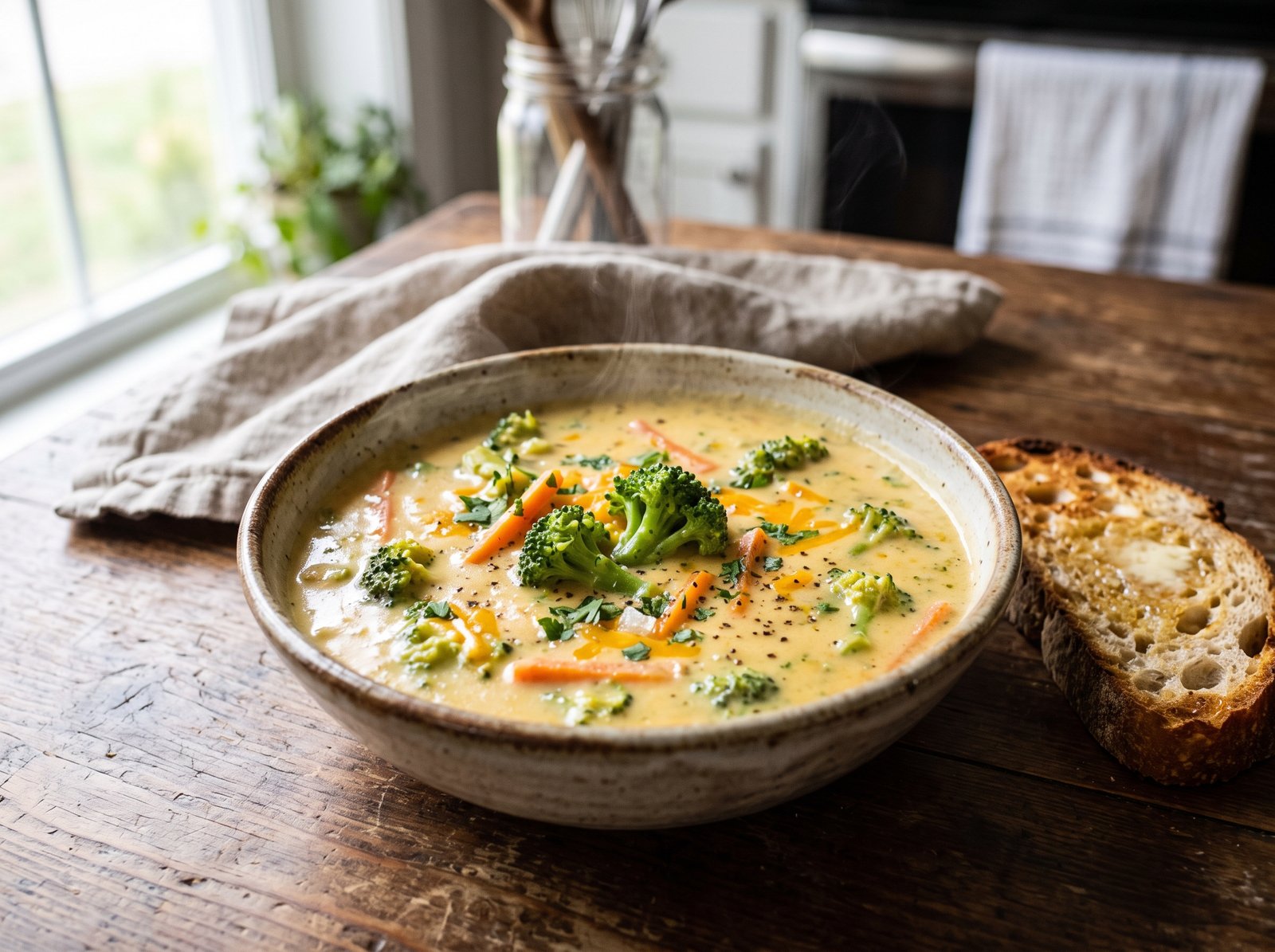
The Ultimate Broccoli Cheddar Soup
Rich, velvety, and deeply comforting, broccoli cheddar soup is the undisputed champion of cold-weather dining. A proper bowl delivers a precise balance: tender, vibrant green broccoli florets and sweet matchstick carrots suspended in a thick, savory cream base that carries the unmistakable bite of sharp cheddar cheese. This is not a thin, watery broth, nor is it a dense, heavy cheese dip. It is a masterclass in building a stable emulsion, utilizing a simple butter-and-flour roux to bind rich chicken stock, dairy, and freshly grated block cheese into a seamless, silky texture. Whether ladled into a hollowed-out sourdough bread bowl or served alongside a crisp autumn salad, this soup transforms basic pantry staples into a restaurant-quality meal in under 40 minutes.
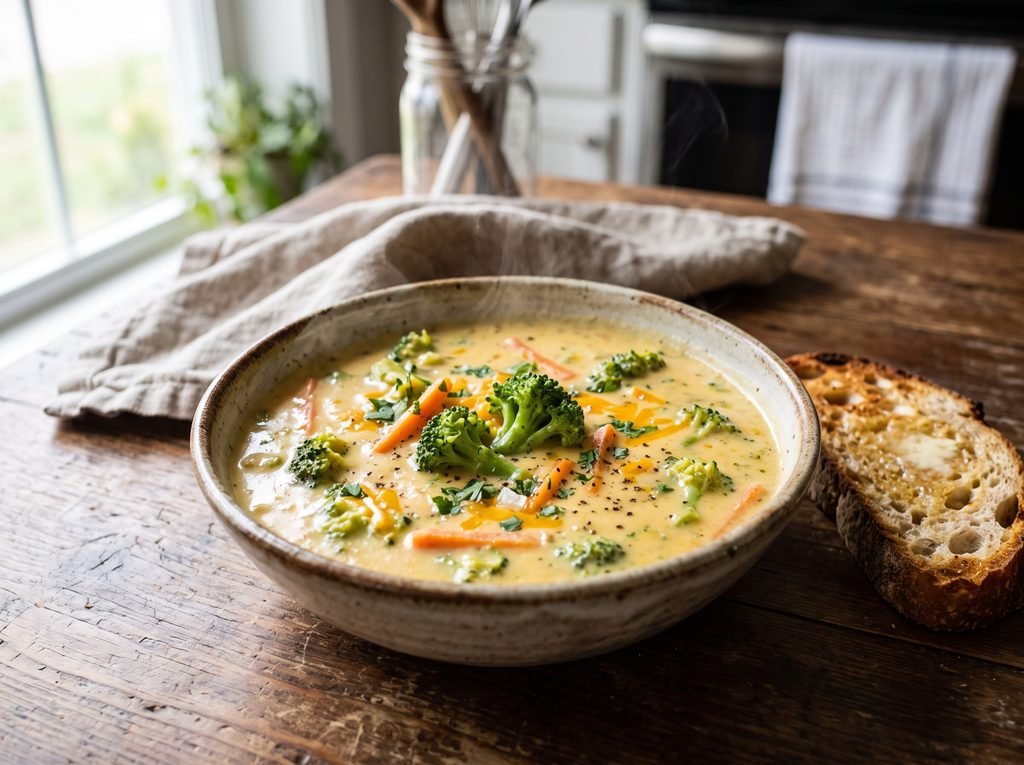
What Is Broccoli Cheddar Soup?
Broccoli cheddar soup is a classic American cream-based soup that relies on a foundational culinary technique: the béchamel or velouté sauce. Unlike broth-based vegetable soups, this dish builds its body by cooking flour and butter together to form a roux, which is then hydrated with a mixture of stock and dairy.
The primary flavor profile is driven by the interaction between earthy, slightly bitter broccoli and the tangy, sharp notes of cheddar cheese. Carrots are traditionally added for a subtle sweetness and visual contrast, while a background of sautéed onions and garlic builds a savory aromatic base. A pinch of nutmeg and dry mustard powder operate behind the scenes, enhancing the dairy’s richness and amplifying the sharpness of the cheddar without adding distinct flavors of their own.
Why You’ll Love This Recipe
- One-Pot Efficiency: From sweating the onions to melting the final handful of cheese, the entire cooking process happens in a single Dutch oven or heavy-bottomed pot.
- Superior Texture: By grating your own cheese and utilizing a proper roux, you avoid the gritty, separated texture common in store-bought or slow-cooker versions.
- Fast and Scalable: The soup comes together in about 35 minutes. It easily doubles to feed a large family or stock the fridge for a week of lunches.
- Customizable: The base recipe readily accepts additions like shredded roasted chicken, crispy bacon, or alternative vegetables like cauliflower.
- Kid-Friendly Vegetables: The rich cheese sauce naturally mellows the cruciferous flavor of the broccoli, making it a highly effective way to serve green vegetables to picky eaters.
Ingredients
Achieving the perfect consistency requires the right balance of fat, starch, and liquid. Gather the following ingredients.
- ¼ cup Unsalted Butter: Provides the fat necessary to cook the flour and build the thickening roux.
- 1 medium Yellow Onion, finely diced: Creates the aromatic foundation. Yellow onions offer the right balance of sweetness and astringency.
- 3 cloves Garlic, minced: Adds depth and a savory bite.
- ¼ cup All-Purpose Flour: Binds with the butter to thicken the soup and stabilize the dairy.
- 2 cups Low-Sodium Chicken Stock: Hydrates the roux and provides a savory backbone. Vegetable stock can be substituted for a vegetarian version.
- 2 cups Half-and-Half: Offers the ideal fat content (around 10-12%) to create a creamy mouthfeel without the heavy, cloying nature of pure heavy cream or the thinness of whole milk.
- 4 cups Fresh Broccoli Florets, chopped bite-sized: The star vegetable. Cut the pieces small enough to fit comfortably on a spoon.
- 1 cup Carrots, julienned or grated: Adds a subtle sweetness and a beautiful orange contrast.
- 8 ounces Sharp Cheddar Cheese, freshly grated from a block: The most critical ingredient. You must grate it yourself. Pre-shredded cheese is coated in cellulose, which prevents smooth melting and causes a grainy soup.
- ½ teaspoon Kosher Salt (plus more to taste): Enhances the overall flavor.
- ¼ teaspoon Freshly Ground Black Pepper: Adds gentle heat.
- ¼ teaspoon Dry Mustard Powder: Acts as an emulsifier and sharpens the flavor of the cheddar cheese.
- ⅛ teaspoon Ground Nutmeg: A classic addition to cream sauces that adds an undetectable warmth and complexity.
How to Make Broccoli Cheddar Soup
Prep Time: 15 minutes
Cook Time: 25 minutes
Total Time: 40 minutes
Servings: 6
- Sauté the Aromatics: Place a large Dutch oven or heavy-bottomed soup pot over medium heat. Melt the unsalted butter. Add the finely diced yellow onion and sauté for 4 to 5 minutes, stirring occasionally, until the onions are soft and translucent. Add the minced garlic and cook for 30 seconds until fragrant.
- Build the Roux: Sprinkle the all-purpose flour evenly over the butter and onion mixture. Whisk continuously for 1 to 2 minutes. The mixture will look like a thick paste and should smell lightly toasted, like pie crust. This cooks the raw flour taste out of the roux.
- Incorporate the Liquids: Slowly pour in the chicken stock, about ½ cup at a time, whisking vigorously after each addition to prevent lumps from forming. Once all the stock is incorporated and the mixture is smooth, slowly whisk in the half-and-half.
- Season the Base: Stir in the kosher salt, black pepper, dry mustard powder, and nutmeg. Bring the soup base to a very gentle simmer. Do not let it come to a rolling boil, as high heat can cause the dairy to scorch or separate.
- Simmer the Vegetables: Add the chopped broccoli florets and grated carrots to the pot. Stir to combine. Cover the pot with a lid, reduce the heat to medium-low, and let the soup simmer for 12 to 15 minutes. Check it occasionally and give it a stir. The soup is ready for the next step when the broccoli is fork-tender but still vibrant green.
- Melt the Cheese: Remove the pot completely from the heat source. This is crucial for a smooth soup. Gradually add the freshly grated sharp cheddar cheese, a handful at a time, stirring gently until completely melted before adding the next handful.
- Taste and Serve: Taste the soup and adjust the seasoning if necessary, adding a pinch more salt or pepper to your preference. Ladle immediately into warm bowls.
Helpful Tips for the Best Results
Success with dairy-based soups comes down to temperature control and ingredient selection.
Grate Your Own Cheese
Bagged, pre-shredded cheese contains anti-caking agents like potato starch, cornstarch, or cellulose powder to keep the shreds from clumping in the bag. When added to soup, these starches prevent the cheese proteins from melting smoothly, resulting in a gritty, grainy texture. Always buy a block of sharp cheddar and run it through a box grater.
Control the Heat When Adding Cheese
Cheese is an emulsion of dairy fat, water, and protein. If you boil cheese, the emulsion breaks. The proteins tighten up and squeeze out the fat, leaving you with stringy clumps of rubbery cheese and a greasy slick of oil on top of your soup. Always remove the pot from the stove before stirring in the cheese, allowing the residual heat of the broth to gently melt it.
Utilize the Broccoli Stems
Do not throw away the stems. The stems pack incredible flavor and a satisfying crunch. Use a vegetable peeler to remove the tough, fibrous dark green outer layer of the stem, then dice the pale green interior into small cubes and toss them into the pot along with the florets.
| Common Issue | Likely Cause | Solution |
| Grainy Texture | Pre-shredded cheese or boiling the cheese. | Use block cheese and remove from heat before melting. |
| Soup is Too Thin | Not enough roux or liquid hasn’t simmered long enough. | Simmer uncovered for 5 more minutes. If still thin, whisk 1 tbsp cornstarch with 1 tbsp cold water and stir in. |
| Soup is Too Thick | Too much flour or excessive evaporation. | Whisk in additional warm chicken stock or milk, ¼ cup at a time, until desired consistency is reached. |
| Greasy Film on Top | Cheese overheated and separated. | Skim the fat. In the future, keep temperatures lower during the final stages. |

Variations and Substitutions
Broccoli cheddar soup provides an excellent blank canvas for customization.
- Protein Additions: Stir in 2 cups of shredded rotisserie chicken during the final 5 minutes of simmering to transform this from a light lunch into a hearty, protein-packed dinner. Crumbled, crispy, thick-cut bacon makes an excellent savory garnish.
- Vegetarian Version: Swap the chicken stock for a high-quality vegetable broth. Ensure your cheddar cheese is made with microbial rennet rather than animal rennet.
- Gluten-Free Version: Omit the all-purpose flour. Sauté the vegetables in butter as directed, add the liquids, and bring to a simmer. Create a slurry by whisking 3 tablespoons of cornstarch with 3 tablespoons of cold milk, then slowly whisk the slurry into the simmering soup to thicken it before adding the cheese.
- Adjusting the Richness: Half-and-half provides the best middle ground, but you can adjust the dairy to suit your diet. For a lighter soup, use whole milk (the soup will be slightly thinner). For an ultra-decadent, restaurant-style soup, use 1 cup of heavy cream and 1 cup of whole milk.
- The Cheese Blend: While sharp yellow cheddar provides the classic flavor and color, blending cheeses adds complexity. Try using 6 ounces of sharp cheddar and 2 ounces of Gruyère or smoked Gouda for a deeper, nuttier flavor profile.
What to Serve With It
A rich, creamy soup demands accompaniments that offer contrasting textures and flavors.
- Sourdough Bread Bowls: The ultimate cafe experience. Slice the top quarter off a round sourdough boule, hollow out the center (save the bread chunks for dipping), and ladle the hot soup directly into the bread. The thick crust holds up perfectly to the creamy liquid.
- Crusty Artisanal Bread: A warm, toasted slice of French baguette or a thick slice of ciabatta is essential for wiping the bowl clean.
- Acidic, Crisp Salads: Balance the heavy dairy with a bright salad. A mix of baby spinach, sliced honeycrisp apples, candied pecans, and dried cranberries tossed in a sharp apple cider vinaigrette cuts through the richness of the soup perfectly.
- Gourmet Grilled Cheese: For the ultimate comfort meal, pair a cup of this soup with a grilled cheese sandwich made on thick brioche, utilizing a blend of sharp cheddar and Monterey Jack.
Storage and Reheating
Proper handling of leftovers is essential for dairy-heavy soups to prevent separation.
Refrigeration
Allow the soup to cool completely to room temperature. Transfer it to an airtight container and store it in the refrigerator for up to 4 days. The soup will thicken significantly as it chills.
Reheating
Reheat gently on the stovetop over medium-low heat. Because the soup thickens in the fridge, you will likely need to whisk in a splash of milk or chicken stock (about 1 to 2 tablespoons per portion) to loosen it back to a silky consistency. Stir frequently to prevent the bottom from scorching. If using a microwave, heat in 45-second intervals at 50% power, stirring well between each interval to prevent the cheese from separating.
Freezing
Freezing cream-and-cheese-based soups is generally not recommended. The freezing and thawing process alters the protein structure of the dairy, frequently causing the soup to separate, become grainy, and take on a curdled appearance when reheated. If you must freeze it, store it in an airtight container for up to 2 months. Thaw overnight in the refrigerator. To fix the texture upon reheating, warm it very slowly on the stove, whisking vigorously. If it remains separated, processing it briefly with an immersion blender can help re-emulsify the fats.
Frequently Asked Questions
Can I use frozen broccoli instead of fresh?
Yes. Frozen broccoli works perfectly and saves prep time. You do not need to thaw it first. Add the frozen florets directly into the simmering liquid. Note that frozen broccoli is often already blanched, so it may only take 8 to 10 minutes to become tender in the soup rather than the full 15 minutes.
Why does my soup taste like raw flour?
This happens when the roux (the butter and flour mixture) isn’t cooked long enough before adding the liquids. Always cook the flour and butter mixture for at least 1 to 2 minutes until it turns a pale golden color and smells nutty.
What kind of cheddar is best for melting?
Medium or sharp cheddar melts the best. Extra-sharp or aged cheddars (aged 2 years or more) have less moisture and have undergone protein changes that make them prone to separating and turning oily when melted into a soup.
Can I make this soup in a slow cooker?
Yes, but you must alter the method. Add the stock, onions, garlic, carrots, and broccoli to the slow cooker and cook on low for 4 hours. Thirty minutes before serving, whisk a slurry of ¼ cup cornstarch and ¼ cup cold milk, stir it into the slow cooker, and turn the heat to high until thickened. Turn off the slow cooker completely before stirring in the warm half-and-half and freshly grated cheese.
Is broccoli cheddar soup healthy?
While it contains nutrient-dense vegetables like broccoli and carrots, the traditional recipe relies heavily on butter, cheese, and cream, making it a high-calorie, high-fat comfort food. It is best enjoyed in moderation or modified with lighter dairy options.
Can I puree the soup?
Absolutely. If you prefer a smooth soup with no chunks, use an immersion blender right before adding the cheese. Blend until you reach your desired consistency, then remove from the heat and stir in the grated cheddar.

Final Thoughts
Mastering a classic broccoli cheddar soup fundamentally upgrades your home cooking repertoire. By relying on a proper roux, choosing the right dairy fat percentages, and respecting the temperature limits of freshly grated cheese, you eliminate the common pitfalls of grainy, separated textures. The result is a vibrant, deeply flavored, and soul-warming dish that proves just how spectacular a few simple ingredients can be when handled with proper technique. Keep a block of sharp cheddar and a head of broccoli in the fridge, and you are never more than forty minutes away from an exceptional meal.