
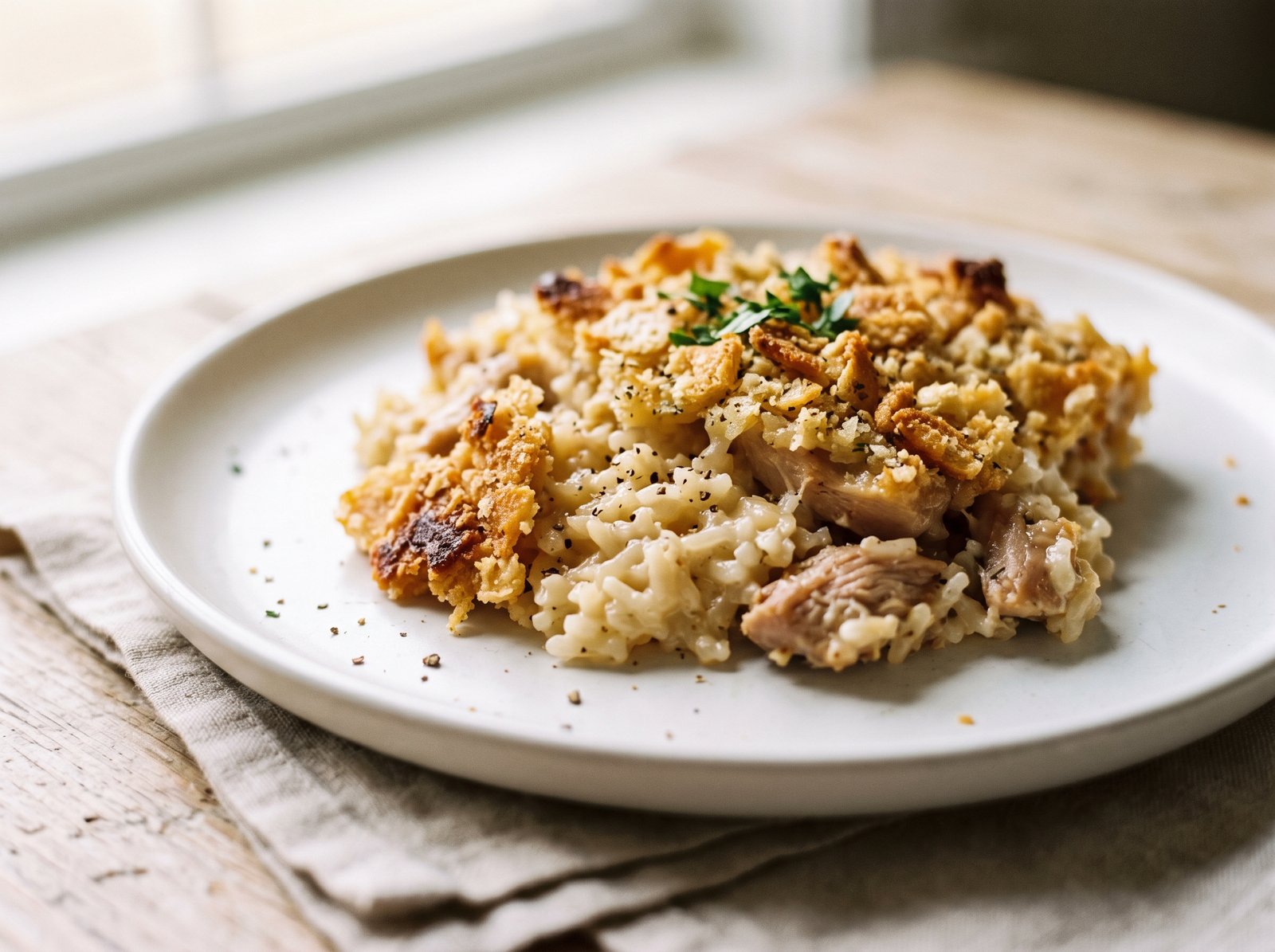
The Ultimate Classic Campbell’s Chicken and Rice Casserole
There is a specific kind of magic that happens when you peel back the red and white label of a Campbell’s soup can. For generations, those iconic cans of condensed soup have been the secret weapon of home cooks across the United States, transforming simple pantry staples into rich, bubbly, soul-warming dinners. When the weather turns chilly, or you simply need a dinner that feels like a warm hug at the end of a long day, nothing hits the spot quite like a classic casserole.
Among the pantheon of great American comfort foods, the classic Campbell’s chicken and rice casserole reigns supreme. It is the undisputed king of the 9×13-inch baking dish. Tender, juicy chicken rests on a bed of incredibly creamy, perfectly cooked rice, all topped with a buttery, crispy cracker crust that provides the ultimate textural contrast. It is the kind of recipe that is passed down on handwritten index cards, brought to neighborhood potlucks, and requested by kids and adults alike for Sunday dinners.
If you have ever struggled with oven-baked rice turning out crunchy, or chicken breasts drying out in the oven, this comprehensive guide will walk you through exactly how to achieve casserole perfection. We are going to dive deep into the ingredients, the foolproof techniques, and the countless ways you can customize this iconic dish to make it a staple in your own weekly dinner rotation.
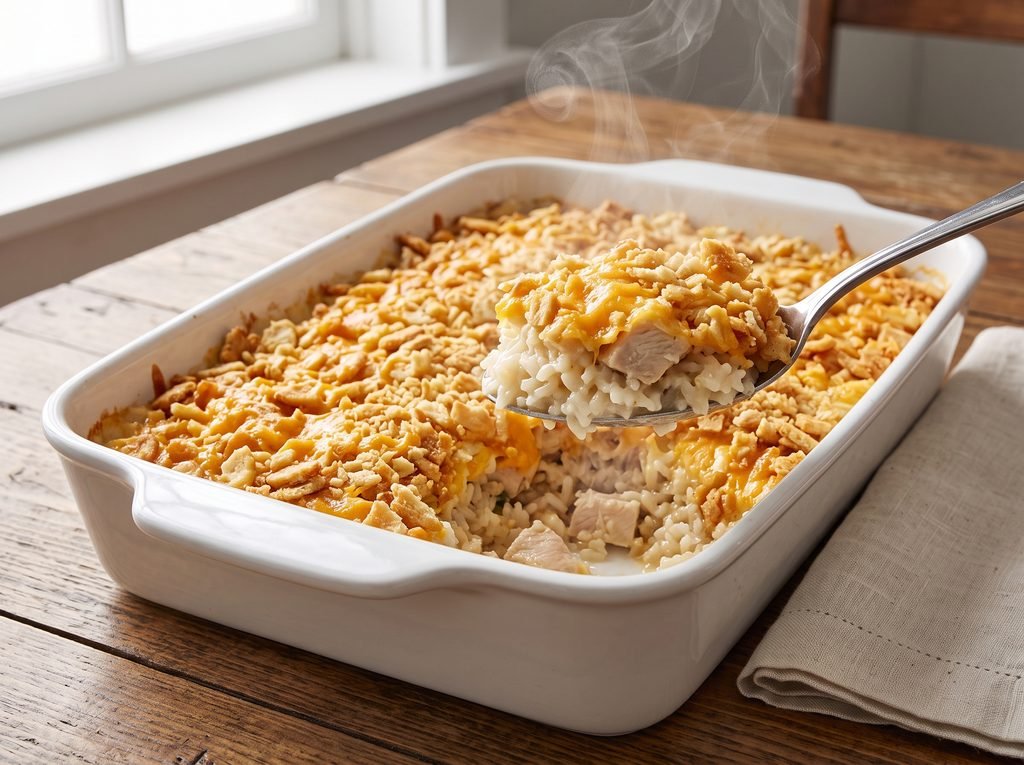
What Is the Classic Campbell’s Chicken and Rice Casserole?
At its core, this dish is a masterful lesson in one-pan cooking. A traditional Campbell’s chicken and rice casserole combines raw long-grain white rice, liquid (usually water, milk, or chicken broth), boneless poultry, and a base of condensed cream soup. Everything is layered into a baking dish, tightly covered, and baked until the rice absorbs the rich, savory liquids and the chicken cooks through to tender perfection.
The brilliance of this recipe lies in the condensed soup. Campbell’s Cream of Chicken and Cream of Mushroom soups act as an emulsifier, a thickener, and a seasoning base all in one. Because the soup is condensed, it provides a velvety texture that prevents the rice from becoming gummy while insulating the chicken from the harsh heat of the oven. As the casserole bakes, the starches from the rice mingle with the savory cream base, creating a self-saucing masterpiece that requires no stovetop roux, no whisking, and virtually no prep time.
Why You’ll Love This Recipe
There are countless reasons why this dish has remained an American staple for over half a century. Here is why this specific recipe will become your go-to weeknight savior:
- True One-Pan Convenience: There is no need to boil the rice separately or sear the chicken in a skillet. Everything goes into the baking dish raw, meaning you only have one pan to wash at the end of the night.
- Incredible Texture: By using a tight foil seal during the baking process, the rice steams beautifully. The addition of a buttery Ritz cracker topping in the final minutes of baking adds a deeply satisfying crunch that contrasts with the creamy rice.
- Budget-Friendly: Feeding a family can be expensive, but this recipe relies on affordable pantry staples like dried rice, canned soup, and basic chicken breasts or thighs.
- Endlessly Customizable: Once you understand the base ratio of rice, liquid, and condensed soup, you can change the flavor profile completely. Add fresh vegetables, swap out the proteins, or experiment with different cheese blends.
- Perfect for Meal Prep: This casserole tastes arguably better the next day after the flavors have had time to meld in the refrigerator, making it ideal for leftovers and meal-prep lunches.
Ingredients
To build the perfect casserole, you need the right balance of starches, proteins, and fats. Here is exactly what you need to gather for this classic comfort food.
The Base
- 1 ½ cups Long-Grain White Rice: You must use uncooked long-grain white rice for this exact recipe. Jasmine or Basmati will work, but standard long-grain white rice is the classic choice. Do not use minute rice (it will turn to absolute mush) or brown rice (it requires significantly more liquid and double the cooking time).
- 1 can (10.5 ounces) Campbell’s Condensed Cream of Chicken Soup: This provides the savory poultry flavor and the necessary thickener for the sauce.
- 1 can (10.5 ounces) Campbell’s Condensed Cream of Mushroom Soup: Mixing mushroom with the chicken soup adds a deep, earthy umami flavor that prevents the dish from tasting one-dimensional.
- 2 cups Low-Sodium Chicken Broth: Using broth instead of water ensures every single grain of rice is infused with flavor. Using low-sodium broth allows you to control the final saltiness of the dish, as the condensed soups already contain plenty of seasoning.
- ½ cup Whole Milk or Heavy Cream: A splash of dairy adds a touch of richness that cuts through the saltiness of the broth and soup.
The Protein
- 1 ½ pounds Boneless, Skinless Chicken Breasts: You can leave them whole if they are small, but cutting them into bite-sized, 1-inch cubes ensures they cook evenly and makes the casserole much easier to serve and eat. You can also substitute boneless, skinless chicken thighs if you prefer dark meat.
The Seasonings
- 1 teaspoon Garlic Powder: Adds a sweet, roasted garlic undertone without the harshness of raw garlic.
- 1 teaspoon Onion Powder: Deepens the savory notes of the cream soups.
- 1 teaspoon Paprika: Adds a beautiful subtle color and a hint of sweet pepper flavor.
- ½ teaspoon Freshly Cracked Black Pepper: Provides a gentle, warm heat.
- ½ teaspoon Kosher Salt: Adjust this based on how salty your chicken broth is.
The Crispy Topping
- 1 sleeve (about 30 crackers) Ritz Crackers or Butter Crackers: Crushed into coarse crumbs.
- 4 tablespoons Unsalted Butter: Melted, to bind the cracker crumbs and help them brown in the oven.
- 1 cup Shredded Sharp Cheddar Cheese (Optional): A handful of freshly grated cheese melted over the top adds a tangy, gooey finish that pairs beautifully with the creamy rice.
How to Make Classic Campbell’s Chicken and Rice Casserole
The secret to this recipe is the method. Follow these step-by-step instructions carefully to ensure your rice is fluffy and your chicken is tender.
Step 1: Prepare the Oven and Baking Dish
Preheat your oven to 375°F (190°C). Generously grease a standard 9×13-inch glass or ceramic baking dish with non-stick cooking spray or a pat of butter. Do not use a metal baking pan if you can avoid it, as glass and ceramic distribute heat more evenly for baked rice dishes, preventing the edges from burning before the center is cooked.
Step 2: Rinse the Rice
Place your 1 ½ cups of long-grain white rice in a fine-mesh strainer and rinse it under cold water for about 30 seconds until the water runs mostly clear. Rinsing removes the excess surface starch from the rice grains. If you skip this step, your casserole can become overly gummy and gluey. Once rinsed, spread the rice out in an even layer across the bottom of your prepared baking dish.
Step 3: Whisk the Creamy Liquid Base
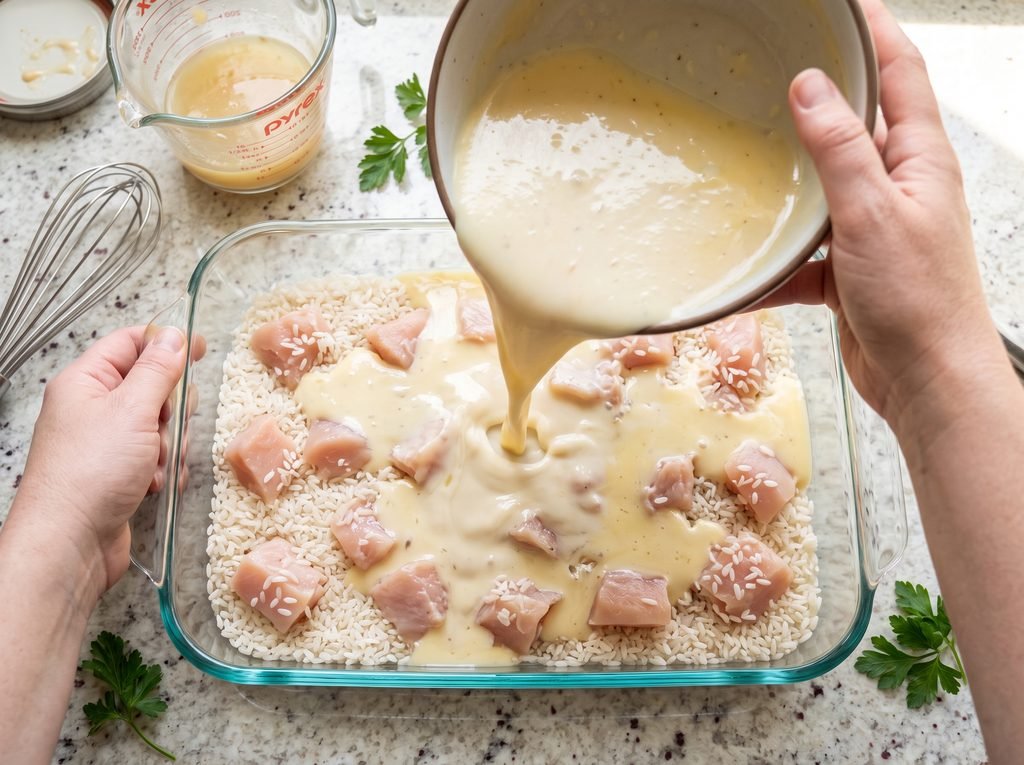
In a large mixing bowl, combine the can of Cream of Chicken soup, the can of Cream of Mushroom soup, the 2 cups of chicken broth, and the ½ cup of milk. Whisk everything together until the condensed soup is completely smooth and incorporated into the liquids. Pour this entire mixture evenly over the uncooked rice in the baking dish. Do not stir it aggressively; just lightly tap the dish so the liquid settles.
Step 4: Season and Add the Chicken
In a separate medium bowl, toss your cubed chicken pieces with the garlic powder, onion powder, paprika, black pepper, and kosher salt. Toss until every piece of chicken is evenly coated in the spices. Drop the seasoned chicken pieces evenly into the baking dish, submerging them slightly into the soup and rice mixture.
Step 5: The Crucial Foil Seal
Tear off a large piece of heavy-duty aluminum foil. Cover the baking dish tightly, crimping the edges around the rim of the dish to create an airtight seal. This is the most critical step of the recipe. The foil traps the steam inside the dish, which is exactly what cooks the raw rice. If steam escapes, your liquid will evaporate too quickly, leaving you with crunchy, undercooked rice.
Step 6: The First Bake
Place the covered baking dish on the middle rack of your preheated oven. Bake for exactly 45 minutes. Resist the urge to open the oven door or peel back the foil to peek, as this will let the precious steam escape.
Step 7: Prepare the Topping
While the casserole is baking, place the crackers in a large zip-top bag and crush them with a rolling pin until you have coarse crumbs. Transfer the crumbs to a small bowl and pour the melted butter over them, tossing with a fork until the crumbs resemble wet sand.
Step 8: The Final Crispy Bake
After 45 minutes, carefully remove the casserole from the oven. Gently pull back the foil (watch out for the rush of hot steam) and test a grain of rice from the center. It should be tender. If it is still crunchy, re-cover tightly and bake for another 10 minutes. Once the rice is tender, sprinkle the optional shredded cheddar cheese evenly over the top, followed by the buttered cracker crumbs. Return the dish to the oven, uncovered, and bake for an additional 10 to 15 minutes, or until the cheese is bubbling and the cracker topping is deeply golden brown and toasted.
Step 9: Rest and Serve
Remove the casserole from the oven and let it rest on the counter for 10 to 15 minutes before serving. This resting period is essential; it allows the bubbling liquids to cool slightly and thicken up into a rich, gravy-like sauce. If you scoop into it immediately, it may seem a bit runny.
Helpful Tips for the Best Results
Even the simplest recipes benefit from a few insider tricks. Keep these culinary tips in mind to elevate your dish from good to great.
- Freshly Grated Cheese is Best: If you choose to use the cheddar cheese topping, take an extra minute to grate it yourself from a block. Pre-shredded bagged cheeses are coated in anti-caking agents (like potato starch or cellulose) that prevent them from melting smoothly.
- The Temperature Check: If you are using whole chicken breasts instead of cubes, ensure they reach an internal temperature of 165°F (74°C) using a meat thermometer. Cubed chicken will cook through perfectly in the allotted time, but thick, whole breasts may need a few extra minutes.
- Don’t Skimp on the Broth: Using high-quality chicken broth instead of water makes a monumental difference in the final flavor. If you want to make it even richer, you can use chicken bone broth.
- Customize the Crunch: If you don’t have Ritz crackers on hand, you can use crushed potato chips, buttery breadcrumbs (panko works exceptionally well), or even crispy fried onions (the kind used on green bean casseroles) for the topping.
Variations and Substitutions
The beauty of cooking with Campbell’s condensed soups is that they provide a reliable, blank canvas for your culinary creativity. Here are a few ways you can modify this recipe to suit your tastes or use up whatever is lingering in your refrigerator.
The Broccoli Cheddar Variation
To sneak some greens into the meal, stir 2 cups of fresh broccoli florets into the rice and liquid mixture before adding the chicken. Swap the Cream of Mushroom soup for a can of Campbell’s Condensed Cheddar Cheese soup. Top with extra sharp cheddar cheese. Note: Cut the broccoli florets small so they steam perfectly alongside the rice without remaining tough.
The Tex-Mex Fiesta Variation
Swap the standard soups for one can of Cream of Chicken and one can of Fiesta Nacho Cheese soup. Substitute the plain chicken broth with an equal amount of mild chicken broth mixed with salsa. Add a drained can of black beans, a cup of frozen sweet corn, and a can of diced green chiles to the rice base. Top with crushed tortilla chips and Monterrey Jack cheese instead of buttery crackers.
The Pork Chop Swap
You do not have to use chicken for this casserole. Thin, bone-in or boneless pork chops work beautifully in this dish. Simply season the pork chops generously, lightly sear them in a skillet for 2 minutes per side to develop a crust (optional but recommended), and lay them on top of the rice mixture before covering with foil.
Make it Vegetarian
You can easily make this a hearty, meatless main course. Omit the chicken entirely. Swap the Cream of Chicken soup for Campbell’s Cream of Celery or an extra can of Cream of Mushroom. Use vegetable broth instead of chicken broth. Stir in a medley of frozen peas, diced carrots, and fresh sliced cremini mushrooms to bulk up the texture.
What to Serve With It
Because a chicken, rice, and cream soup casserole is inherently rich, heavy, and savory, it is best paired with sides that offer a pop of acidity, freshness, and crunch. This balances the palate and keeps the meal from feeling too heavy.
- A Crisp, Acidic Salad: A simple arugula or mixed green salad dressed with a sharp lemon vinaigrette or a tangy apple cider vinaigrette is the perfect counterpoint to the creamy rice.
- Roasted Green Vegetables: While you can certainly serve this with classic canned green beans, tossing some fresh asparagus spears or Brussels sprouts in olive oil and roasting them alongside the casserole (during the last 20 minutes of baking) adds a wonderful charred, bitter note that complements the dish.
- Glazed Carrots: Sweet, tender carrots cooked down with a little butter and honey provide a lovely color contrast on the plate.
- Warm Dinner Rolls: You can never have too many carbs when it comes to comfort food. A soft, pillowy yeast roll is perfect for swiping up any extra creamy sauce left on your plate.
Storage, Freezing, and Reheating
Casseroles are famous for yielding excellent leftovers. Handling them correctly ensures your day-two lunch is just as delicious as the fresh-baked dinner.
How to Store Leftovers: Allow the casserole to cool completely to room temperature. Transfer the leftovers to an airtight container, or tightly wrap your baking dish in plastic wrap. Store in the refrigerator for up to 4 days.
How to Reheat: The rice will absorb a lot of the sauce as it sits in the fridge, meaning it can dry out when reheated.
- Microwave Method: Place a portion on a microwave-safe plate. Drizzle a tablespoon of chicken broth or water over the top. Cover loosely with a damp paper towel and microwave on high for 1 to 2 minutes, or until heated through. The damp paper towel creates a mini-steamer that rehydrates the rice.
- Oven Method: If you are reheating the entire pan, preheat the oven to 350°F (175°C). Pour ¼ cup of chicken broth over the top of the casserole, cover tightly with foil, and bake for 20-25 minutes until hot and bubbly.
How to Freeze: You can freeze this casserole, but it is best frozen unbaked. Mix all the ingredients (except the cracker topping) directly in an aluminum disposable 9×13-inch pan. Wrap the pan tightly in a layer of plastic wrap, pressing the wrap down onto the surface of the liquid to prevent ice crystals, followed by a double layer of heavy-duty aluminum foil. Freeze for up to 3 months. When ready to eat, thaw the casserole completely in the refrigerator overnight. Add 15 extra minutes to the initial covered baking time, then proceed with adding the topping and doing the final uncovered bake.
Frequently Asked Questions
Can I use Minute Rice (instant rice) instead of regular white rice? No. Instant rice has been pre-cooked and dehydrated. If you use it in a casserole that bakes for 45 minutes with all that liquid, it will disintegrate into an unappetizing, gummy mush. You must use standard uncooked long-grain white rice.
Do I need to cook the chicken before putting it in the casserole? No, the raw chicken will cook perfectly and safely in the oven during the 45-minute baking time. Cooking it beforehand will result in dry, overcooked chicken by the time the rice finishes baking.
Why is my rice still crunchy after baking? There are three main culprits for crunchy casserole rice. First, the foil seal wasn’t tight enough, allowing the necessary steam to escape. Second, your oven may run cool (an oven thermometer can verify this). Third, you may not have used enough liquid. Always ensure you measure your rice and liquids accurately.
Can I make this casserole ahead of time? Yes! You can assemble the entire casserole (minus the cracker topping) earlier in the day. Cover it tightly and keep it in the refrigerator for up to 12 hours before baking. You may need to add 5-10 minutes to the covered baking time since the dish is starting from a cold state.
Can I use brown rice instead? You can, but it requires significant modifications. Brown rice requires more liquid and a much longer cooking time (often up to 1 hour and 15 minutes). If you bake chicken cubes for that long, they will be dry. If you want to use brown rice, it is best to partially cook the rice on the stovetop for 15 minutes before mixing it into the casserole dish.
Is it safe to bake this in a glass Pyrex dish? Yes, glass baking dishes are ideal for casseroles. Just be sure not to place a cold glass dish straight from the refrigerator into a hot oven, as the extreme temperature shock can cause the glass to shatter. Let a refrigerated glass dish sit on the counter for 30 minutes before baking.
Can I use a different Campbell’s cream soup? Absolutely. Cream of Celery, Cream of Potato, or even Cream of Bacon will work perfectly. The ratio is always the same: you just need two 10.5-ounce cans of condensed cream soup to provide the base.
How do I prevent the casserole from being too salty? Condensed soups contain a fair amount of sodium. To control the salt levels, always use low-sodium or no-salt-added chicken broth. You can also use unsalted butter for the cracker topping. Taste your liquid mixture before adding the raw chicken; if it tastes seasoned enough, do not add the extra ½ teaspoon of kosher salt to the meat.
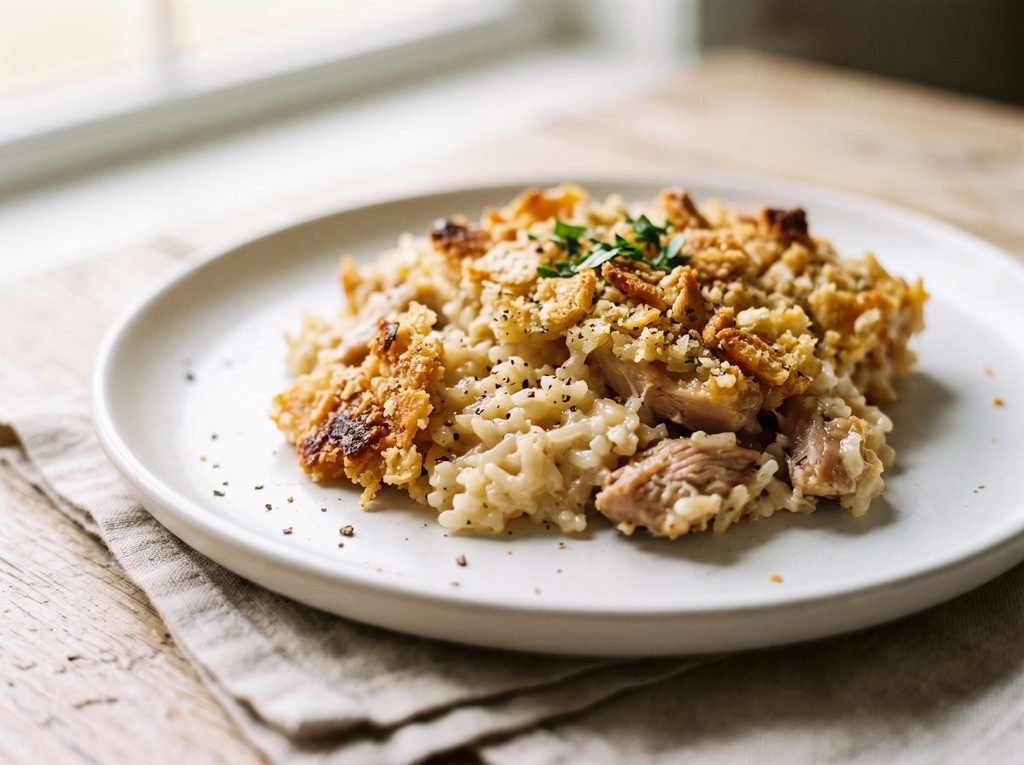
Final Thoughts
The enduring legacy of the classic Campbell’s chicken and rice casserole isn’t just about the flavor—though the combination of creamy, savory rice and a buttery crust is undeniably delicious. Its lasting power comes from its reliability. In an era where dinner can often feel complicated, this dish offers a return to simple, satisfying cooking. It asks very little of the cook, utilizing basic pantry staples and a single pan, yet it delivers a meal that feels hearty, intentional, and deeply comforting.
Whether you stick to the traditional recipe outlined here or use it as a foundation to experiment with new vegetables, cheeses, and flavor profiles, mastering this classic oven-baked method ensures you will always have a foolproof dinner strategy in your back pocket. Grab your 9×13 pan, break out those trusty red and white cans, and enjoy the ultimate comfort food tonight