
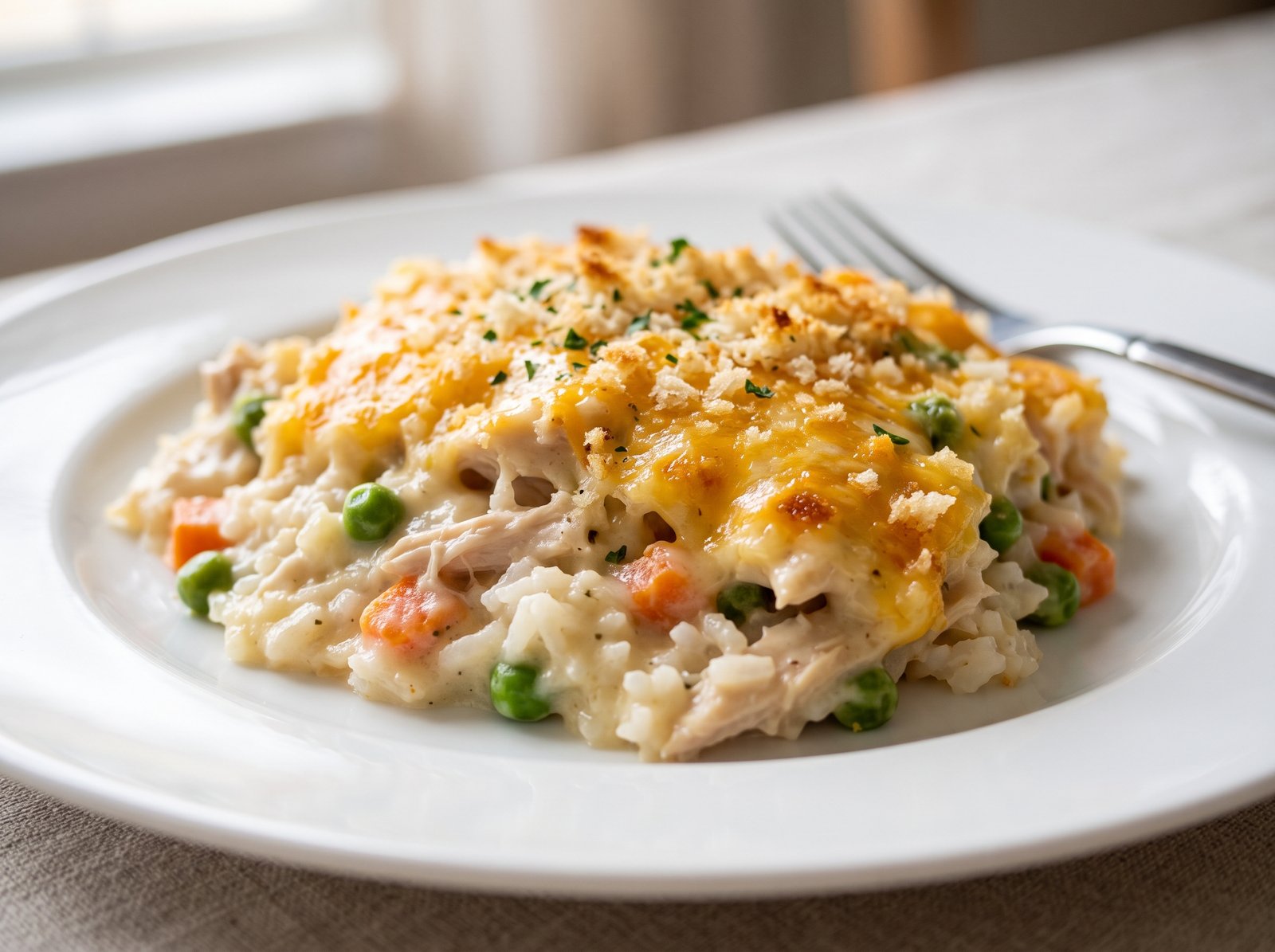
The Ultimate Guide to Cooking with Campbell’s Soup (Plus a Classic Chicken and Rice Casserole)
If there is one iconic staple you will find hiding in almost every American pantry, it is the classic red and white can of Campbell’s soup. For generations, these cans have been much more than just a quick, comforting lunch on a rainy afternoon or a soothing remedy for a winter cold. They are the secret weapons of home cooks, church potluck champions, and busy parents everywhere.
The brilliance of a condensed cream soup lies in its incredible versatility. It is not just a bowl of soup; it is a ready-made sauce, a casserole binder, a meatloaf moistener, and the foundational building block for thousands of beloved family recipes. Whether you are craving the legendary green bean casserole at Thanksgiving or a creamy, bubbly chicken bake on a chaotic Tuesday night, this humble ingredient delivers reliable, savory perfection every single time.
In this comprehensive guide, we are going to explore why cooking with Campbell’s soup has remained a cherished American culinary tradition. We will cover the essential flavors you should always keep stocked, how to elevate a basic bowl of canned soup into a gourmet experience, and finally, how to make the ultimate comfort food: our signature Creamy Chicken and Rice Casserole.
What Is Campbell’s Soup?
Campbell’s soup refers to the famous line of canned soups produced by the Campbell Soup Company, easily recognized by their iconic red and white labels (which famously inspired pop artist Andy Warhol in the 1960s). However, the true culinary breakthrough of this product happened in 1897 when a chemist named John T. Dorrance invented a commercial method for condensing soup.
By removing exactly half of the water from the recipe, the company could package the soup in smaller, lighter cans. This made shipping incredibly cheap and gave the product an incredibly long shelf life. For the consumer, it meant simply opening the can, pouring the condensed paste into a saucepan, and adding one can of water or milk to reconstitute it.
While the original purpose was simply to serve it as a bowl of soup, mid-century American home cooks quickly realized that the thick, condensed product—before the extra liquid was added—functioned perfectly as a rich, seasoned, stabilized cream sauce. The “Cream of” varieties essentially became the modern “mother sauces” of middle-class American cuisine, replacing the need to make a time-consuming roux or béchamel from scratch.
Why You’ll Love Cooking with Condensed Soups
- Unbeatable Convenience: Making a creamy sauce from scratch requires melting butter, whisking in flour, slowly adding milk, and simmering until perfectly thickened. A can of condensed soup bypasses all of this, saving you significant prep time on busy weeknights.
- Built-In Seasoning: These soups are already seasoned with savory broths, garlic, onion, and herbs. When used in a recipe, they impart a deep, slow-cooked flavor profile to the entire dish.
- Foolproof Texture: Because the soups are commercially stabilized, they rarely break, curdle, or separate when baked at high temperatures, making them ideal for long-simmering slow cooker meals and baked casseroles.
- Nostalgic Comfort: There is a specific, deeply comforting flavor profile associated with recipes made from these soups that instantly transports people back to their childhood dinner tables.
The Best Campbell’s Soups to Keep in Your Pantry
Not all canned soups are meant for cooking. While varieties like Chicken Noodle and Minestrone are best eaten from a bowl, the following condensed soups are the true workhorses of the kitchen.
Cream of Mushroom
If you only keep one can in your pantry, make it Cream of Mushroom. It features a savory, earthy, umami-rich profile with tiny bits of real mushrooms. It is the mandatory binder for the classic Thanksgiving Green Bean Casserole, the secret to a quick weeknight beef stroganoff, and a fantastic gravy base for smothered pork chops.
Cream of Chicken
Rich, velvety, and deeply savory, Cream of Chicken is the cornerstone of poultry-based casseroles. It acts as the perfect filling for homemade chicken pot pies, the creamy sauce over baked chicken breasts, and a wonderful base for cheesy chicken enchiladas.
Tomato Soup
While famous for being paired with a grilled cheese sandwich, condensed tomato soup is a brilliant cooking ingredient. Because of its concentrated sweetness and acidity, it makes a fantastic glaze for meatloaf, a rich base for slow-cooker beef stews, and a shortcut for quick chili recipes.
French Onion
Unlike the cream soups, condensed French onion provides a powerful punch of savory beef broth and sweet, caramelized onions. It is the ultimate secret ingredient for slow-cooking a chuck roast (often alongside a packet of dry onion soup mix) to create tender, falling-apart French dip sandwiches.
How to Elevate a Simple Bowl of Canned Soup
Sometimes, you do not want to bake a casserole; you just want a cozy bowl of soup. If you are eating Campbell’s soup straight from the saucepan, here are a few simple ways to make it taste like it came from a high-end bistro.
- Upgrade the Liquid: When making Cream of Tomato or Cream of Mushroom, never reconstitute it with water. Use whole milk, half-and-half, or even a splash of heavy cream for a dramatically richer, silkier texture.
- Add Fresh Herbs: Canned soup relies on dried seasonings. Stirring in freshly chopped basil to tomato soup, or fresh parsley and thyme to chicken noodle, wakes up the flavor profile immediately.
- Finish with Acid: Canned soups can taste slightly flat due to the canning process. A tiny squeeze of fresh lemon juice in chicken noodle soup, or a dash of balsamic vinegar in tomato soup, balances the sodium and brightens the bowl.
- Texture is Everything: Canned soup is uniformly soft. Top your bowl with homemade garlic croutons, a sprinkle of sharp cheddar cheese, crushed butter crackers, or crispy fried onions to add a much-needed crunch.
Classic Campbell’s Creamy Chicken and Rice Casserole
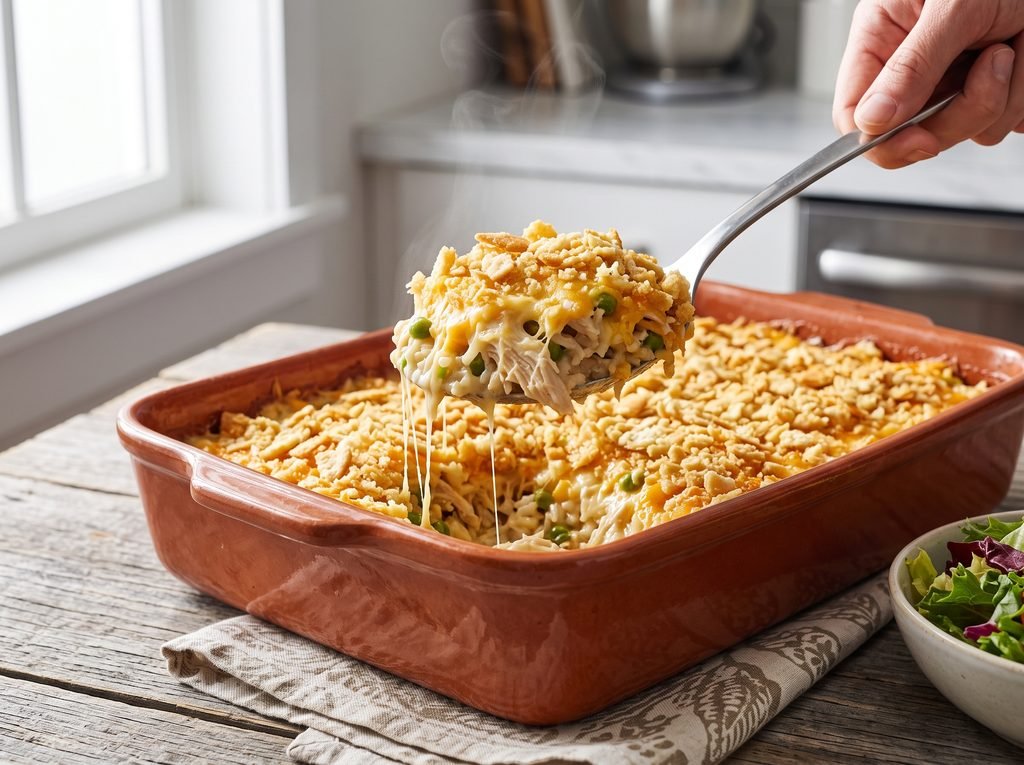
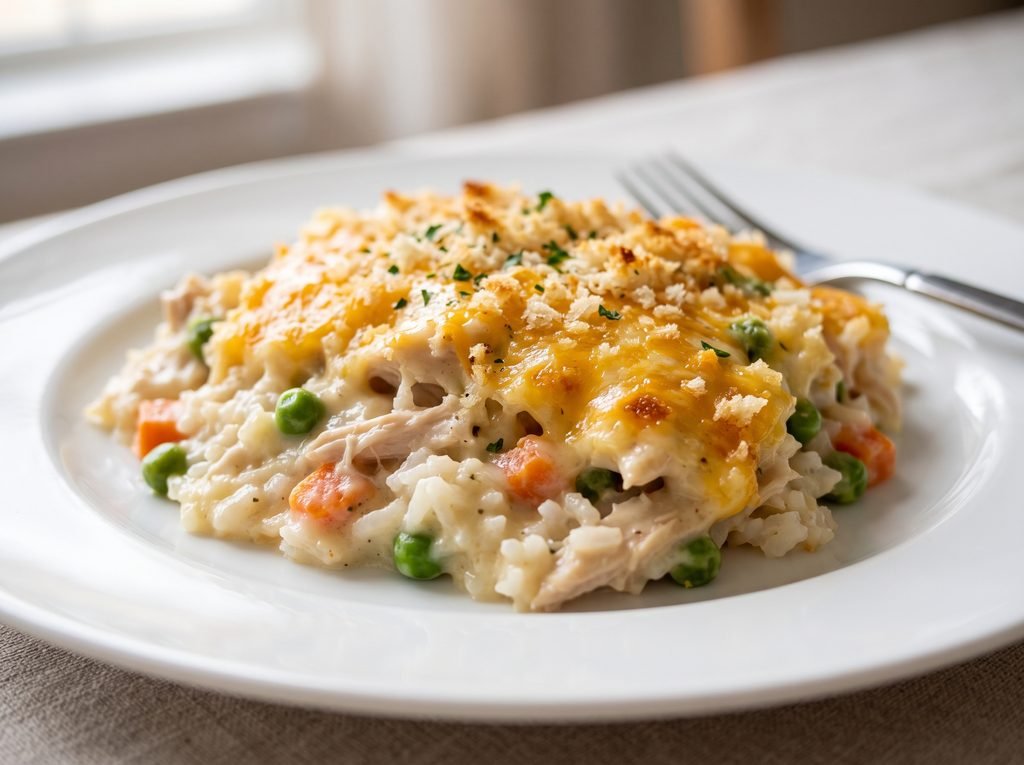
This is arguably one of the most famous and beloved recipes utilizing Campbell’s soup. It is a one-pan wonder where the raw rice cooks directly in the creamy soup mixture alongside tender bites of chicken. The result is a bubbly, cheesy, deeply comforting meal that takes just minutes to prep.
- Prep Time: 15 minutes
- Cook Time: 55 minutes
- Total Time: 1 hour 10 minutes
- Servings: 6
Ingredients
- 2 cans (10.5 ounces each) Campbell’s Cream of Chicken Soup: Do not add water to the cans. (You can also use one can of Cream of Chicken and one can of Cream of Mushroom).
- 1 cup Whole Milk: Provides the necessary liquid for the rice to absorb without watering down the creaminess.
- 1 cup Long-Grain White Rice (Uncooked): Standard long-grain white rice works best. Do not use Minute Rice or brown rice for this specific recipe.
- 1 1/2 pounds Boneless, Skinless Chicken Breasts: Cut into bite-sized 1-inch cubes.
- 1 teaspoon Garlic Powder: For savory depth.
- 1 teaspoon Onion Powder: Complements the chicken and soup perfectly.
- 1/2 teaspoon Freshly Ground Black Pepper: To taste. (Notice we do not add salt, as the condensed soup contains plenty).
- 1 cup Frozen Mixed Vegetables (Peas and Carrots): No need to thaw them first.
- 1 1/2 cups Sharp Cheddar Cheese (Shredded): Divided use.
- 1/2 cup Ritz Crackers (Crushed): For a buttery, crispy topping.
- 2 tablespoons Unsalted Butter (Melted): To mix with the cracker crumbs.
How to Make Creamy Chicken and Rice Casserole
- Preheat the Oven: Preheat your oven to 375°F. Lightly grease a standard 9×13-inch baking dish with non-stick cooking spray or a little butter.
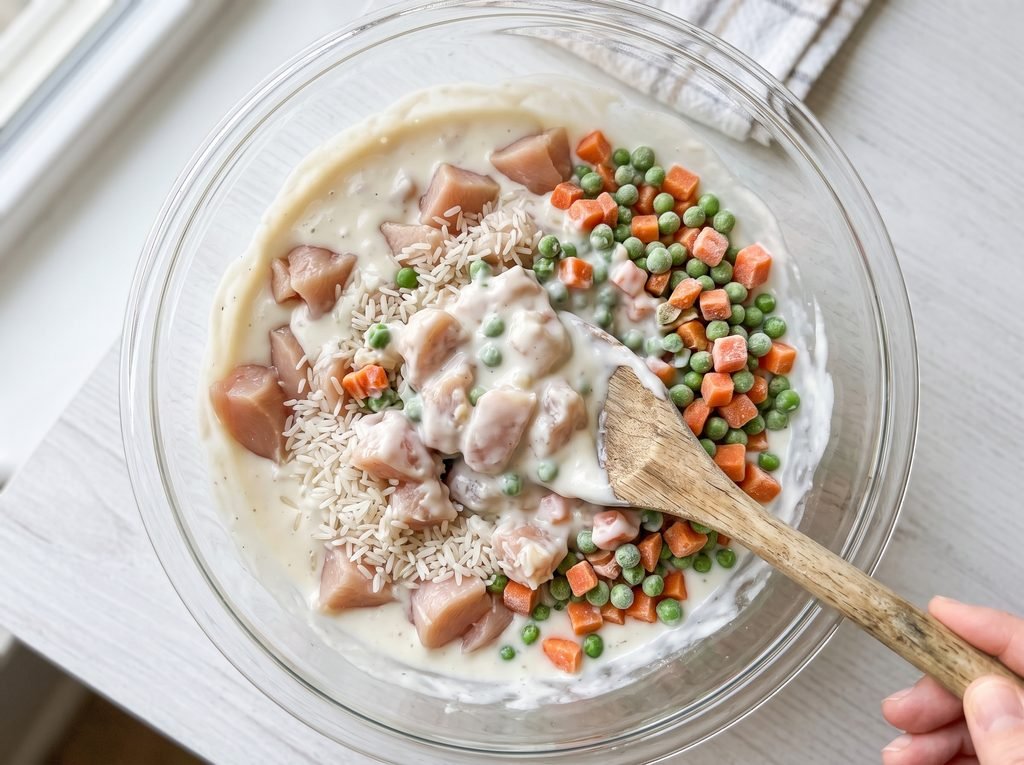
- Whisk the Liquid Base: In a large mixing bowl, combine the two cans of Cream of Chicken soup, the whole milk, garlic powder, onion powder, and black pepper. Whisk until the mixture is smooth and well combined.
- Combine the Ingredients: Stir the uncooked white rice, the cubed raw chicken, the frozen mixed vegetables, and 1 cup of the shredded cheddar cheese into the soup mixture. Fold everything together until the chicken and rice are evenly coated.
- Transfer to the Baking Dish: Pour the entire mixture into your prepared 9×13-inch baking dish, spreading it out into an even layer with a rubber spatula.
- Cover and Bake: Cover the baking dish tightly with heavy-duty aluminum foil. Make sure the edges are crimped and sealed well. This traps the steam inside the dish, which is absolutely critical for cooking the raw rice. Bake in the preheated oven for 45 minutes.
- Prepare the Topping: While the casserole is baking, toss the crushed Ritz crackers with the melted butter in a small bowl until the crumbs are evenly coated.
- Add the Topping and Finish: After 45 minutes, carefully remove the casserole from the oven and take off the foil (watch out for escaping steam). The rice should be tender and the liquid mostly absorbed. Sprinkle the remaining 1/2 cup of cheddar cheese evenly over the top, followed by the buttered cracker crumbs.
- Bake Uncovered: Return the uncovered baking dish to the oven and bake for an additional 10 minutes, or until the cheese is melted, the topping is golden brown, and the casserole is bubbling around the edges.
- Rest Before Serving: Remove from the oven and let the casserole rest for 5 to 10 minutes before serving. This allows the sauce to thicken slightly and makes serving much easier.
Helpful Tips for the Best Results
- Seal the Foil Tightly: The biggest mistake people make with rice casseroles is not covering the dish tightly enough. If the steam escapes, the rice will not cook and you will be left with crunchy grains.
- Check the Rice: Ovens vary in temperature. If you pull the foil off at 45 minutes and the rice still feels slightly hard or there is a pool of unabsorbed liquid, cover it back up and bake for another 10 minutes before adding the topping.
- Avoid Brown Rice: Brown rice requires significantly more liquid and nearly double the cooking time compared to white rice. It will not work in this recipe as written; the chicken will severely overcook by the time the rice is tender.
Variations and Substitutions
- Mushroom Lover’s Version: Swap both cans of Cream of Chicken for Cream of Mushroom, and stir in 1 cup of freshly sliced sautéed cremini mushrooms before baking.
- The Broccoli Cheese Swap: Instead of peas and carrots, fold in 2 cups of fresh, finely chopped broccoli florets. Swap one can of the Cream of Chicken for a can of Campbell’s Condensed Cheddar Cheese soup.
- Alternative Toppings: If you do not have buttery round crackers, crushed potato chips, panko breadcrumbs, or French fried onions make spectacular, crispy toppings for this dish.
What to Serve With It
Because this casserole is incredibly rich and contains your protein and starch in one dish, you want to serve it alongside something bright, crisp, and acidic to cut through the creaminess.
- A large garden salad dressed with a sharp lemon vinaigrette or a tangy Italian dressing.
- Roasted green beans or fresh steamed asparagus.
- Warm, crusty garlic bread or soft yeast rolls for wiping the plate clean.
Storage and Reheating
- Storage: Allow any leftover casserole to cool completely to room temperature. Transfer it to an airtight container and store it in the refrigerator for up to 3 to 4 days.
- Reheating: Rice tends to absorb moisture as it sits in the fridge, making the leftover casserole a bit thick. To reheat, place a portion on a microwave-safe plate, sprinkle a teaspoon of water or milk over the top, and microwave for 1 to 2 minutes until heated through. The extra splash of liquid brings the creamy sauce right back to life.
- Freezing: This casserole freezes wonderfully. You can freeze it unbaked (without the cracker topping) for up to 2 months. Thaw overnight in the refrigerator, add 15 minutes to your covered baking time, and proceed as normal. You can also freeze baked leftovers in individual portions for quick lunches.
Frequently Asked Questions
Can I use milk instead of water when making condensed soup? Absolutely. In fact, replacing the water with milk (or a mixture of milk and a splash of cream) is the best way to make condensed tomato or mushroom soup taste richer, creamier, and much closer to a homemade recipe.
Is condensed soup the same as regular canned soup? No. Condensed soup has had roughly half of its water content removed during the manufacturing process. It is meant to be reconstituted with one can full of water or milk before eating. Regular “ready-to-serve” canned soups (like Campbell’s Chunky line) already contain the proper amount of liquid and just need to be heated.
Can I substitute Cream of Mushroom for Cream of Chicken in a recipe? Yes. In almost all casserole recipes, Cream of Mushroom, Cream of Chicken, and Cream of Celery can be substituted for one another at a 1:1 ratio. The texture and thickening power are identical; only the background flavor profile will change slightly.
Is it safe to eat condensed soup straight from the can? Technically, yes. The soup is fully cooked during the canning process, so it is safe to consume without heating. However, eating condensed soup straight from the can will be incredibly thick, gelatinous, and overwhelmingly salty, as the seasoning is concentrated.
Why do recipes call for condensed soup instead of just making a cream sauce? Convenience and stability. A homemade roux-based cream sauce takes time, requires constant whisking to prevent lumps, and can sometimes separate or “break” when baked in an oven with other acidic or fatty ingredients. Condensed soups are commercially stabilized, meaning they hold their creamy texture perfectly under a wide variety of cooking conditions.
Can I make a casserole ahead of time if it uses Campbell’s soup? Yes, dishes made with condensed cream soups are excellent for meal prep. You can assemble the chicken and rice casserole (leaving off the crispy topping), cover it tightly, and keep it in the refrigerator for up to 2 days before baking it.
Final Thoughts
Campbell’s soup has earned its permanent place in the American pantry for a good reason. It bridges the gap between convenience and classic comfort, allowing home cooks to put hearty, family-pleasing meals on the table without spending hours slaving over a stove. Whether you are doctoring up a simple bowl of tomato soup to pair with a gooey grilled cheese, or relying on a can of Cream of Chicken to bind together a bubbling, golden-brown casserole, these iconic red and white cans continue to be a foundational ingredient in everyday cooking. Stock up your pantry, try out our ultimate chicken and rice bake, and embrace the easy, nostalgic comfort that only a great casserole can provide.