
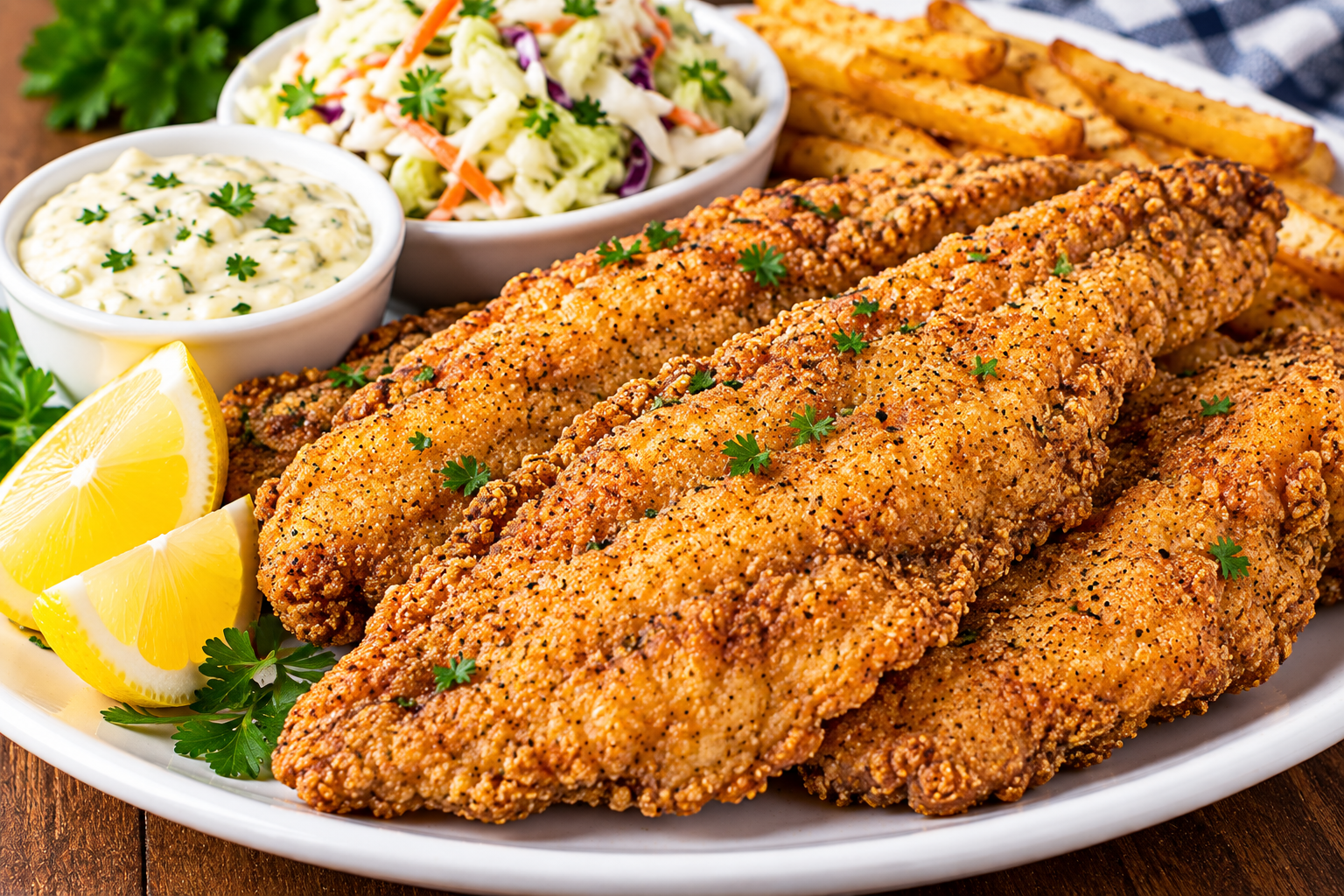
Crispy Fried Flounder: A Golden, Crunchy Seafood Favorite
There is something incredibly satisfying about a plate of freshly fried fish. The moment you take a bite, you experience the contrast between a golden, crispy coating and tender, flaky fish. Crispy Fried Flounder is one of those classic seafood recipes that delivers restaurant-quality flavor with simple ingredients and straightforward preparation.
Flounder is a popular choice for frying because of its delicate texture and mild flavor. Its thin fillets cook quickly, making them perfect for a busy weeknight dinner or a relaxed weekend meal. When coated with seasoned flour and cornmeal, flounder develops a beautifully crunchy exterior while maintaining its naturally tender center.
Whether you are preparing seafood for your family, planning a casual dinner with friends, or simply craving a comforting homemade meal, this recipe is worth adding to your collection. With the right preparation and a few helpful techniques, you can create crispy fried flounder that tastes delicious every time.
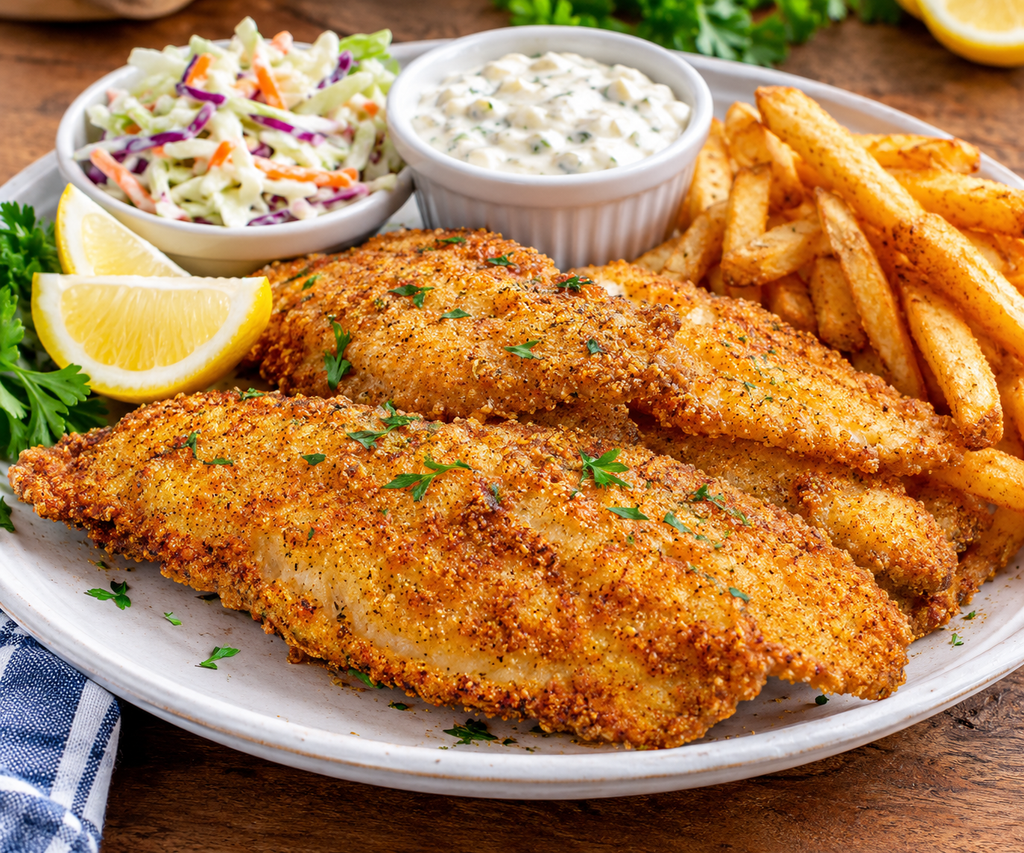
What Makes Crispy Fried Flounder So Delicious?
The appeal of Crispy Fried Flounder comes from its combination of textures and flavors. The outside develops a golden crust that provides a satisfying crunch, while the inside remains moist, delicate, and flaky. The mild taste of flounder also makes it a versatile fish that pairs well with a variety of seasonings and sauces.
Unlike fish with a stronger flavor, flounder allows the coating and seasonings to shine without overwhelming the seafood. A simple blend of garlic powder, paprika, black pepper, and salt adds depth while keeping the recipe approachable.
Cornmeal is another important ingredient in this preparation. It contributes a slightly grainy texture that helps create a crispier crust than flour alone. Combined with all-purpose flour, it produces a coating that is light enough for delicate fish but sturdy enough to hold its shape during frying.
Fresh lemon juice adds brightness to the finished dish, balancing the richness of the fried coating. Tartar sauce provides a creamy, tangy contrast, making every bite even more enjoyable.
Choosing the Best Flounder for Frying
The quality of the fish plays an important role in the final result. Fresh or properly thawed frozen flounder can both work well, provided the fillets are handled carefully.
When selecting fresh flounder, look for fillets with a clean, mild smell and firm flesh. The surface should appear moist but not slimy, and the fish should not have an unpleasant odor. If you are purchasing frozen fillets, choose packages that are well sealed and free from excessive ice crystals or signs of freezer damage.
Flounder fillets are often thin, which means they cook quickly. This is convenient, but it also means they can become overcooked if left in the oil too long. Pay attention to the thickness of each fillet and adjust the cooking time accordingly.
If the fish is frozen, thaw it safely in the refrigerator before cooking. Once thawed, pat the fillets thoroughly dry with paper towels. Removing excess moisture is one of the most important steps for achieving a crispy coating.
Ingredients You Will Need
This recipe uses everyday ingredients to create a flavorful, golden crust.
For the Fish
- 4 flounder fillets, approximately 5–6 ounces each
- 1 cup all-purpose flour
- ½ cup yellow cornmeal
- 1 teaspoon garlic powder
- 1 teaspoon paprika
- ½ teaspoon onion powder
- ½ teaspoon salt, plus more to taste
- ½ teaspoon freshly ground black pepper
- ½ cup milk
- Vegetable or canola oil, for frying
For Serving
- Lemon wedges
- Tartar sauce
- Fresh parsley, optional
- French fries, coleslaw, or a green salad
The flour provides structure for the coating, while cornmeal contributes a pleasant crunch. Garlic powder and onion powder add savory flavor, and paprika gives the crust a warm color and subtle sweetness.
Milk helps the dry mixture adhere to the fish. If you prefer a slightly thicker coating, you can use buttermilk instead. It adds a mild tang and works particularly well with fried seafood.
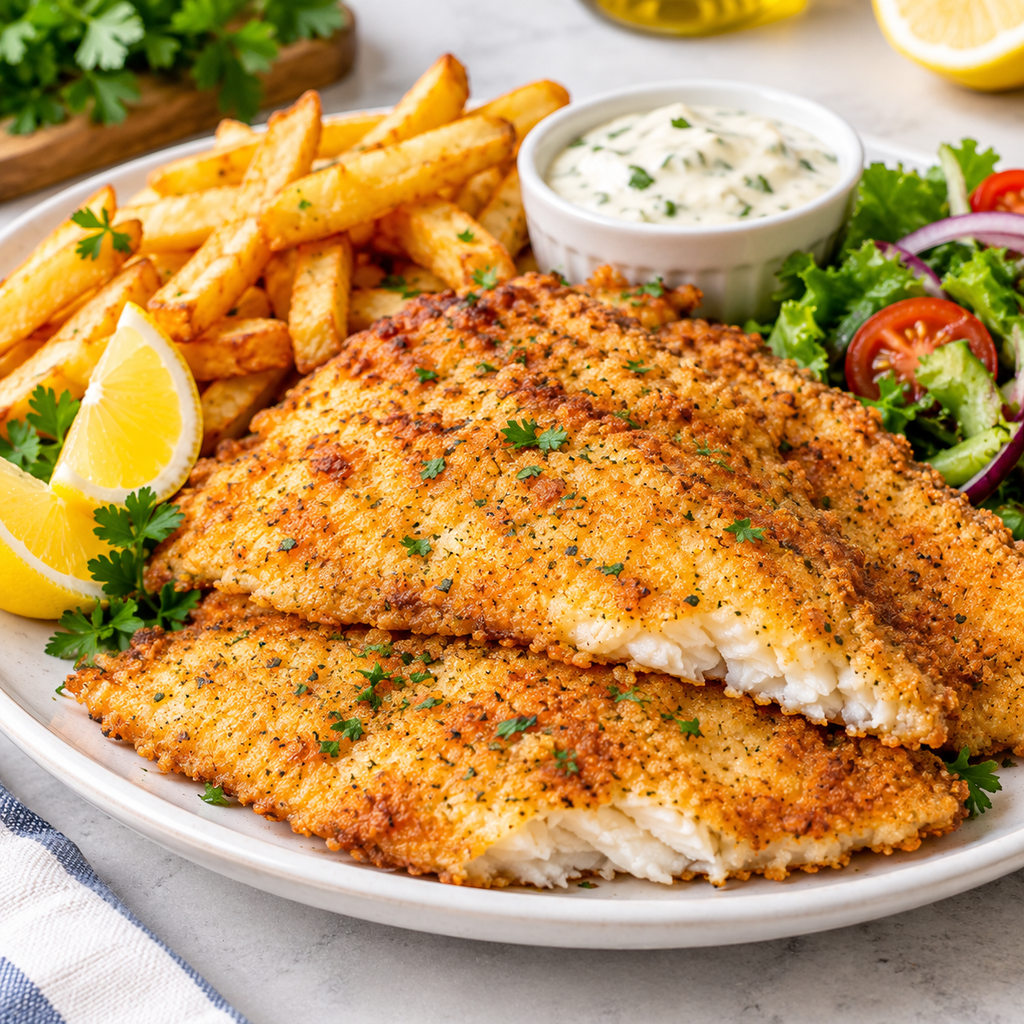
How to Prepare Crispy Fried Flounder
Step 1: Prepare the Fish
Begin by placing the flounder fillets on a clean plate or cutting board. Use paper towels to pat both sides completely dry.
This step should not be rushed. Excess moisture can prevent the coating from sticking properly and may cause the oil to splatter during frying. Dry fillets also encourage better browning.
Season both sides lightly with salt and black pepper. Allow the fish to sit for a few minutes while you prepare the coating.
Step 2: Prepare the Seasoned Coating
In a shallow bowl, combine the flour, cornmeal, garlic powder, paprika, onion powder, salt, and black pepper. Stir until the seasonings are distributed evenly.
Pour the milk into a second shallow bowl. Arrange the bowls next to each other to create a simple coating station.
For an even more flavorful crust, you can add a small amount of dried oregano, Cajun seasoning, or a pinch of cayenne pepper. However, keep the seasoning balanced so the delicate flavor of the flounder remains noticeable.
Step 3: Coat the Flounder Fillets
Take one fillet and dip it into the milk, making sure both sides are lightly moistened. Allow any excess milk to drip off.
Place the fillet into the seasoned flour and cornmeal mixture. Press the coating gently onto both sides, paying attention to the edges.
Lift the fillet and shake off excess coating. A thin, even layer is usually better than a heavy coating because it cooks more evenly and remains crisp without overpowering the fish.
Repeat the process with the remaining fillets. Place the coated fish on a clean plate or wire rack while you heat the oil.
Step 4: Heat the Oil
Pour approximately ½ inch of vegetable or canola oil into a large, heavy skillet. A cast-iron skillet or stainless-steel pan works well for this recipe.
Heat the oil over medium-high heat until it reaches approximately 350°F (175°C). A kitchen thermometer is the most reliable way to check the temperature.
If the oil is too cool, the coating may absorb excess oil and become greasy. If it is too hot, the outside can brown too quickly before the fish is fully cooked.
Always use caution when working with hot oil. Keep the pan stable, avoid adding wet ingredients directly to the oil, and never leave hot oil unattended.
Step 5: Fry the Flounder
Carefully place the coated fillets into the hot oil, leaving enough space between them for even cooking. Depending on the size of your skillet, you may need to fry the fish in batches.
Cook the fillets for approximately 3–5 minutes on the first side, then gently turn them using a fish spatula or tongs. Continue cooking for another 2–4 minutes, adjusting the time based on thickness.
The coating should become golden brown and crisp. The fish should be opaque and separate easily with a fork. For food safety, the thickest part should reach an internal temperature of 145°F (63°C).
Avoid pressing down on the fillets while they cook. This can release moisture and interfere with the crisp crust.
Step 6: Drain and Serve
Transfer the cooked flounder to a wire rack set over a baking sheet or a paper towel-lined plate. A wire rack is especially helpful because it allows excess oil to drain away without making the bottom of the fish soggy.
Serve the fish immediately while the coating is still crisp. Add fresh lemon wedges, tartar sauce, and your favorite side dishes.
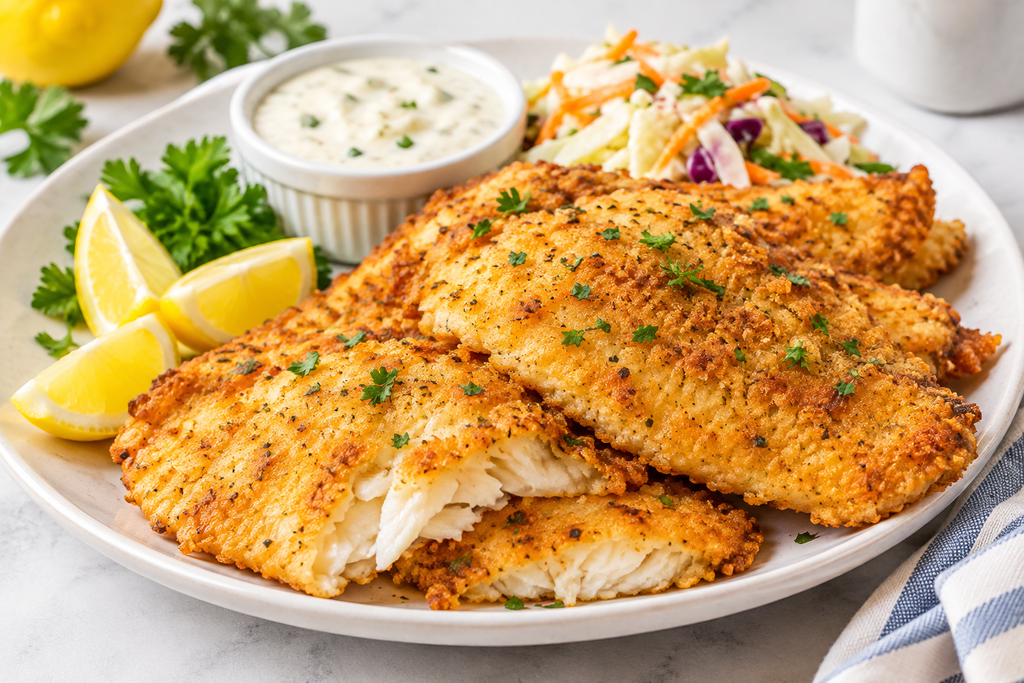
The Best Tips for Extra Crispy Fried Flounder
Achieving a crunchy crust is easier when you pay attention to a few details.
Dry the Fish Thoroughly
Moisture is one of the biggest obstacles to crispiness. Pat the fillets dry before seasoning and coating them. If the fish is particularly wet, allow it to rest on paper towels for a few minutes.
Use the Right Oil Temperature
Maintaining the oil around 350°F helps the coating brown properly while the fish cooks through. If you do not have a thermometer, test the oil with a small pinch of the coating mixture. It should sizzle immediately without burning.
Avoid Overcrowding
Adding too many fillets at once lowers the oil temperature. This can result in a pale, greasy coating. Fry in batches when necessary and allow the oil to return to temperature between batches.
Do Not Cover the Fish
Covering fried fish traps steam, which softens the crust. Keep the cooked fillets uncovered and serve them as soon as possible.
Use a Wire Rack
A wire rack allows air to circulate around the fish and prevents the bottom from becoming soggy. This small step can make a noticeable difference in texture.
What to Serve with Crispy Fried Flounder
Crispy Fried Flounder pairs beautifully with classic seafood side dishes. The best choices offer freshness, creaminess, or a contrasting texture.
French Fries
Golden French fries are a traditional companion for fried fish. Their crisp exterior and fluffy center make them a natural match for the crunchy flounder.
Creamy Coleslaw
Coleslaw adds a refreshing contrast to the warm, fried fish. The cool cabbage and tangy dressing balance the richness of the meal.
Hush Puppies
Hush puppies are a Southern-inspired side made from cornmeal batter. Their savory flavor complements the cornmeal coating used on the flounder.
Green Salad
For a lighter option, serve the fish with a fresh salad made from lettuce, cucumber, tomatoes, and a lemon-based dressing.
Roasted Vegetables
Roasted broccoli, asparagus, or green beans provide a simple and nutritious addition to the plate.
Homemade Tartar Sauce
Tartar sauce is one of the most popular condiments for fried fish. Its creamy texture and tangy flavor complement the crispy coating perfectly.
To make a quick homemade version, combine mayonnaise, finely chopped dill pickles, a little lemon juice, and a small amount of Dijon mustard. Add chopped fresh parsley or dill if desired.
Stir everything together and refrigerate for at least 15 minutes before serving. This gives the flavors time to blend.
You can adjust the ingredients according to your taste. Add more lemon juice for brightness, extra pickles for tanginess, or a pinch of black pepper for additional flavor.
How to Store Leftover Fried Flounder
Fried fish is best enjoyed immediately, but leftovers can be stored safely.
Allow the cooked fish to cool briefly, then place it in an airtight container and refrigerate it within two hours of cooking. Properly refrigerated leftovers should generally be eaten within 3–4 days.
For the best texture, reheat the fish in an oven or air fryer rather than a microwave. A temperature of approximately 375°F can help restore some of the crispness. Heat until the fish is thoroughly warmed.
Avoid repeatedly reheating the same portion. Only reheat the amount you plan to eat.
Can You Make Fried Flounder in an Air Fryer?
Yes, air frying is an alternative that uses less oil than traditional pan-frying. However, the texture may differ slightly from deep or shallow frying.
To prepare air-fried flounder, coat the fillets as directed and lightly spray both sides with cooking oil. Arrange them in a single layer in the air fryer basket, leaving space between the pieces.
Cook at approximately 400°F, checking frequently because flounder fillets are often thin. The exact cooking time will depend on the thickness of the fish and the specific air fryer.
The coating should be golden and the fish should reach an internal temperature of 145°F. Air-fried flounder is best served immediately.
Common Mistakes to Avoid
Even a simple fish recipe can go wrong if a few details are overlooked.
Using wet fish: Excess moisture makes it harder for the coating to adhere and can cause oil splattering.
Starting with cold oil: The coating may absorb too much oil and become greasy instead of crisp.
Overcrowding the pan: Too many fillets lower the temperature and prevent even browning.
Overcooking the fish: Thin flounder cooks quickly. Watch the fillets closely and use a thermometer when possible.
Serving too late: Fried fish gradually loses its crunch as it sits. Serve it promptly for the best experience.
Frequently Asked Questions
Is flounder good for frying?
Yes. Flounder has a mild flavor and delicate texture that work well with a seasoned crispy coating. Its thin fillets also cook quickly.
Can I use frozen flounder?
Yes. Thaw frozen flounder safely in the refrigerator, then pat it dry before coating. Properly thawed fish can produce excellent results.
Why is my fried flounder not crispy?
The most common causes are excess moisture, oil that is too cool, overcrowding the pan, or allowing the cooked fish to sit in trapped steam.
Can I use flour without cornmeal?
Yes. Flour alone can create a crisp coating, although cornmeal adds extra texture. You can also experiment with a small amount of cornstarch for a lighter crunch.
What oil is best for frying flounder?
Neutral oils with relatively high smoke points, such as canola or vegetable oil, are suitable choices. Avoid using oil that has been overheated or has an off smell.
How do I know when flounder is fully cooked?
The fish should be opaque, flake easily with a fork, and reach an internal temperature of 145°F (63°C) at the thickest part.
Final Thoughts
Crispy Fried Flounder is a comforting seafood recipe that proves delicious meals do not need complicated ingredients. With fresh fish, a flavorful coating, properly heated oil, and a few simple techniques, you can prepare a golden, crunchy dinner in your own kitchen.
The combination of tender flounder, savory seasonings, and a crisp cornmeal crust makes this dish a family-friendly favorite. Serve it with lemon wedges, tartar sauce, French fries, or a fresh salad for a complete meal.
Whether you are an experienced home cook or trying fried fish for the first time, this recipe offers an easy way to enjoy the delicious flavor and texture of homemade seafood. Give it a try, and make it part of your next family dinner or weekend seafood gathering.